



Vietnam touts IP crackdown results after US launches new probe
More than 1,400 IP infringement cases have been handled in the last 3 weeks, criminal proceedings have been launched in 28 cases
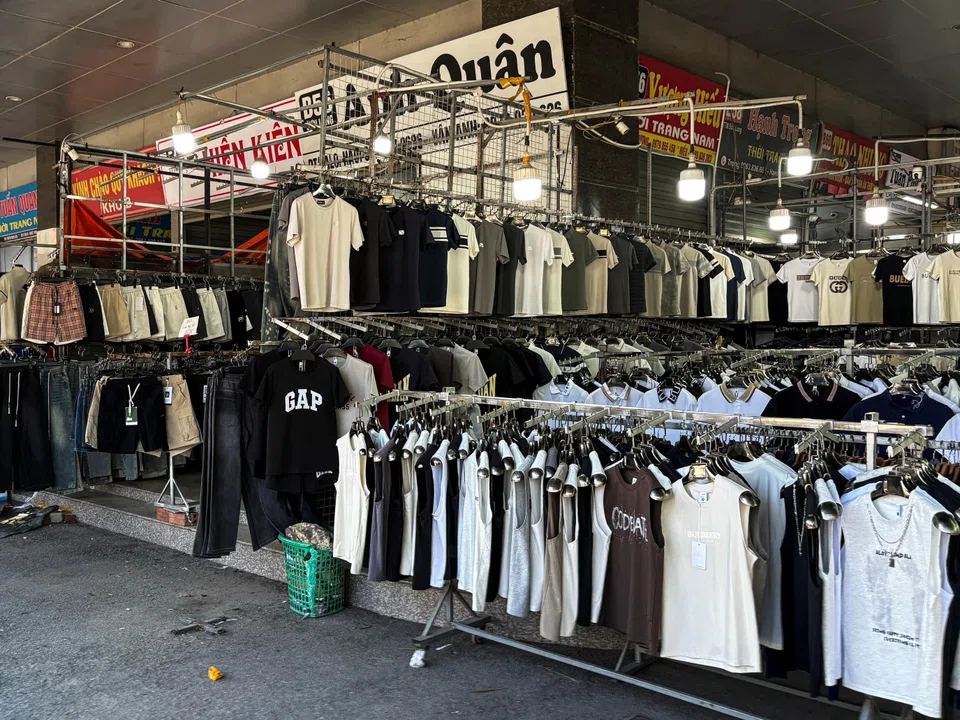
[HANOI] Vietnam’s government touted the results of a sweeping crackdown on intellectual property (IP) violations after the US launched a fresh trade investigation, even as counterfeit items remain easily accessible across the country’s street markets.
More than 1,400 IP infringement cases have been handled in the last three weeks, while criminal proceedings have been launched in 28 cases, said a statement on the government website. The market surveillance team processed 210 per cent more cases than in May last year, it said.
Last Friday (May 29), the US Trade Representative announced a Section 301 probe into whether Vietnam’s “persistent failure to resolve long-standing concerns” about IP protection and enforcement “burdens or restricts US commerce”.
The South-east Asian nation is already the subject of two separate Section 301 probes into alleged excess manufacturing capacity and forced labour. The US has initiated a raft of trade inquiries as President Donald Trump looks to rebuild a tariff wall that was toppled when the Supreme Court overturned his previous global tariffs.
“Vietnam has emerged as a focal point within this broader strategy because it combines three characteristics that increasingly attract US scrutiny: a large and rapidly growing bilateral trade surplus; a central role in global manufacturing supply chains; and significant integration with Chinese intermediate inputs,” Pham Luu Hung, chief economist at SSI Securities, wrote in a note to investors on Monday.
Vietnam was identified as a “priority foreign country” in a late April report, marking the first time in 13 years that a nation has been placed in that category. The designation is reserved for countries with the most egregious IP-related acts.
The government responded by ordering a clampdown on piracy websites, counterfeit goods and trademark infringements. It said the country is committed to combating IP violations and has requested that the US conduct an “objective and fair assessment, fully recognising Vietnam’s efforts and tangible results”.
But as at Monday lunchtime, the stalls in Saigon Square, Ho Chi Minh City’s main counterfeit goods market, appeared to be doing a brisk trade, with shelves stacked with fake Gucci and Chanel handbags competing with copy Nike trainers for customers willing to bargain for a good price.
One handbag seller, who did not want to be identified, said she is worried about the increasing scrutiny but still needs to make a living.
Sales have been “really slow lately, down more than 70 per cent”, another shop owner told Bloomberg last week. “Before, I could sell 10 to 15 pairs of shoes a day. Now I only sell five to seven,” said the 32-year-old, who identified himself only as Viet.
Alleged counterfeit goods are confiscated, and sellers are required to pay not only fines but also the cost of destroying the items. “I was caught a week ago,” Viet said. “They issued a violation report, fined me and confiscated all my goods,” he added.
The trade probe comes as the two nations continue to wrangle over the terms of a final trade deal, leaving uncertainty hanging over one of America’s largest trading partners. Vietnam was initially hit with a steep 46 per cent tariff last April which was later reduced to 20 per cent, before the tariff ruling left most companies paying a 10 per cent baseline.
The talks have stalled over issues including transshipments, market access and Vietnam’s large trade surplus with the US, which has only continued to grow as manufacturers shift production from China. One of Washington’s biggest concerns remains that the country acts as a conduit for Chinese goods seeking to avoid higher tariffs.
Vietnam’s main vulnerability lies less in IP enforcement or foreign exchange policy and more in its position within China-linked manufacturing ecosystems, said Hung of SSI Securities.
As a result, “the most likely outcome is a gradual increase in compliance requirements, origin verification, customs scrutiny, and sector-specific enforcement rather than the introduction of a broad China-style tariff regime”, he said. BLOOMBERG
Decoding Asia newsletter: your guide to navigating Asia in a new global order. Sign up here to get Decoding Asia newsletter. Delivered to your inbox. Free.
Share with us your feedback on BT's products and services
TRENDING NOW

ComfortDelGro appoints two new independent directors

Once staunchly pro-China, Malaysian Chinese businesses are now distancing themselves from Beijing

NoonTalk needs continued financial support from CEO Dasmond Koh, auditors warn

DP Architects sets the benchmark for sustainability disclosure and design

