Asean Business logo
SPONSORED BYUOB logo

Vietnam wants greater adoption of rooftop solar power systems

Jamille Tran
Published Sat, Jan 6, 2024 · 09:00 AM
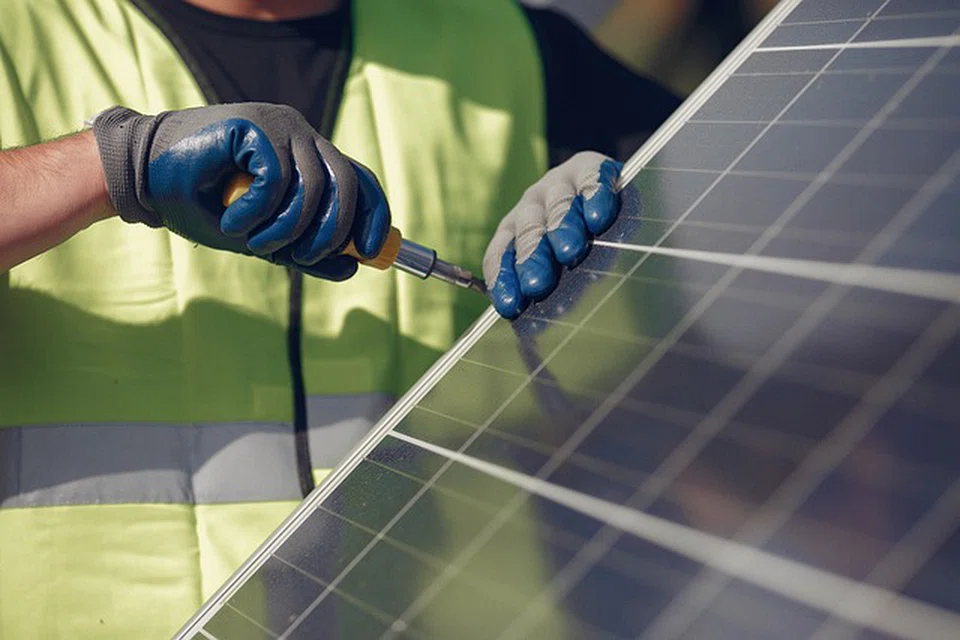
    • Vietnam's trade ministry is designing incentives for small-scale installations of solar systems on office and residential roofs for self-consumption.
    • Vietnam's trade ministry is designing incentives for small-scale installations of solar systems on office and residential roofs for self-consumption. PHOTO: PIXABAY

    [HO CHI MINH CITY] Vietnam – the top generator of solar energy in South-east Asia – has an ambitious plan for at least half of the country’s office buildings and houses to be equipped with rooftop solar panels for self-consumption by 2030.

    This self-produced solar energy will be purely for on-site consumption, and not meant for sale to the national grid. Industry players and analysts, however, are divided on whether this 50 per cent target can be achieved, given the lack of incentives to drive adoption.

    Nguyen Anh Khoa, the head of energy and infrastructure at VinaCapital, an investment management firm based in Ho Chi Minh City, said the take-up rate of rooftop solar panels “is less likely to take off” without clear guidance on regulations, available funding sources, market education and the participation of the private sector.

    So far, rooftop solar development is more common within the commercial and industrial (C&I) sector such as at large factories and industrial complexes.

    This was largely due to attractive feed-in tariff mechanisms for rooftop solar projects operated before end-Dec 2020, an increased pressure for greener operations, as well as the benefits of cost savings and energy reliability.

    Such collaborations often take place within concentrated locations of less than 10 sites with an installed capacity per site of at least 1 megawatt peak (MWp), said Khoa.

    This enables both rooftop solar energy service companies and large electricity consumers to benefit from economies of scale in terms of construction, operations and maintenance.

    In 2020, rooftop solar power installations of over new 100,000 systems added a total of 9,583 MW to Vietnam’s national grid – a huge increase of 2,435 per cent from a year ago.

    But from 2021 to July 2023, without renewed incentives, there were just 1,030 new systems installed for self-consumption with a total capacity of around 400 MW, according to a report by Vietnam’s trade ministry.

    “The development of solar farms and industrial rooftop solar somehow hit their peaks a few years ago as there are limited spaces for such large-scale projects,” said Tran Tuan Anh, the co-founder and chief executive of Vietnam-based smart power solutions provider Solano Energy.

    “Armed with the right technologies, the interest will shift towards more distributed, resilient and less capital-intensive rooftop solar systems at residential and commercial buildings,” he added.

    In recent years, however, some C&I players have seen new opportunities for more dispersed and smaller scale projects in Vietnam.

    In October 2023, UK-based Coro Energy announced that it would build 50 MW of rooftop solar capacity at 900 retail stores operated by Mobile World Investment Corporation, one of the biggest electronics retailers in Vietnam.

    Khoa noted that the management of smaller scale, dispersed rooftop solar sites may be time-consuming and costly, and it remained to be seen if this would be successful.

    The Electricity and Renewable Energy Authority said that industrial rooftop solar is not yet prioritised for incentives. This is because the government wants to exploit the distributed renewable energy sources without having to invest in upgrading the distribution grid, as well as to ensure the safe operation of the power system.

    The sudden rise of renewable energy has put pressure on the national grid, particularly in Vietnam’s central region where the majority of renewable energy projects are based.

    The trade ministry has instead proposed some incentives for small-scale solar power installations on office and residential rooftops for self-consumption, such as exemption from obtaining power operation licenses and electricity business registration certificates. They could also be prioritised for budgetary allocation, tax breaks or deductions, and access to loans with preferential rates.

    Anh from Solano Energy plans to install up to 100,000 small-scale rooftop solar systems at residential dwellings in the next two years, with the aim of becoming one of the main energy providers for Vietnamese households.

    Based on internal tests, Solano’s system could help families save up to 80 per cent on their electricity bills with a payback period of about five to six years after paying for the system and installation, Anh added.

    Electricity trading mechanism

    For years, Vietnamese authorities have been designing direct power purchase mechanisms between solar power generation units and large electricity users.

    According to some proposed regulations, if connected to the national grid system, only renewable power plants of at least 100 MW in installed capacity are able to transact electricity through the country’s main electricity retailer EVN.

    For systems at residential and office buildings, however, the draft rules state that they should only be used for on-site self-consumption purposes. Excess capacity cannot be sold to other organisations, individuals or even EVN out of concerns over “system insecurity”.

    This means electricity trading is restricted in these smaller-scale projects, which disappointed household investors who hoped for a net-metering billing mechanism that could compensate them for contributing the surplus output to the utility grid.

    As such, industry players said that upfront costs remain the biggest roadblock for customers, given how rooftop solar systems need to be paired with expensive batteries to store any excess energy generated during the day.

    “We are actively looking for financing partners to help ease the cost burden for customers,” said Anh. “I believe if we have the right incentives for homeowners, we can mobilise a larger amount of capital in the society for a faster and more efficient transition to clean energy.”

    According to Solano’s estimates, the solar power generated from half of the total rooftop area in Ho Chi Minh City alone can provide enough electricity for the entire country’s consumption needs.

    Anh remains bullish about the revolution of the local regulatory landscape in the next three to five years towards an electricity trading mechanism, which aligns with his vision of creating a “virtual power plant” (VPP) for Vietnam similar to that in Australia, the US and parts of Europe.

    VPPs are networks of small energy-producing or storage devices such as solar panels and batteries, which are pooled together to supply power.

    This model also opens up opportunities for peer-to-peer electricity trading, which enables individuals to generate income by selling their unused energy directly to others within the network.