Asean Business logo
SPONSORED BYUOB logo

Vietnam’s domestic air travel nosedives amid jet supply crunch, soaring airfares

Deemed one of the fastest recovering aviation markets, the country’s travel growth is now being deterred by a combination of factors, including an up to 50% increase in fares
Published Sat, Jun 29, 2024 · 05:00 AM
    • From January to March, national flag carrier Vietnam Airlines reported its first profitable quarter since the Covid-19 outbreak, with international flights accounting for 65 per cent of total revenue. 
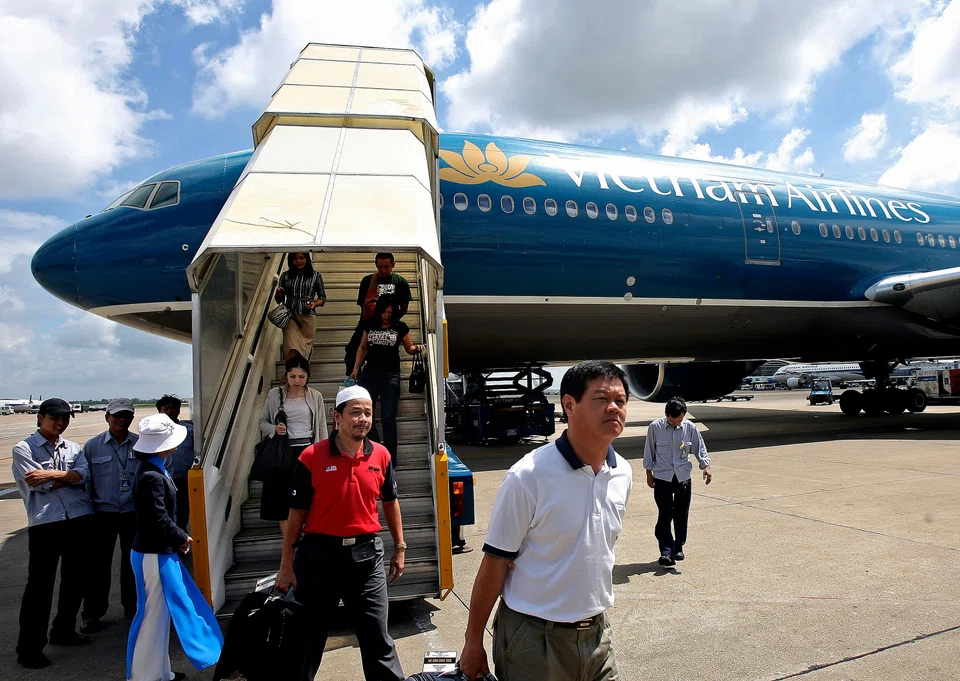
    • From January to March, national flag carrier Vietnam Airlines reported its first profitable quarter since the Covid-19 outbreak, with international flights accounting for 65 per cent of total revenue.  PHOTO: BLOOMBERG

    [HO CHI MINH CITY] Vietnam, once boasting the world’s fastest-recovering domestic aviation market, is now grappling with a sharp decline in domestic air travel, falling by 20 per cent in the first five months of this year, as aircraft shortages force airlines to slash services and hike fares. These further compound the challenges faced by the sluggish economy in the first half of this year.

    From January to May, Vietnam experienced a 19.4 per cent plunge in domestic air transport passengers from the previous year, dropping to 17 million – a decline of 8 per cent from the same period in 2019, data from the Civil Aviation Authority of Vietnam (CAAV) indicated.

    This decline followed an 18 per cent drop in the first quarter, one of the industry’s peak travel seasons, and the dip is expected to continue through the summer.

    “This gap between supply and demand is slated to persist during the peak season of summer 2024, putting certain pressure on domestic ticket prices, especially flights to tourist attractions and resort destinations,” noted Vietnam’s aviation authority in the May report.  

    In a separate report, data showed that during the current June-July peak holiday period, booking rates for flights from Vietnam’s two largest cities – Hanoi and Ho Chi Minh City – to most localities and vice versa remain unusually low, with 50 to 80 per cent of seats still available.

    Cost-conscious Vietnamese travellers are reportedly opting for other modes of transportation and tourist spots closer to home, or even considering overseas tours that are only slightly more expensive than domestic options.

    Jet crunch inflates airfares

    Significant engine issues faced by American aerospace manufacturer Pratt & Whitney have impacted about 600 to 700 engines worldwide, including those used by Vietnamese airlines. This year alone, 42 aircraft in Vietnam will be taken out of service for repairs that could take up to 18 months.

    This situation, combined with periodic plane maintenance and the scaling down of local carriers Bamboo Airways and Pacific Airlines, has reduced the number of operational jets in Vietnam to about 160 – down by about 30 per cent from pre-pandemic levels and 20 per cent from last year.

    The aircraft supply crunch has forced carriers to trim flight schedules, which in turn has driven up airfares – more so amid demand spikes over the holidays.

    On average, the rise in domestic flight ticket prices, depending on routes, leapt from 7 per cent to 50 per cent from a year ago in the first four months, according to a report by CAAV. 

    Further complicating matters, Vietnamese airlines are hesitant to expand their fleets due to global used-jet rental prices being at their highest in years.

    The availability of aircraft for lease also remains scarce, exacerbated by delays in new plane deliveries from manufacturers and increased post-pandemic travel demand.

    Rising losses from domestic flights

    Speaking at an industry conference in June, chief executive of Bamboo Airways Luong Hoai Nam expressed concerns over escalating losses when airlines are urged to expand their fleet and increase domestic flights to lower airfares, state media VnExpress reported. 

    “If leasing more jets results in higher profits, we would have done that already,” Nam said. 

    Bamboo Airways has yet to disclose its financial results in FY2023 and the first quarter of 2024, but it suffered heavy losses of 10 trillion dong (S$532 million) and 3.2 trillion dong in 2021 and 2022, respectively.

    Since October last year, the budget carrier has carried out a rigorous restructuring plan by suspending services on all international routes and certain domestic ones, as well as reducing its fleet size from a peak of 30 to only eight as at April 2024.

    Nam pointed out that turning a profit on domestic flights is no longer feasible due to significantly rising expenses, compounded by Vietnam’s longstanding airfare ceiling mechanism.

    The stronger US dollar, which rose 8 per cent year on year against the dong, has made carriers’ US dollar-denominated payments more expensive. In addition, rising jet rentals and fuel and maintenance costs are piling the pressure on local carriers, which have yet to fully recover from pandemic pains.

    Taking into account market vagaries, the country’s regulators raised the ceiling prices of domestic airfares on most routes by some 5 per cent in March this year.

    Wind beneath its wings – international tourism 

    Vietnamese airlines often resort to profits from international flights to offset losses in their domestic business, said industry insiders.

    The country received nearly 7.6 million international visitors in the first five months of 2024, up 65 per cent year-on-year and 3.9 per cent compared to the same period in 2019.

    Thanks to this revival of international tourism, local carriers have switched their focus to overseas routes to end a painful period of losses in the industry.

    From January to March, national flag carrier Vietnam Airlines reported its first profitable quarter since the Covid-19 outbreak, with international flights accounting for 65 per cent of total revenue. 

    Low-cost airline Vietjet Air posted a threefold jump in net profit from a year ago, with more than half of the revenue generated from international operations.

    Tourism-dedicated carrier Vietravel Airlines, operating only three aircraft, reported its first profitable quarter after more than three years in business.

    Calls for higher efficiency

    Some argue that rising costs and aircraft shortages are not unique to Vietnam, and the current scenario of high airfares and a limited fleet size seems to benefit airlines at the expense of local customers. 

    In response to complaints about airfare hikes, Vietnam’s ministries have directed relevant agencies to implement measures such as conducting inspections for greater transparency in airline pricing, facilitating the addition of more aircraft, and reducing taxes and fees.

    Airlines are also scheduling more night flights as well as developing service packages with travel agencies to optimise aircraft fleets and offer more affordable seats.

    However, these measures have yielded few favourable outcomes so far.

    Experts have noted that the growing travel demand in Vietnam has already outpaced the capacity of the country’s five domestic airlines, and have called for the entry of new players and improvements in industry efficiency.

    “The liberalisation of aviation worldwide has led to increased competition, more innovation, increased choice, and lower prices for travellers, all of which can benefit Vietnam tourism,” Dr Nuno Ribeiro, a senior lecturer in Tourism and Hospitality Management at RMIT Vietnam, wrote in a note in June.

    In 2022, the International Air Transport Association ranked the South-east Asian country as the fifth fastest-growing aviation market, which is forecast to reach 150 million passengers by 2035, from about 74 million in 2023.

    To meet local demand and expand into international markets, Vietnam’s largest carriers, Vietjet Air and Vietnam Airlines – together, they hold the lion’s share of more than 90 per cent in the market – have announced plans to purchase a total of 250 Boeing aircraft, with deliveries scheduled between 2024 and 2030.