



Vietnam’s electronics retail king DMX aims to repeat its feat in Indonesia ‘in half the time’
Beyond its own ongoing domestic IPO, it hopes to list joint venture EraBlue in Indonesia within five years

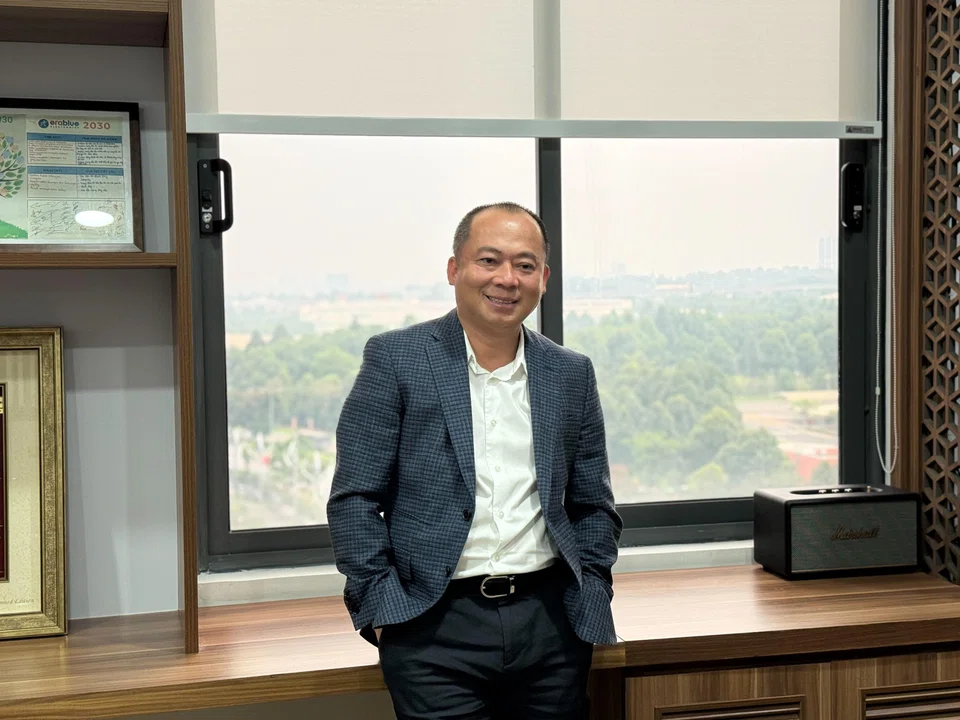
[HO CHI MINH CITY] After establishing a firm grip on 55 per cent of Vietnam’s consumer electronics market, Dien May Xanh Investment (DMX) is seeing early signs of success from exporting its battle-tested retail playbook overseas.
The retailer, a subsidiary of local giant Mobile World Investment, is placing EraBlue – a joint venture formed in 2022 with Indonesia’s electronics giant Erajaya Swasembada – at the centre of this international strategy.
The joint venture is also being positioned as one of its most important growth drivers over the next five years.
“I told our partner in Indonesia that we would build a second Dien May Xanh in half the time it took us in Vietnam,” CEO Doan Van Hieu Em told The Business Times.
That confidence is rooted in DMX’s years of expansion at home. It took 22 years to develop its mobile-phone chain The Gioi Di Dong and 16 years to build its consumer electronics retail sister Dien May Xanh.
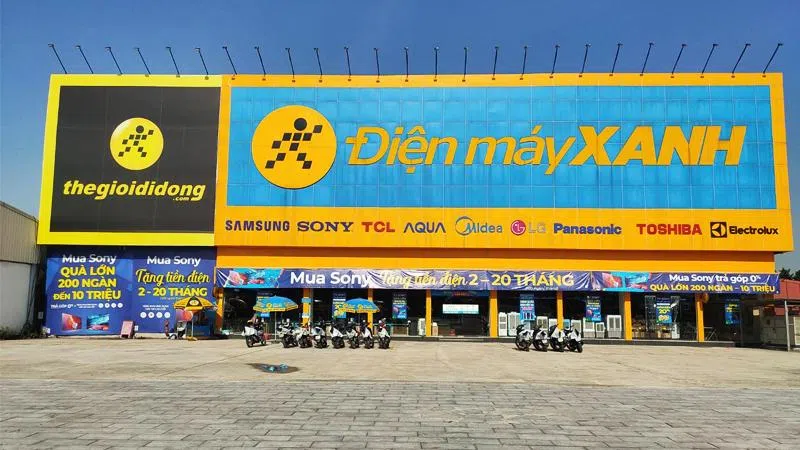
Together with Apple authorised reseller TopZone, which was launched in 2021, DMX now runs a network of more than 3,000 stores nationwide as at end-2025.
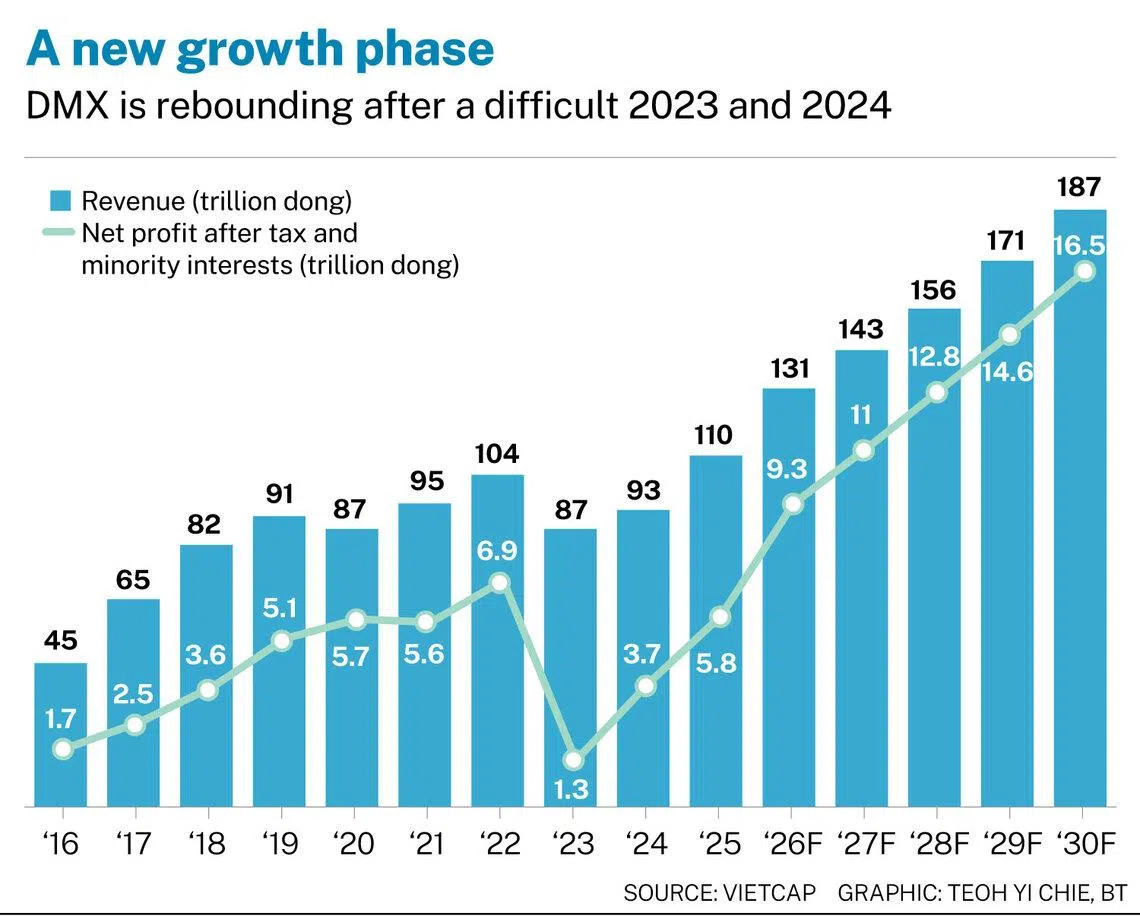
The firm generated revenue of 106.8 trillion dong (S$5.2 billion) and net profit of 6.1 trillion dong in 2025, up 18.4 per cent and 46 per cent, respectively, from a year earlier.
Though its Indonesia business remains relatively modest in scale, with 181 stores and revenue of 3.7 trillion dong in 2025, EraBlue turned profitable for the first time last year with earnings of about US$2 million.
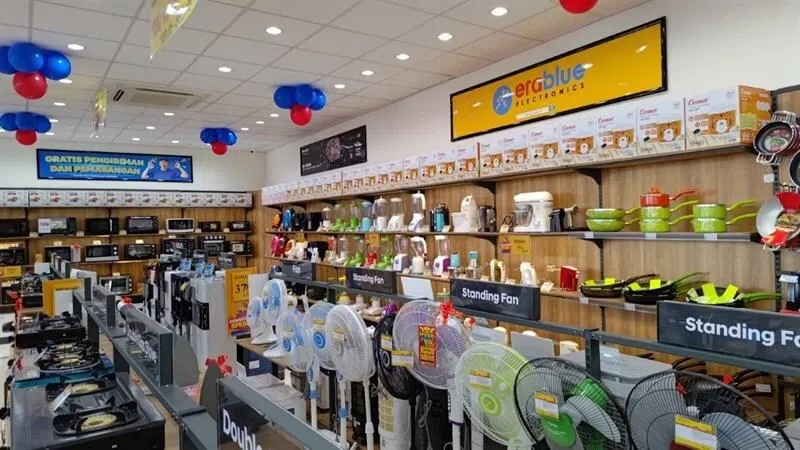
DMX, which owns a 45 per cent stake in the venture, aims to expand the network to 1,000 outlets by the end of the decade, generating around US$800 million in revenue and US$30 million in profit annually.
SEE ALSO



Hieu Em described those targets – which would represent about 11 per cent of the company's total revenue and 6 per cent of its profit by then – as “conservative”, saying they could be achieved earlier and potentially exceeded.
He also expects EraBlue to eventually become a listed company, with a potential stock market debut in Indonesia between 2027 and 2030, at an industry price-to-earning (P/E) ratio currently estimated at 25 times.
“We have discussed with Erajaya a long-term road map that includes taking the business public when the timing is right,” Hieu Em said. “If we succeed, the story could unfold much like DMX and Mobile World have in Vietnam today.”
The Indonesian push comes as DMX is rolling out its own domestic listing. The company is conducting a 14.4 trillion dong initial public offering at home with a post-IPO valuation of about US$3.9 billion and plans to list on the Ho Chi Minh City Stock Exchange in August.
Its parent Mobile World Investment currently has a market value of about US$4.5 billion on the bourse.
“The decision to spin off DMX was intended to ‘vindicate’ the business,” Hieu Em said, referring to perceptions that the market had become saturated.
He noted that the consumer electronics chain alone has delivered double-digit revenue growth in most years since its founding in 2010.
The Cambodian “lesson” and Indonesia pivot
The Indonesian expansion was not DMX’s first attempt at internationalisation.
Its initial overseas venture was Cambodia in 2017, a market chosen simply for its proximity as a “learning” laboratory.
However, the reality of the market soon set in. Cambodia proved too small, with a market comparable to one Vietnamese province. Regulatory uncertainties added to the challenge, prompting DMX to exit after more than five years and a peak of 50 stores.
Meanwhile, Indonesia, particularly Java, offers what Hieu Em sees as a market that is “five to seven years behind Vietnam” in retail development.
Home to nearly 300 million people, Indonesia is about three times the size of Vietnam and remains highly fragmented, with traditional mom-and-pop stores still accounting for a large share of electronics sales.
Hieu Em said that DMX plans to focus its international resources solely on Indonesia over the next few years.
“This market is simply too large and too attractive,” he said. “There is already more than enough work for us to do here. I don’t want the team to become distracted.”
Building a second Dien May Xanh
A key pillar of DMX’s Indonesian strategy is the partnership with Erajaya, one of South-east Asia’s largest consumer electronics retailers.
The group – Indonesia’s equivalent of Mobile World – operates more than 2,3000 stores across Indonesia, Malaysia and Singapore through multiple brands, including its mobile phone retail chain Erafone, which accounts for 62 per cent of Erajaya’s total outlets.
“We are very clear about who does what so we avoid stepping on each other’s toes,” Hieu Em said.
Erajaya provides the essential local “backbone”, leveraging its deep understanding of Indonesian law, finance and human resources. DMX provides the “retail engine”, exporting its capacity to build and run high-efficiency chains, including site selection, store development, merchandising, operations and customer experience.
But while DMX in Vietnam enjoyed a net profit margin of 5.7 per cent at the end of 2025, EraBlue is operating on much thinner ice, with a 2025 net margin of 1.3 per cent and a projected level of around 3 per cent by 2030.
“We are willing to sacrifice part of today’s profit to accelerate growth,” Hieu Em said.
“From quantity to quality” at home
While it is remaining firmly in expansion mode in Indonesia, DMX’s strategy in Vietnam has entered a new phase that its management calls “a shift from quantity to quality”.
After a difficult 2023 and 2024, when weak consumer spending weighed on earnings, the company embarked on an aggressive restructuring programme.
It closed more than 400 stores during the period, eliminating over 10 per cent of its network. Revenue improved to a record high in 2025 and profit surged 4.5 times from 2023.
Hieu Em described this as “pruning the branches to grow the tree”: a strategy designed to shed underperforming assets and transition the remaining network from hardware retailers into high-margin service providers.
Beyond selling products such as televisions, refrigerators and air conditioners, DMX’s management increasingly focuses on consumer financing solutions and lifetime maintenance services.
Yet, the longer-term strategic positioning is expected to be reshaped through a “super app” strategy, evolving what began as a customer-care application into an integrated multi-service platform to unlock new revenue streams and broaden customer bases.
“We believe we can create a very different game in e-commerce,” Hieu Em said.
Rather than building another conventional marketplace, he envisions an “online hypermarket” that could significantly expand product offerings while lowering operating costs.
“We also don’t compete on price in the e-commerce play. We compete on service,” he added. “If we can deliver that offline, we should be able to do it online as well – and even better.”
“Riding the tiger”
As DMX moves toward its IPO – which is running from May 27 to Jun 17 – and a follow-up listing, its management has adopted an internal philosophy known as “riding the tiger”: a recognition that becoming a public company leaves little room for stagnation.
“Once you become a public company, there is no way back,” Hieu Em said. “Investors expect growth. They expect development. The only direction is forward.”
The company is targeting a domestic market share of 65 per cent and a valuation of roughly US$7 billion by the end of the decade.
For this year, with 2026 profit growth projected to exceed 50 per cent, DMX expects its 80,000 dong offering price to imply a P/E of about 10 to 12 times, which Hieu Em views as “very cheap” compared with regional peers.
“We see DMX as a business at the top of its first growth curve,” he added.
“That is why we want to immediately create a new, higher growth curve, one that keeps the team pushing toward the next peak.”
Decoding Asia newsletter: your guide to navigating Asia in a new global order. Sign up here to get Decoding Asia newsletter. Delivered to your inbox. Free.
Copyright SPH Media. All rights reserved.
TRENDING NOW

Once staunchly pro-China, Malaysian Chinese businesses are now distancing themselves from Beijing

Looking beyond looming CEO succession, should UOB potentially pursue a transformative merger?

Could stablecoins be the future of money?

Grab CEO’s wife Chloe Tong on life with Anthony Tan and finding her purpose

