


Asean Business logo
SPONSORED BYUOB logo

Vietnam’s GDP growth improves but stays weak in Q2, as manufacturing remains soft

Jamille Tran
Published Thu, Jun 29, 2023 · 12:02 PM
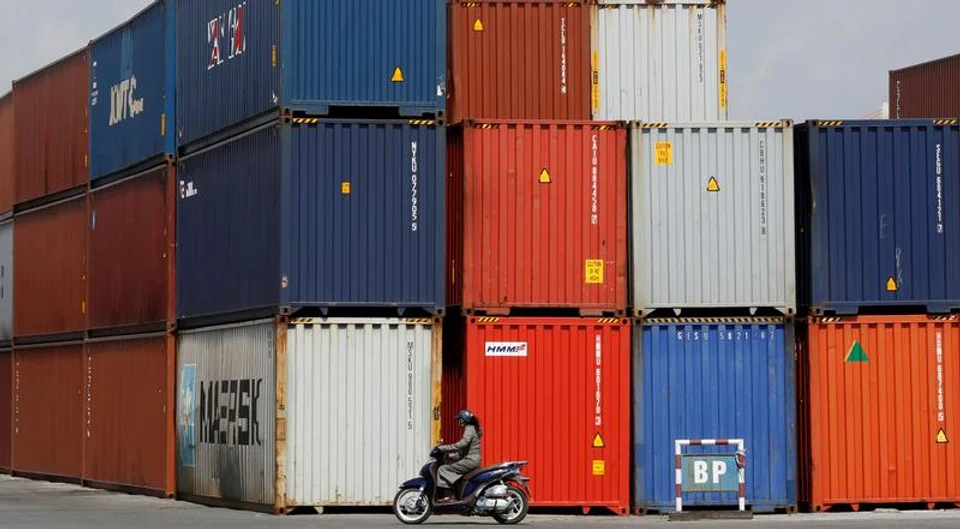
    • In Q2, the trade-reliant country’s exports contracted by 14.2 per cent from a year ago, and imports declined 22.3 per cent.
    • In Q2, the trade-reliant country’s exports contracted by 14.2 per cent from a year ago, and imports declined 22.3 per cent. PHOTO: REUTERS

    [HANOI] Vietnam’s economic growth improved in the second quarter of 2023 but remained slower than last year amid weakening external demand, despite the central bank’s accommodative monetary policies to support businesses.

    According to estimates released by the General Statistics Office on Thursday (Jun 29), gross domestic product (GDP) grew 4.14 per cent year on year in the second quarter. This was an improvement from 3.3 per cent in the preceding quarter, but much slower than the 7.72 per cent expansion in Q2 2022.

    The latest figures bring first-half growth to 3.72 per cent year on year – the second-lowest rate of first-half growth in the last 12 years, the agency noted in its report.

    The government’s official full-year growth target is 6.5 per cent. Before Thursday’s figures, Maybank economists said full-year growth was likely to fall significantly short of that, with their own forecast being 4 per cent.

    In Q2, the trade-reliant country’s exports contracted by 14.2 per cent from a year ago, and imports declined 22.3 per cent. For the first half, exports were down 10 per cent and imports were down 13.2 per cent year on year.

    “As elevated interest rates and tighter credit conditions continue to weigh on global demand, alongside waning economic momentum in China, we think Vietnam’s exports have little hope of rebounding significantly over the next few quarters,” noted Tan Theng Theng, assistant economist at Oxford Economics.

    Instead, Vietnam’s faster growth in Q2 was driven by the services sector, which grew 6.11 per cent.

    Retail, accommodation, food and beverage, and travelling services sectors were propped up by the recovery of the tourism industry. In the first six months, foreign visitor arrivals were 9.3 times that of the year-ago period.

    For the first half, retail sales of goods and services increased 10.9 per cent from a year ago, slower than the 12.2 per cent rate for the first half of 2022. In June itself, year-on-year retail sales growth eased to 6.5 per cent, down from 11.5 per cent in April and May.

    Month-on-month retail sales growth rates have plateaued out or barely picked up during the first six months, signalling cautious consumer sentiment amid labour market softness, analysts said.

    In Q2, the industry and construction sector grew 2.5 per cent, improving from the 0.4 per cent contraction in Q1 but still far slower than in preceding quarters. For the first half, the index of industrial production was down 1.2 per cent year on year.

    Construction activity picked up, growing 7.05 per cent year on year in Q2 versus 1.88 per cent in Q1. Analysts believe that this signals the resumption of real estate projects on the back of an acceleration in public infrastructure spending, as well as a let-up in the government’s anti-corruption campaigns and regulatory roadblocks in the property sector.

    To further spur economic growth, the State Bank of Vietnam (SBV) has already cut its key policy rates four times this year and lawmakers have reduced value-added tax on some sectors until year-end.

    However, credit growth remained weak at 3.13 per cent from end-2022 till Jun 20, versus 8.51 per cent for the year-ago period. SBV deputy governor Dao Minh Tu said this was due to softened demand for business spending and expansion.

    Tran Ngoc Bau, chief executive of Vietnam-based financial data platform WiGroup, said that the impact of accommodative monetary policies often lags by two to four quarters, largely subject to the will of the banking system and the root causes of the economic slowdown.

    He expects that the effects of looser monetary policy will show up in Q3 or Q4 in Vietnam. But further action is also required in both monetary and fiscal policy, such as greater public investment and cuts on administered prices of some goods, he added.

    “As the growth outlook remains gloomy and inflation stays under control, we think that the SBV will continue its rate-cutting cycle,” noted Oxford Economics’s Tan.

    For the first half of the year, Vietnam’s core inflation – which excludes volatile items and administered prices of goods by the government – was 4.74 per cent year on year.

    Overall, average consumer prices in the first six months rose 3.29 per cent year on year. The government has said that it aims to cap full-year inflation at 4.5 per cent.



