Vietnam’s Lam takes spotlight as party selects new leadership
Voting at the congress will take place behind closed doors, with mobile data and Wi-Fi signals blocked
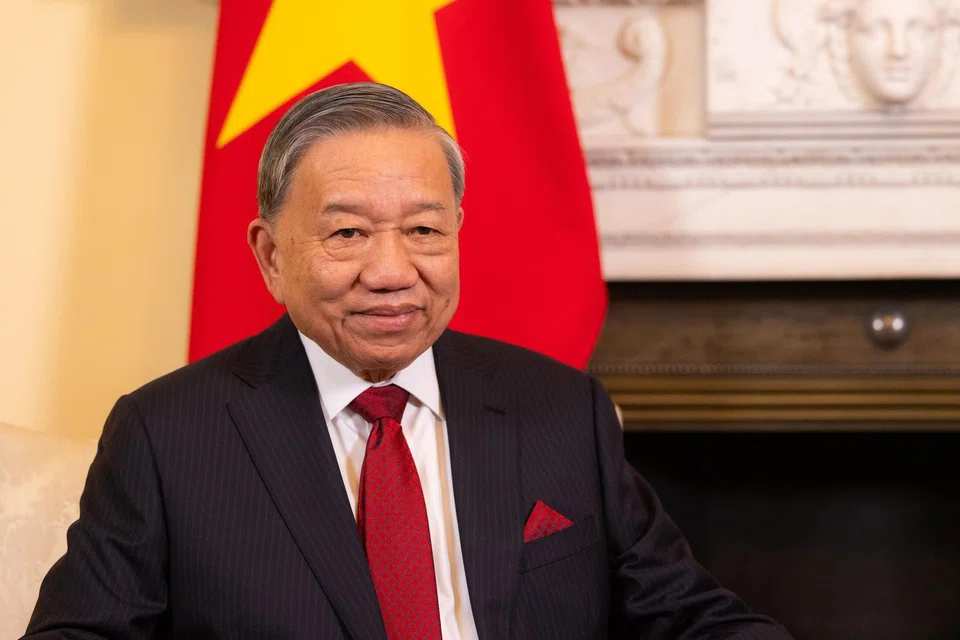
[HANOI] Vietnam’s Communist Party chief is set to take the stage on Tuesday (Jan 20) at the opening ceremony for the National Congress in Hanoi, a forum where the ruling party of the fast-growing South-east Asian nation will sign off on a new five-year development plan.
To Lam, 68, is expected to address delegates as he appears on course to secure a full five-year term as General Secretary and may also be put forward for the presidency, which would be a rare grip on two top levers of power. Several days of secret ballots under tight security will culminate in the election of a new Politburo and party chief later this week.
The political gathering comes at a crucial time for Vietnam, which is negotiating a tariff deal with the US while balancing relations with its biggest trade partner, Beijing. The nation remains a key beneficiary of supply chain shifts away from China, while a surge in shipments to the US has seen its trade surplus swell and draw the ire of US President Donald Trump.
It also offers Lam a chance to solidify the changes he’s pursued in his 18 months as party chief, including some of the most significant in four decades, such as slashing the size of the bureaucracy, shrinking the number of provinces by half and cutting a whole tier of local government.
Lam’s core reforms “are already in implementation”, said Pham Luu Hung, chief economist at SSI Securities. “The congress therefore functions less as a policy inflection point and more as a formal consolidation of measures already shaping the macro trajectory.”
Nominations for other key roles will also be settled and delegates will approve a new economic blueprint as Vietnam targets at least 10 per cent annual growth over the next five years. The export-dependent economy grew 8.02 per cent last year, despite the Trump administration’s 20 per cent tariff.
Ahead of the conclave, the government posted draft documents online that preview what could be in the five-year plan.
The party is seeking to boost “the development of the private sector as one of the most important growth engines” and focus on developing “large, strong Vietnamese private conglomerates”, it said. The introduction last year of so-called Resolution 68 elevated the private sector from an “important driving force”.
State-run companies, touted as a key pillar of the economy in the recently passed Resolution 79, will play a leading role in “guiding and orienting strategic direction”, the documents say, while also highlighting the need to innovate.


As Vietnam seeks to move up the value chain and target high-income status by 2045, the draft also focuses on the need to develop and own emerging industries, including semiconductors, automation and robotics.
“The Congress documents emphasise strategic autonomy, self-reliance and policy independence, without signalling inward-looking policies,” Hung said. “Vietnam continues to position itself as open to trade and investment, while seeking to reduce vulnerability to external shocks through diversification, domestic capability building and stronger institutions.”
Age exemptions
Just under 1,600 delegates will elect about 200 members to the Central Committee, which in turn will pick the Politburo and from that the general secretary. Nominations will then be submitted for the top government positions of president, prime minister and National Assembly chair.
Parliament will vote on the candidates when it convenes in April, but that step will mostly be procedural.
There’s also the question of age. Vietnam sets its official retirement ceiling at 65, although exemptions are often granted. Former Party chief Nguyen Phu Trong was 80 when he died, having been in the post for 13 years.
Voting at the congress will take place behind closed doors, with mobile data and Wi-Fi signals blocked. Press covering the event were issued with stringent guidelines prohibiting them from carrying mobile phones and recording devices inside the Congress hall. Thousands of police and military personnel have been deployed in the capital to ensure security. BLOOMBERG
Decoding Asia newsletter: your guide to navigating Asia in a new global order. Sign up here to get Decoding Asia newsletter. Delivered to your inbox. Free.
Share with us your feedback on BT's products and services