Vietnam’s move to source renewables directly a big boost to energy independence
The move is critical for the regional manufacturing hub to realise its ambition of hosting more global high-tech firms
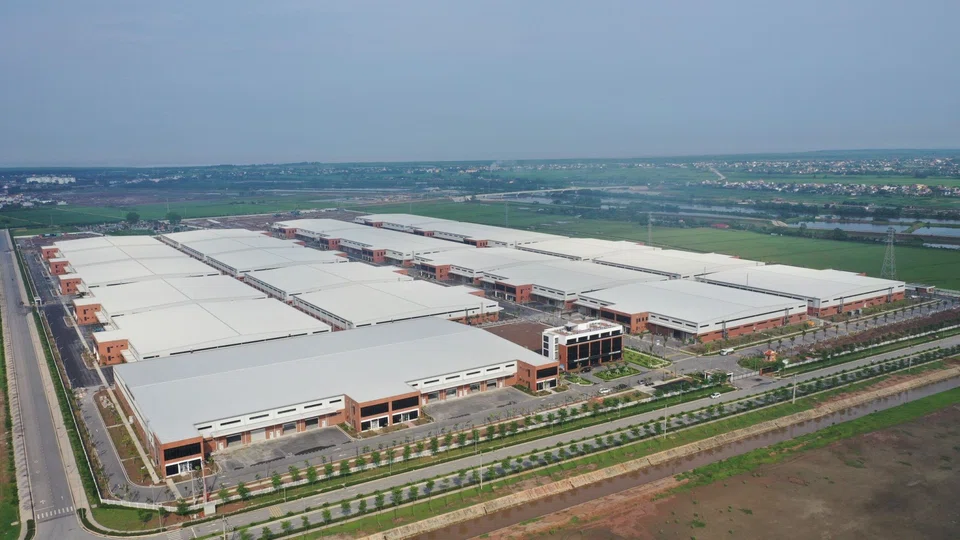
[HO CHI MINH CITY] Vietnam’s new regulations on direct power purchase agreement (DPPA) for renewable energy are generating a buzz among industrial parks as it offers a gateway to energy self-sufficiency and greener power for tenants.
However, industry players caution that while the potential is significant, several hurdles remain, including the need for clearer guidance from the authorities.
“Some industrial parks are working very quickly to be self-sufficient with their own energy,” said John Rockhold, the president of Pacific Rim Investment & Management.
“By 2030, they will be able to guarantee a round-the-clock electricity supply and a high percentage of that will be from renewable energy,” said Rockhold, adding that the new legislation does not stop industrial parks in the country from building their own grid and power supply.
Rockhold – who heads the power and energy working group at Vietnam Business Forum, a consortium that includes representatives from 17 foreign chambers of commerce – said that such energy reliability is a prerequisite for Vietnam to attract foreign investment in energy-intensive sectors such as chipmaking.
Last month, the country issued a new decree that allows large electricity consumers to buy power directly from renewable energy producers, either via private transmission lines or via the national power grid. This effectively put an end to the monopoly of state-owned distributor Vietnam Electricity (EVN).
Under the mechanism, licensed electricity retailers at industrial parks can purchase electricity from EVN and other onsite renewable sources and retail such output to tenants, with electricity prices being regulated by the Ministry of Industry and Trade.
New World Fashion Group’s London Business Park, which is still under construction in the northern province of Thai Binh, is among the pioneers looking to seize such a business opportunity.
In its initial plan, small factories can also buy renewable energy from the industrial park, regardless of whether they are consuming 200,000 kWh or more per month as prescribed in the decree for large electricity users.
Do Quang Thinh, technical director at Nam Tai Green Energy, a unit of New World Fashion Group, told The Business Times that the firm is going to install photovoltaic (PV) panels and battery energy storage systems across more than 320,000 square metres of ready-built factory roofs at the park.
At a designed capacity of about 10-15 megawatt-peak, the rooftop solar systems are intended to supply about 60 per cent of the total energy needed at the park, with the rest being provided by EVN.
“This will ensure electricity quality and ease pressure on EVN’s power grid, as well as support export-oriented manufacturers in meeting strict requirements for renewable energy certificates,” he said.
Since August 2023, Frasers Property Vietnam has also collaborated with Singapore’s SP Group to jointly develop and implement integrated smart energy solutions at the Binh Duong Industrial Park in southern Vietnam.
The partnership includes the installation of solar PV systems and a feasibility study to implement a green microgrid for the industrial park, aiming to provide greater power reliability and resilience for tenants.
Microgrids are localised independent energy systems within a small area such as a farm or an industrial park. Their key components include generation sources, energy storage systems, distribution networks and control systems.
In another option that utilises EVN’s national grid to guarantee green energy supply to tenants, FECON Corporation is looking to participate in DPPA to enable its two upcoming industrial parks in northern Vietnam to buy renewable energy from faraway sources.
The supply could come from the output of FECON’s own solar and wind farms, which are mostly located in the central and southern parts of Vietnam with a total installed capacity of over 500MW.
Industry players said such energy self-sufficiency models are needed as Vietnam continues to struggle to meet the growing demands for electricity.
In addition, the country has also committed to carbon neutrality in 2050 and wants to strengthen its position as a regional manufacturing hub by growing more energy-intensive high-tech industries.
Last summer, a severe drought led to the depletion of hydropower reservoirs, causing major shortages of electricity sources. Rolling blackouts then disrupted production in key industrial areas of some northern provinces during peak periods in May and June 2023.
Investment considerations
Thanks to the introduction of DPPA rules, industry players – which are not limited to industrial park developers – are also actively looking for merger and acquisition opportunities with existing solar and wind farms.
They are also setting up new renewable energy projects in Vietnam to participate in the direct power purchase mechanism, said analysts.
Since the feed-in tariff incentive to sell electricity to state utility EVN at favourable rates expired at the end of 2020, the establishment of large-scale solar farms and rooftop solar projects has been mostly halted.
This followed the boom that pushed the cumulative installed solar capacity in Vietnam to 16.5GW in 2020, from only 97MW in 2018.
“With the DPPA, it is largely positive because there is more clarity and we can invest in this space,” Thiagu Visvalingam, chief operating officer of Singapore’s solar independent power producer LYS Energy, said at an event in Ho Chi Minh City more than a month ago.
“However, a few challenges remain and need to be addressed. For instance, alignment with the PDP8 (Vietnam’s Eighth National Power Development Plan) and the implementation of the current DPPA,” he added.
Bui Tan Hung, head of gas and renewables in Vietnam at French energy giant TotalEnergies, added that renewable energy investors and developers also need to wait for EVN’s calculation of transmission fees to estimate the possible electricity rates they could charge when selling renewable energy to customers via the national grid.
It will determine the financial return for project developers and influence their investment decisions, he said.
In addition, to ensure the reliability and maximise the usage of intermittent energy sources such as solar and wind, investors are also weighing the utilisation of systems that can store excess output for later use or sale. The main obstacles, however, lie in the high cost of the battery equipment and the absence of clear technical requirements set by the authorities.
On top of that, the ability to sell power to private consumers as well as inject surplus power into the grid requires robust and strong infrastructure, which still needs significant improvements and investments from the state, said industry players.
“A lot of work needs to go into this and we have to wait for EVN to come up with a structure for us,” said Visvalingam.