Vietnam’s speedy transition to being an aged society opens new doors for investors
Jamille Tran

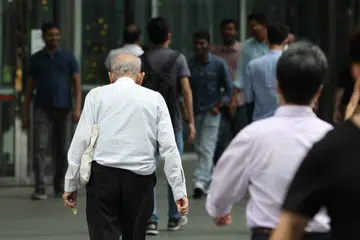
[HO CHI MINH CITY] Much has been said about how a sizeable chunk of Vietnam’s population is young and enterprising, but policymakers are also coming to terms with the fact that the country is also one of the most rapidly ageing in the world.
According to the United Nations Population Fund (UNFPA), those aged 60 and above make up about 11.9 per cent of Vietnam’s total population of 100 million in 2019. By the year 2050, this rate will more than double to 25 per cent.
The World Bank said that Vietnam became an ageing society in 2015 and will officially be an aged one by 2035. The pace at which it is moving towards an aged population – in the space of just 20 years – is much faster than the likes of Japan, Italy, Sweden and France.
On its part, the government – well aware of the challenges of a greying society and the higher costs involved – is eager to fast track the country’s development. There is a national plan to turn Vietnam into a developing country with modern industrial sectors and reach the upper-middle income status by 2030, and to be high-income by 2050.
Getting old before getting rich
While the proportion of people aged 65 and above in Vietnam is the third highest in South-east Asia, after Thailand and Singapore, Vietnam’s income per capita of US$4,100 in 2022 is ranked just sixth in the region.
This has led the World Bank to warn that Vietnam risks being in a situation where people “get old before they get rich”. Put simply, the population is ageing at a rate that does not match the growth of the country’s per capita income level.
Observers say this is placing a strain on many areas such as the social insurance network. Currently, only about one in three Vietnamese retirees receive pensions, social insurance benefits or monthly social allowances.
A 2019 survey found that 81 per cent of elderly Vietnamese who rely on financial support from either their children or grandchildren as their main source of income, a sharp increase from 32 per cent in 2011.
Investment opportunities
The fact that Vietnam is ageing so quickly has not been lost on local and foreign investors, many of whom are seeking new and lucrative opportunities in private healthcare and nursing homes, among other areas.
In July, Singapore’s mainboard-listed healthcare group Thomson Medical Group acquired FV Hospital – a multi-specialised healthcare facility in Ho Chi Minh City – for as much as S$381.4 million. This made it the largest healthcare deal in Vietnam to date, and the biggest in South-east Asia since 2020.
A month later, South Korea’s Dongwha Pharm spent nearly $30 million to acquire 51 per cent of Trung Son Pharma, a company that operates a chain of pharmacies in Vietnam.
And back in 2020, Singapore’s sovereign wealth fund GIC led a US$203 million investment deal into private hospital operator Vinmec, which is part of Vietnam’s largest private conglomerate Vingroup.
Analysts said these mega deals reflected the strength and potential of Vietnam’s growing private healthcare market, which has seen greater expenditure over the years due to the rising middle class, an ageing population, as well as an increase in the number of expatriates.
The Vietnam Association of Realtors wrote in a March 2023 report that Vietnam has many advantages – vast natural landscapes, culture and a relatively low cost of living – when it comes to building nursing home projects in the suburbs of the country’s large cities.
The association also said that it expects as many as 5.3 million overseas Vietnamese to one day return to their hometowns in Vietnam during their retirement years.
It added that there is potential to develop nursing home properties that are similar to “luxury resorts”, which would appeal to the expanding middle class that have greater spending power.
Challenges for Ho Chi Minh City
As the most populous city and the largest contributor to Vietnam’s gross domestic product, Ho Chi Minh City has a larger role to play when it comes to maintaining a favourable demographic structure to grow the national economy, observers said.
This is easier said than done, however, as Ho Chi Minh City’s population of over nine million is also ageing fast due to a decline in mortality, falling birth rates and a trend of people marrying later and starting families. In 2020, more than one in 10 people in the southern metropolis were aged 60 and above.
According to official data, Ho Chi Minh City has the lowest total fertility rate of all cities and provinces in Vietnam at 1.39, down from 1.53 in 2020. The national level stood at 2.026 births per woman last year.
The average lifespan of a resident in Ho Chi Minh City is 76.2 years, compared to the national average of 73.2 years, although the healthy life expectancy is only about 64 years.
Pham Chanh Trung, head of the city’s department of population and family planning, was quoted in a Vietnam News report in August as saying that the low fertility rate will pose risks of a future labour shortage.
“The low birth rate will have a significant impact on the population structure, as the proportion of the young people decreases while the proportion of elderly increases. This will accelerate the ageing process of the city’s population,” he added.