Vietnam’s textile and garments industry doubles down on eco-friendly fibres to boost exports
Jamille Tran
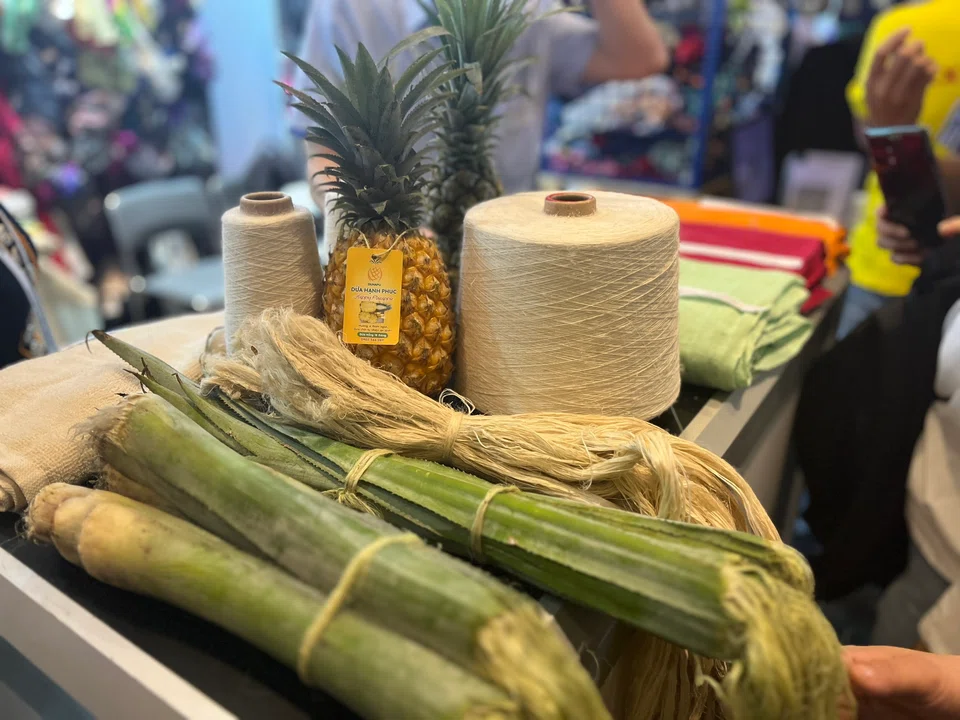
[HO CHI MINH CITY] When pineapples are harvested in Vietnam each year, tonnes of leaves from the plants are either left in the field to decompose or burned when the fields are cleared.
This led to Vu Thi Lieu, a professor at a university in Hanoi, recently appearing on a local TV programme where she did a presentation on the technology of producing fibre and yarns from these leaves.
And with Vietnam’s pineapple plantations occupying 40,000 hectares – Lieu thinks the exact size could be as large as 100,000 ha – there are plenty of opportunities for Vietnamese companies to turn this eco-friendly by-product into fibre and fabrics.
When used to make clothes, pineapple leaf fibre is known for its strength in sweat absorption, breathability and durability. This fibre is also used to create leather-like fabric for accessories or coarse home textiles.
Nguyen Thanh Ngan, deputy head of investment and development at Vietnam Textile and Garment Group (Vinatex), said that Vietnam has “favourable natural conditions” for many plants that are sources of natural fibre such as linen, jute, banana leaves and pineapple leaves.
While Vietnam has much potential to produce sustainable yarns and fabrics from plants, Ngan noted that many plantations are fragmented and operate on a small scale.
“The products are mainly produced manually. (The plantations) are not ready for large-scale manufacturing to serve the global fashion industry due to unsteady material sources,” she said.
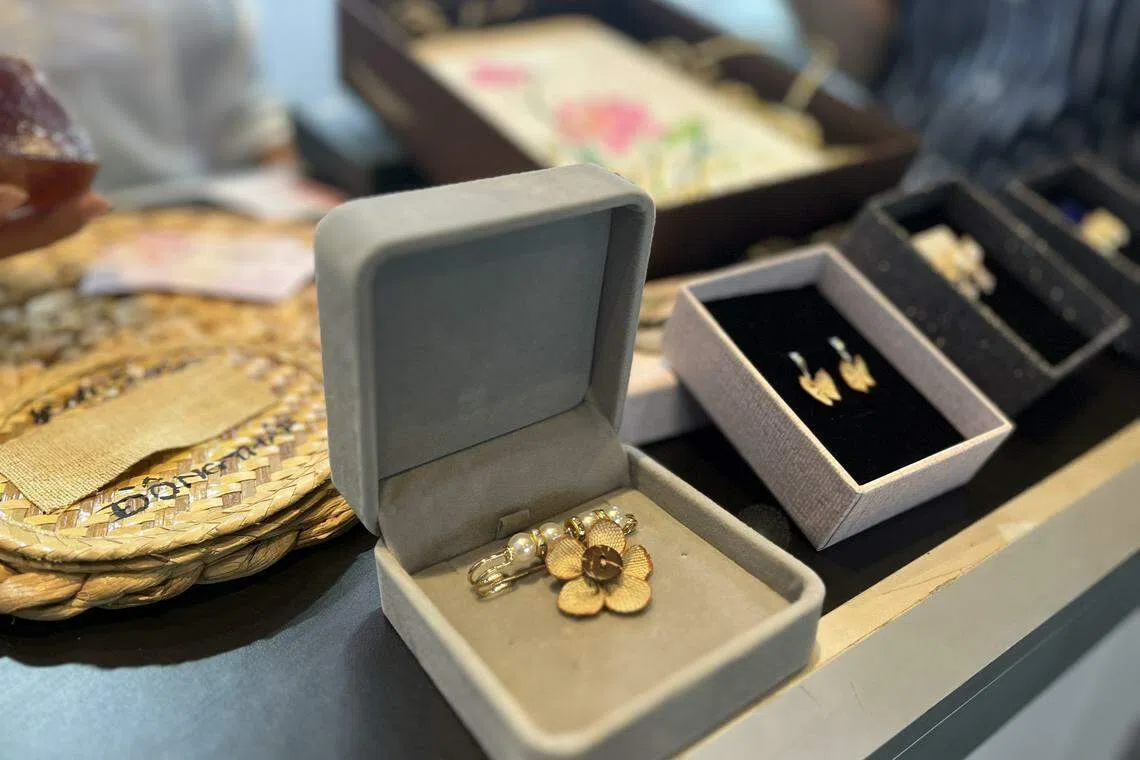
While there are more local companies these days that are trying to promote their yarns and garments using sustainable sources originating from Vietnam, the textile and garment industry still relies heavily on imported fabric and materials for production.
At an international fair of premium fabrics held in Ho Chi Minh City in March, three-quarters of the 90 booths were run by firms from China and South Korea.
In 2022, Vietnam imported nearly US$28 billion worth of fibre, fabrics and auxiliary materials, which are largely used to manufacture clothing and then exported around the world.
According to latest available data, the export value of Vietnam’s textiles and garments reached US$37.6 billion last year, an increase of about 14.7 per cent from 2021. This ranks Vietnam as the world’s third-largest exporter of clothing, behind China and Bangladesh.
The government has previously said that it hopes the industry’s exports can reach up to US$52 billion in 2025 and US$70 billion by 2030.
Vietnam’s textiles and garments sector has received a boost in recent years thanks to several free trade deals such as the 11-member Comprehensive and Progressive Agreement for Trans-Pacific Partnership and the European Union-Vietnam Free Trade Agreement.
This means companies in Vietnam have more opportunities to widen their export market with significantly lower tariffs. But in order to enjoy these favourable trade conditions, businesses must meet rules of origin requirements, meaning that textile products “from the yarn onwards” or “from the fabric onwards” must originate from Vietnam.
In December, Vietnam’s government announced a national strategy to boost the industry’s localisation rate to 60 per cent during the 2026-2030 period. It also aims to promote the transition towards a more sustainable development of the industry that follows the circular economy model by 2035.
To realise these goals, the strategy places greater emphasis on investments into the production of high-quality and eco-friendly fibres, yarns and fabrics to serve domestic demand and gradually reduce the import of materials.
Thien Phuoc Ramie Group is an example of a local company that has stepped up its game to be more sustainable in its business. It is able to produce natural fabrics from homegrown ramie plant fibre on an industrial scale without using chemical fertiliser or pesticides, said its chairwoman Do Thi Thuy.
Ramie fibre is mostly produced in China, but Thuy said Vietnam has the right weather and soil conditions that are ideal for producing thinner and higher-quality ramie fibre.
When the new green ramie variety called AP1 was certified by Vietnam’s agricultural ministry in 2018, Thuy’s company operated large fields in 12 provinces to produce the fibre and exported it overseas to countries such as China and Japan.
“Green ramie planting helps prevent erosion, enriches the soil, creates jobs for local farmers as well as strengthens the sustainable material supply for the global fashion industry,” said Thuy. “I want to double down on this to help Vietnam’s textile industry become self-reliant. The domestic demand alone is already a huge market.”