



Vietnam’s travel players parry rising costs and stiff competition amid industry’s rebound
Jamille Tran
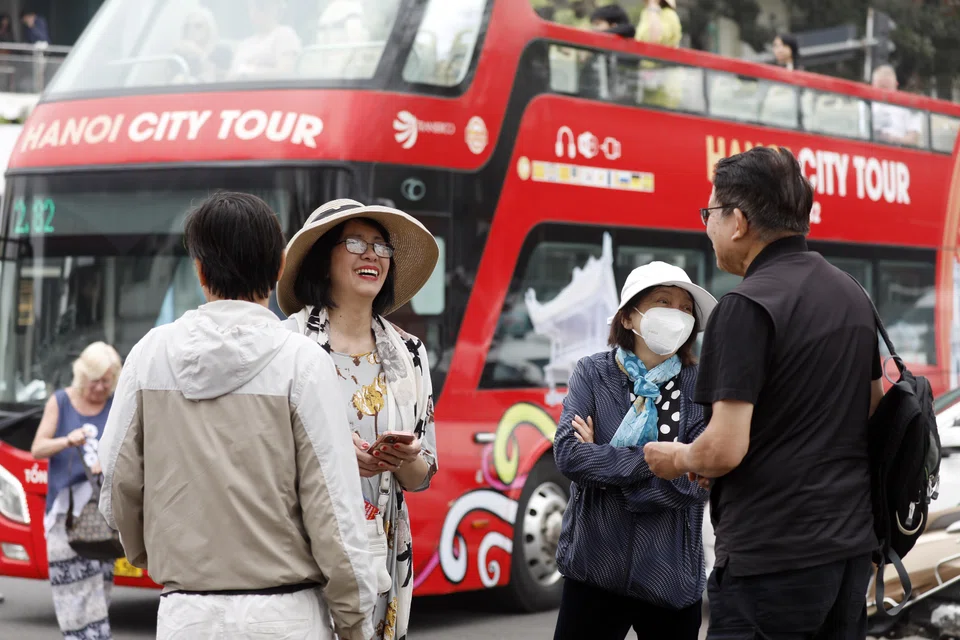
[HO CHI MINH CITY] Vietnam’s tourism industry is losing steam as high costs and stiff competition throw up challenges to local market participants. This is even as tourist arrivals remain below what they were before the Covid-19 pandemic hit.
Tran Mai Anh, chief executive of Babylon M, a spa service provider to hotels, said that average room rates were between 70 and 80 per cent of pre-pandemic levels.
“Vietnamese tourism has not fully overcome the crisis period yet and (hoteliers) need to vie with each other for every single guest,” Anh said. “Hotels and F&B services are returning extensively this year and looking to provide new services, adopt technologies, implement infrastructure upgrades or offer discounts to lure customers back.”
According to Vietnam’s statistics office, 1.8 million foreign tourists visited Vietnam in the first two months of 2023. This is 36.6 times what it was in the same period in 2022, but less than 60 per cent of the same period in 2019.
In November, Vietnam placed last among 100 Asian countries and territories surveyed in the post-pandemic international tourism recovery ranking conducted by travel analytics company ForwardKeys.
Receiving about 3.6 million foreign tourists in 2022, the nation missed its target of 5 million international arrivals. Thailand, Indonesia and Singapore all exceeded their goals, seeing 11.15 million, 5.2 million and 6.3 million foreign visitors last year, respectively.
Current visitors to Vietnam mostly come from South Korea, the United States, India and other South-east Asian countries such as Singapore and Malaysia. Tourists from China are set to return only from this month, while the number of Russians visiting has plunged due to the ongoing Russia-Ukraine war. Nha Trang and Da Nang, traditionally hotspots for Russia and China tourists, are in a tough position.
“Companies need to look for potential new markets because of updated immigration policies, rising airfares and changing customers’ demands,” said Nguyen Cuong Bach, CEO of tourism-focused marketing agency Asia Lion. “Marketing to businesses also needs rebuilding because of shuffling in partners during the past pandemic-stricken years.”
Meanwhile, travel players are grappling with higher operating costs on the one hand, and weakening consumer spend on the other. This is especially so in the lower end of the market, where uncertain economic conditions are crimping tourist spend.
Luxury boom
The bright spark in Vietnam’s tourism industry is the luxury segment. Jeremiah Ong, a 35-year-old Singaporean who has lived in Vietnam for eight years, said the room rates of five-star hotels and resorts are on the rise while cheaper hotels offer slightly lower prices than before.
“Full bookings and higher prices are perhaps indicative of the demand for luxury travel in Vietnam,” Ong said.
Some of that demand is coming from domestic tourists, as Vietnamese grow wealthier. According to consultancy Knight Frank’s Wealth Report 2022, the number of Vietnamese worth at least US$30 million is forecast to grow by 26 per cent, and cross 1,500 by 2026.
To capture the luxury dollar of international tourists, however, Ong expects the tourism industry will need to show several improvements.
One is the limited command of English among most staff members. Unfriendly immigration policies, lack of clear signage in English and inadequate control of touts at airports also often disappoint prospective visitors, he said. The variety of services and offerings to international tourists, by and large, also remained the same over the past years.
“I think there is insufficient effort to change the image of Vietnam in the international tourism arena,” he added. “I feel like I am more welcome in Thailand or Malaysia, than in Vietnam.”
According to the government’s strategy on tourism development, Vietnam aims to become a nation with a developed tourism sector, and one of the top 30 countries worldwide in terms of tourism competitiveness by 2030.
Efforts appear to be underway on this. Speaking at a national conference on Mar 15, Prime Minister Pham Minh Chinh said that in order to accelerate the sector’s recovery, Vietnam will increase the number of countries exempted from visas, enable extension of stays with reasonable fees and boost the granting of e-visas.






