



Vietnam's winding road to a renewable energy future
Hanoi
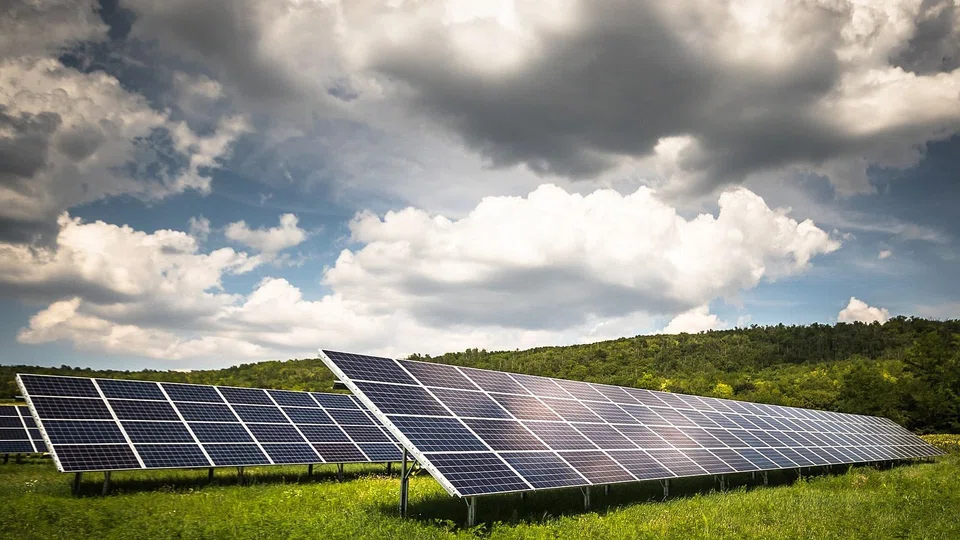
VIETNAM currently boasts the most solar power of any South-east Asian nation today with 16.6 gigawatts of installed capacity as of 2020.
Government policy has been a key driver of this renewable energy transition, with feed-in tariffs (FITs) playing a big role in the overall take-up of solar technology.
But it hasn't been all good news, with infrastructure woes limiting the effectiveness of many of these solar projects.
As a result, Vietnam's transition to renewable energy is set to slow down considerably over the next decade although renewable energy's share of Vietnam's power production is still expected to grow.
Vietnam has always been a regional leader in the renewable energy field, due to a number of large-scale hydro projects around the country.
In fact, back in 2012, hydropower production met 48 per cent of the country's energy needs.
But that number has since dropped significantly to just 26 per cent in 2020.
Despite an estimated 35 gigawatts of capacity, Vietnam is currently exploiting just 19-21 gigawatts of hydropower, according to the International Hydropower Association.
Further development of hydro resources will be limited. Drought and water shortages, frequently linked to policy upstream in neighbouring Cambodia, Laos, and China, has created market uncertainty for investors.
Coal has taken up a lot of the slack, but it is not popular among Vietnam's burgeoning middle class.
The environmental impact of coal-fired power plants can be acutely felt in cities like Hanoi, where air quality frequently ranks among the worst in the world.
A shift to solar energy, has therefore, been enthusiastically welcomed.
Two key policies have been at the forefront of Vietnam's solar boom - FIT1 and FIT2.
FIT1, which was approved in 2017, required state energy provider EVN to buy electricity from solar projects at 2,086 dong (12 Singapore cents) per kWh for 20 years.
This led to a huge boom in solar facilities with solar installations jumping from 106MWp in 2018 to about 5.317GWp when it expired in 2019.
FIT2, which succeeded FIT1, was similar except that it was skewed towards rooftop solar as a means to reduce the need to move electricity through an ageing grid to where it needed to be.
Under the FIT2 policy, solar power was purchased at a slightly lower rate than FIT1 of 1,943 dong per kWh.
Floating solar and ground mount projects were paid slightly less again at around 9.6 Singapore cents per kWh and 10 Singapore cents per kWh respectively.
This second policy saw a continued boom in solar power investments with over 16 gigawatts of installed capacity registered at the end of 2020.
This solar power boom, however, has not been without its fair share of challenges.
Poor planning and a failure to upgrade power infrastructure has limited how much of Vietnam's installed capacity can actually be utilised.
As a result, as The Business Times reported in September 2021, solar energy producers have been asked by the state electricity provider EVN to reduce their output by up to 70 per cent in some instances.
FIT2 expired at the end of 2020, and Vietnam's solar industry appears to be in a holding pattern until these kinks can be worked out.
Attention has now shifted to the upcoming Power Development Plan 8, which will lay out a blueprint for the expansion of Vietnam's energy production up to 2030.
Its most recent draft, released in October 2020, called for an increase in baseload coal and gas power which will make up the bulk of Vietnam's energy supply.
This has raised some eyebrows. Not only could this be detrimental to Vietnam's green power credentials, but it could also put in jeopardy Vietnam's COP26 commitment to net-zero carbon emissions by 2050.
That said, this is only a draft and may be subject to further changes as feedback comes in from relevant stakeholders.
TRENDING NOW

OCBC mobile, online banking services restored after Friday afternoon disruption

SGX CEO Loh Boon Chye to step down; succession planning under way

Waymo founder predicts ‘landslide’ robotaxi adoption in Singapore, driven by high car costs

Vietnam’s northern provinces, not Hanoi or Ho Chi Minh City, are powering near 10% GDP growth

