



VinFast’s blockbuster listing puts spotlight on Vietnam’s manufacturing capabilities
Jamille Tran
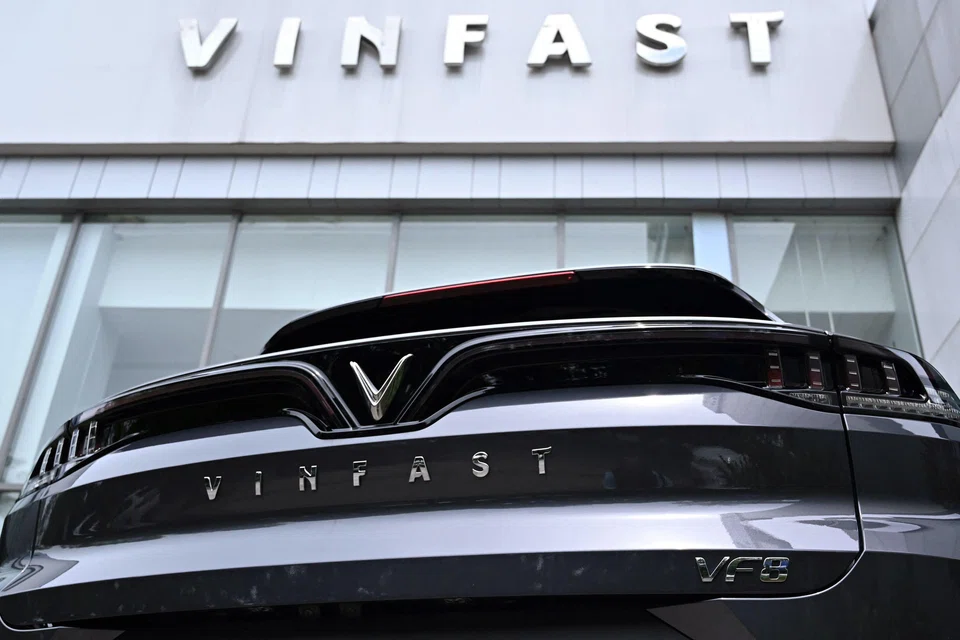
[HO CHI MINH CITY] Not long after VinFast – Vietnam’s most famous electric-vehicle (EV) maker – made its Nasdaq debut in mid-August, its share price soared to the extent that the company had a valuation greater than legacy US auto giants Ford and General Motors.
At one point, VinFast became the world’s third most-valuable automaker, with a market capitalisation of nearly US$200 billion – behind only Tesla and Toyota.
While a minuscule float amplified the unpredictable price volatility – 99 per cent of VinFast’s shares are held by three companies, including parent Vingroup – analysts said the hype was driven mainly by EV-focused retail investors.
These investors, they said, are constantly on the lookout for the next big thing in Asia’s fast-growing EV market, fuelled by increasing demand and generous government incentives in China, India, Indonesia and Thailand.
“The EV market in Asia is massive, and Wall Street has its eyes on the leaders in this next frontier,” said Daniel Ives, the managing director of US-based Wedbush Securities. “VinFast is the Tesla of Vietnam and Asia in the eyes of many.”
Lukas Neckermann, the managing director of Neckermann Strategic Advisors, a mobility-focused consultancy based in London, said: “The equity success of Tesla and, to a lesser extent, (China’s) BYD (has) fuelled an irrational exuberance. Investors are ploughing into almost any... EV manufacturer irrespective of sales, state of development, or provenance.”
On the surface, VinFast’s initial public offering looks like a runaway success. But the reality is that the company posted a net loss in 2022, and its EV business has yet to turn a profit.
Therefore, market watchers and investors are waiting for a clearer track record to emerge in order to make sense of the company’s eye-popping valuation.
The valuation varies at around 40 times to 100 times VinFast’s projected revenue in 2023 of US$1.88 billion – a figure reported by Bloomberg at an investor presentation in June.
It is worth noting, however, that VinFast has not actually sold that many cars in the US, although that could change in the coming years after the company has completed its new plant in North Carolina.
Of the 3,000 vehicles shipped to the US as at June this year, just 137 have been sold. The reviews have been mixed, with some buyers giving poor reviews and questioning the quality of the cars. In May this year, VinFast had to recall its first batch of EVs in the US due to a display malfunction that posed safety risks.
Even so, there are many investors who are optimistic about the company’s long-term prospects, given how the high-profile Nasdaq listing has placed the spotlight on Vietnam’s manufacturing capabilities – not just in the auto industry, but other sectors too.
In recent years, Vietnam has emerged as a beneficiary of the global production shift away from China amid escalating Sino-US trade frictions and disrupted supply chains caused by the Covid-19 pandemic.
Wedbush’s Ives cited Vietnam’s strategic position in South-east Asia, its low-cost but highly-skilled workforce, numerous free trade agreements, and incentives for foreign direct investments as main reasons why there is so much attention on the country these days.
“VinFast represents the first global play on this front,” he said.
Neckermann said: “(If VinFast) can get it right, it (will) become a rising tide that will lift Vietnam’s entire manufacturing sector. But too many recalls, not enough sales, or even an outright failure of the company, and it risks becoming the Yugo of this decade.”
The Yugo was a small car made in the former communist nation of Yugoslavia, and it entered the US market in the 1980s. While it was inexpensive, it was widely derided as poorly engineered, ugly and cheap, with some going so far as to describe it as the “worst car in history”.
Cost competitiveness
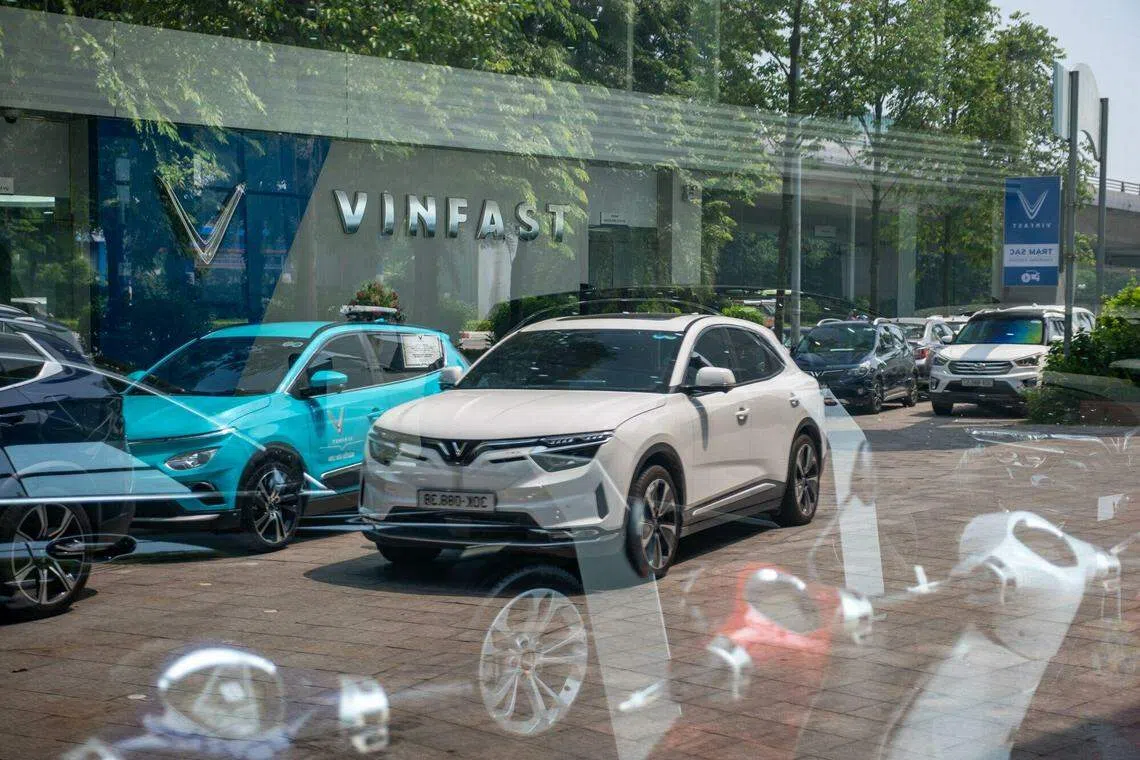
In terms of pricing, VinFast’s VF8 model (after including US federal subsidies) costs almost US$7,000 more than Tesla’s Model Y. Tesla also recently launched cheaper versions of its Model S and Model X.
Neckermann pointed out that VinFast cars eventually manufactured in the US will likely be eligible for EV tax credits, a sharp contrast to the hefty tariffs and trade restrictions imposed on Chinese EV manufacturers.
Le Thi Thu Thuy, VinFast’s chief executive, told Reuters in an interview in August that she felt her company’s EVs were priced competitively, but there were plans in place to bring prices down.
“There is no other (automaker) in the world that has as low a cost base as in Vietnam,” she said. “All of that is leading to cost reduction in the future.”
The success on this front will largely depend on its sales numbers. VinFast sold 24,000 cars globally last year, and 16,000 in the first seven months of 2023.
VinFast has set a target of selling 50,000 units worldwide this year. This number, however, is just a fifth of the production capacity of its Vietnam plant. As such, industry players said VinFast must broaden its reach to cover the US, Europe and the rest of South-east Asia in order to get anywhere near its aim of breaking even by end-2024.
Nguyen Manh Dung, the head of institutional equity sales at Maybank Investment Bank in Vietnam, said one advantage is that VinFast is among the few EV makers that build and ship their own products around the world.
Despite the fact that VinFast was established only in 2017 and has been in the EV business for less than two years, it has already managed to sell its cars in the US – a feat that regional auto hubs such as Thailand and Indonesia have yet to accomplish, noted Dung.
“If VinFast can lead the wave and elevate Vietnam from the bottom of the global supply chain to somewhere in the middle or even at the top, it would be a very good indication of the start of a new era of industrialisation in Vietnam,” he said.
TRENDING NOW

He built the Vingroup empire. Now South-east Asia’s richest man is handing some key roles to his sons
China’s Pinglu Canal likely to benefit Singapore, other South-east Asia ports in the long term
Suntec Reit to increase Singapore focus, sell three Australia properties

Despite the de-dollarisation debate, demand for dollar liquidity in Asia is growing

