Vingroup’s shares surge 1,000% to overtake regional heavyweights including Singtel and JD.com
Vingroup’s blistering rally has made it the biggest company within frontier markets, and one of the most expensive across Asia
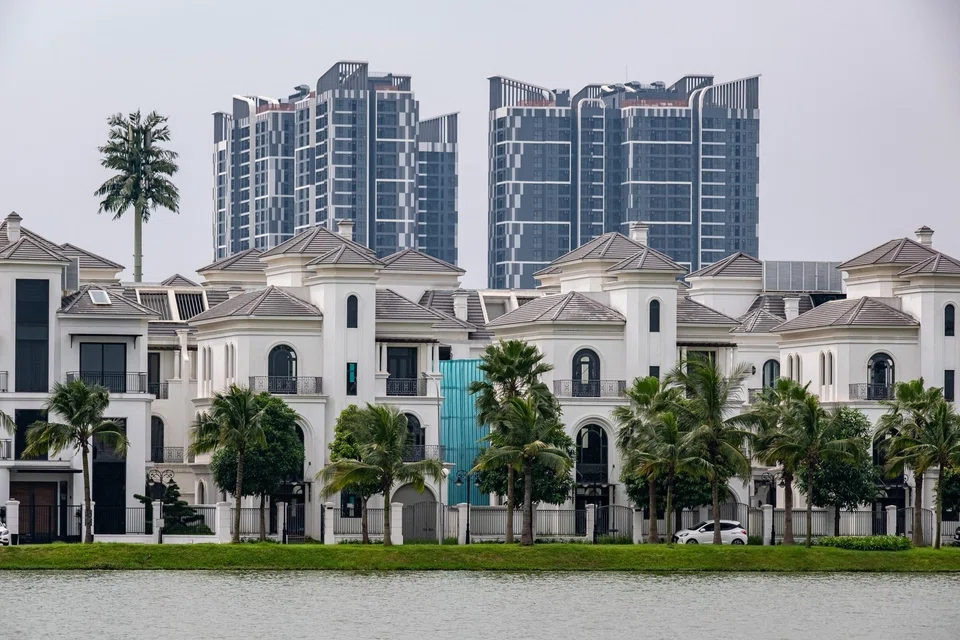
[HANOI/MUMBAI] Unexplained gains in Vietnam’s biggest stock have confounded seasoned analysts and set off a frenzy among retail traders, raising doubts about how long the rally can last.
Up 1,000 per cent from the start of 2025 to its peak just two weeks ago, Vingroup’s blistering rally has made it the biggest company within frontier markets, and one of the most expensive across Asia. The conglomerate is now worth more than any Indonesian company and even surpasses regional heavyweights Singtel and JD.com.
Analysts point to a mix of aggressive retail buying, improving prospects at key subsidiaries and optimism ahead of an imminent market upgrade by FTSE Russell as drivers. Yet global money managers remain wary, questioning whether earnings growth can keep pace with valuations that now stand in sharp contrast to peers by most conventional metrics.
“Current valuations imply very high expectations for future execution, funding conditions, and long-term business expansion,” said Marco Martinelli, a partner at Turicum Investment Management, a Vietnam-dedicated investment and research firm. At these levels, Vingroup-related stocks are less compelling than other opportunities in the nation.
Backed by billionaire Pham Nhat Vuong, Vingroup spans electric vehicles, transport, real estate, hospitality and tourism. Its reach has grown so big that it now accounts for about one-third of the benchmark VN Index. While valuations have retreated from this year’s high, the stock still trades at 70 times forward earnings, compared to 12 times for the broader market.

Such dynamics are not particularly unusual in smaller markets, where thin liquidity can drive volatility. Still, Vingroup’s rapid ascent and its outsized weighting, risks distorting South-east Asia’s best-performing market over the past year. Passive investors will also have to grapple with an inflated benchmark constituent when Vietnam is upgraded to emerging-market status in September.
The key question now is whether the company’s fundamentals can justify that scale. For earnings to keep pace, Vingroup is relying heavily on Vinhomes. In the first quarter, the property arm posted net income of 25.6 trillion dong (S$1.3 billion), roughly ten times higher than a year earlier, compared with the group’s consolidated profit of 7.3 trillion dong. Those gains are increasingly needed to offset losses at US-listed EV maker VinFast Auto, as well as rising debt across the board, part of which is being funnelled into the carmaker.
As Tundra Fonder’s chief investment officer Mattias Martinsson puts it, the company has a “valuation excess of over US$30 billion”, which should imply a 70 per cent lower fundamental value.
The caution is visible in market positioning. Foreigners have offloaded US$2.7 billion of local equities so far this year, nearing the US$3.3 billion outflow from Indonesia, where markets are grappling with uncertainty over a potential MSCI market downgrade. With only a handful of companies with more than a US$10 million a day turnover, often seen as a minimum threshold for investability, selling is likely concentrated in the biggest names.
SEE ALSO





Leverage may also have played a role, with margin loans hitting a record 407 trillion dong in the first quarter, according to Fiingroup.
Vinhomes’ growth, though, may also underscore the broader economic trajectory in Vietnam, where GDP expanded 7.8 per cent in the first quarter. The country’s stock market has rallied 45 per cent since the start of last year, in part on optimism around the FTSE upgrade. As the largest listed company, Vingroup will likely receive the lion’s share of any increase in passive flows, making it an easy proxy bet for investors seeking exposure to the theme.
In a statement to Bloomberg News, Vingroup said that the rise in its shares reflects a positive macroeconomic outlook for Vietnam and the government’s emphasis on the private sector’s growth.
That’s putting at least some market watchers at ease. Even if valuations look stretched under traditional measures, “technical flows and long-duration growth expectations may continue to support the stock price in the near-to-medium term”, said Nguyen Anh Duc, head of institutional brokerage at SBB Securities.
The rally’s durability may ultimately hinge on whether fundamentals can catch up with inflows, analysts say. With valuations stretched, any shift in sentiment could just as quickly reverse the momentum that propelled Vingroup to dizzying new heights.
There’s a credible near-term case for why Vingroup can trade higher, according to Quynh Cao, head of institutional business at VNDirect Securities. Vinhomes’ land project deliveries and upcoming dividend distributions are a positive factor.
Still, “if Vinhomes project monetisation slows, or VinFast losses persist longer than expected, the compression will be fast”, she said. “This is a stock priced for a future that has to arrive on schedule.” BLOOMBERG
Decoding Asia newsletter: your guide to navigating Asia in a new global order. Sign up here to get Decoding Asia newsletter. Delivered to your inbox. Free.
Share with us your feedback on BT's products and services