



Weaker ringgit, easier approvals boost appeal of Malaysian property for China investors
Tan Ai Leng
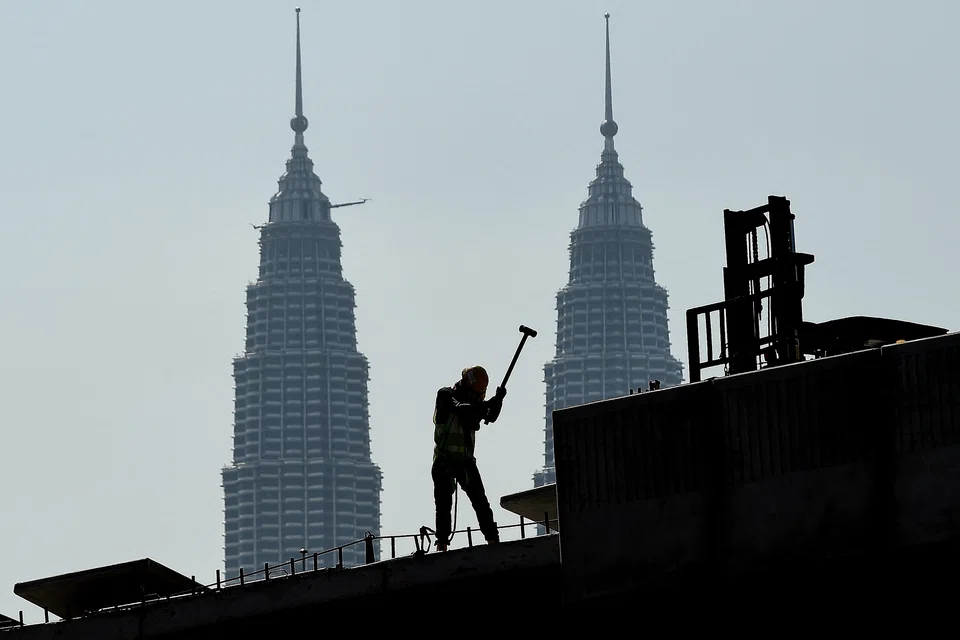
[KUALA LUMPUR] Malaysia’s commercial and residential property market is regaining its allure with foreign investors, with the draw being the weakening ringgit and the country’s strategic location in the region, property consultants said.
Malaysia’s membership in the Regional Comprehensive Economic Partnership (RCEP) free trade agreement is also a key selling point, as it opens up the doors for investors to do business in other key markets in South-east Asia and beyond, they said.
Kashif Ansari, the co-founder and group chief executive officer of Malaysia-based real estate firm Juwai IQI, said Chinese commercial property investors have turned their focus from traditional places like the US and Australia to South-east Asia, with Malaysia, Indonesia and Thailand their top destinations.
In Malaysia, the preferred places for such investors are Johor, Selangor and the capital Kuala Lumpur. Kashif added that it is also “relatively easy” for Chinese investors to get the necessary approvals for investment in Malaysia, compared to North America or Europe.
“Chinese investors consider Malaysian commercial property appealing because business ties with China are growing. Also, Malaysia’s strong economy provides opportunities in development land, tourism facilities, industrial parks, data centres and industrial and logistics facilities,” Kashif said in a report released by Juwai IQI on Jun 13.
Johor’s appeal is its close proximity to Singapore, and the fact that the Johor-Singapore rapid transit link remains on track for completion by 2026.
The Juwai IQI report forecast that there will be an additional 50,000 people choosing to adopt a “cross-border lifestyle” by 2030, and this will in turn spur greater interest for commercial real estate in Malaysia’s southernmost state.
Allan Sim, the executive director of capital markets at Knight Frank Malaysia, cited Penang and Kedah as two other key states that are attracting foreign property investors due to the bustling tech sectors there.
Consultants also said that Malaysia’s residential market is seeing lots of activity too, in the months following China’s reopening in January.
Jonathan Lee, the group CEO of international real estate company Keller Williams in Malaysia, said there have been numerous enquiries from Chinese buyers on various types of properties in Malaysia, with the majority eyeing luxury residences.
“We saw some big deals concluded recently, priced between RM10 million (S$2.9 million) and RM15 million,” he told The Business Times. “The majority (of the Chinese investors) are looking at accumulating quality assets in this region, with Malaysia being one of the preferred locations for its matured economic development and relatively cheaper prices compared to other countries.”
Apart from Chinese investors, Knight Frank’s Sim said his firm has fielded enquiries from investors in Taiwan and Europe, who are looking to diversify their portfolios in Malaysia and around South-east Asia.
“Most are buying for investment while others are looking at commercial properties that fit their companies’ regional expansion plans, he said.
What’s more, the weakening ringgit – one of the worst-performing currencies in Asia this year – “also sweetens the deal”, said Sim.
The ringgit has fallen by nearly 5 per cent to RM4.63 against the US dollar, from RM4.40 at the start of this year. Against the Singapore dollar, the ringgit has also declined by close to 5 per cent to RM3.45, from RM3.29 on Jan 1.
While Kashif believes that the ringgit will bounce back in the coming months, he said that investors who purchase Malaysian property assets today will benefit in the long term.
On the whole, Malaysia had a total of 389,107 property transactions worth RM179 billion in 2022, according to data from the National Property Information Centre. This was 18 per cent higher than the 328,677 deals closed in 2019, before the Covid-19 pandemic struck.
Of the transactions concluded in 2022, about a sixth (16.4 per cent) were commercial and industrial properties worth nearly RM67 billion in total, while 62.5 per cent were residential properties worth a combined RM94.3 billion.
TRENDING NOW

Once staunchly pro-China, Malaysian Chinese businesses are now distancing themselves from Beijing

Grab CEO’s wife Chloe Tong on life with Anthony Tan and finding her purpose

Could stablecoins be the future of money?

ST Engineering opens tech-focused aircraft maintenance facility in Changi; to create over 500 jobs

