When your customer sends the ESG memo: How big buyers are forcing Malaysia’s SMEs to comply
As the country’s biggest corporations race to meet the year-end sustainability disclosure deadline, the pressure is being felt along their supply chains
[KUALA LUMPUR] Malaysia’s army of small suppliers is discovering that environmental, social and governance (ESG) compliance is much more than a buzzword – it is now a business requirement. For many, the message arrived not in a government circular, but in an e-mail from their biggest customer.
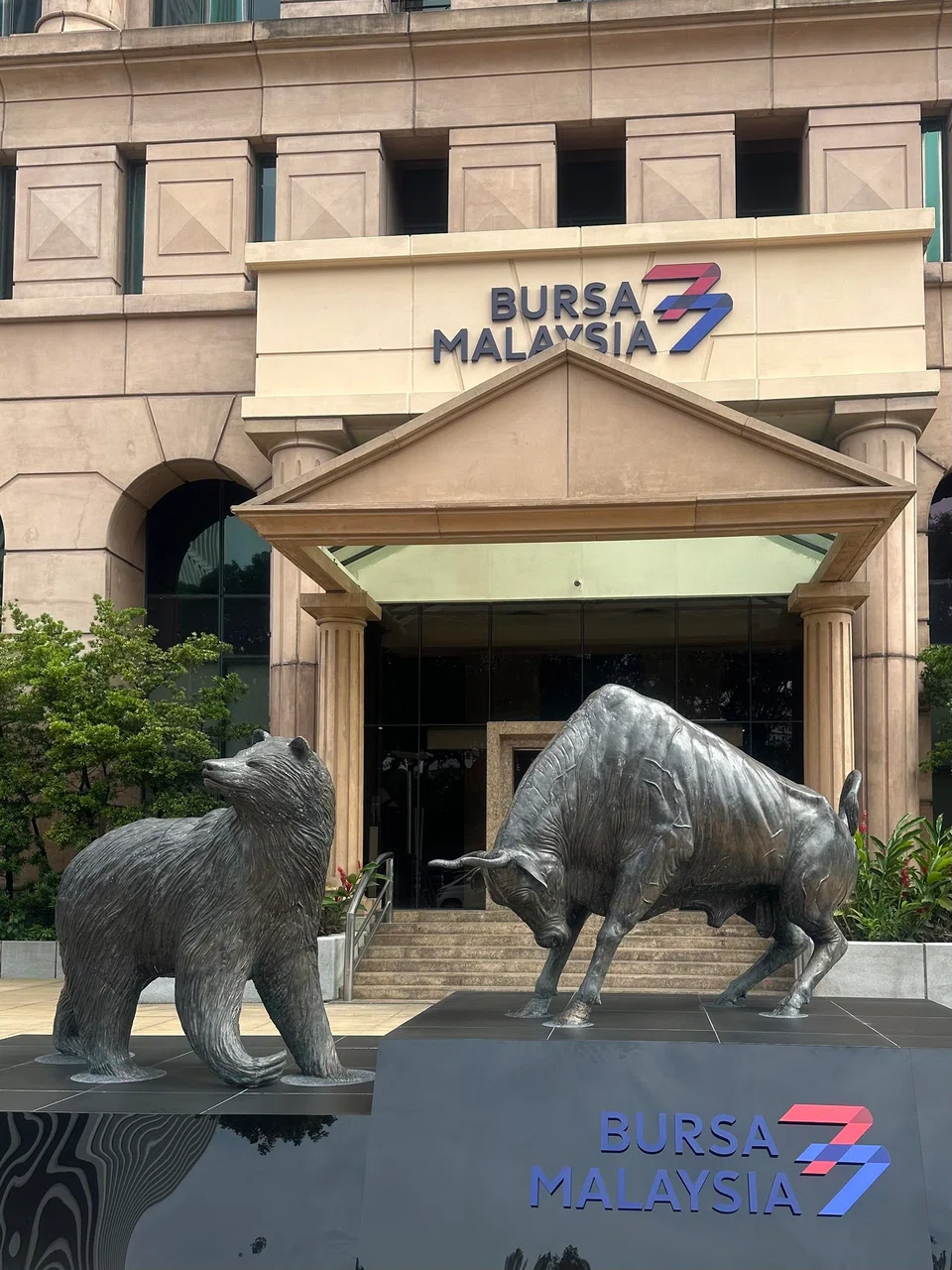
As Bursa Malaysia’s phased sustainability reporting requirements take effect – with the largest listed companies facing their first deadline this December – corporations are requiring ESG data from small companies up and down their supply chains.
This is effectively creating a de facto compliance regime for thousands of unlisted businesses that have never been directly regulated.
“The biggest challenge for most SMEs (small and medium-sized enterprises) isn’t the lack of will – it’s the lack of clarity and capability,” said Danny Ng, founder and managing director of APR Electronic Services.
“ESG is no longer a cost; it’s becoming part of business survival,” added Ng, who is also adjunct professor at the Guangdong Women’s Polytechnic College in Guangzhou, China.
The shift reveals how sustainability mandates work in practice: not through regulatory force alone, but through the market power of large buyers who need supplier data to complete their own compliance reports. It is a dynamic with clear implications for Singapore’s SME suppliers as the Singapore Exchange tightens its own disclosure rules.
The mechanics of Malaysia’s ESG transition
Malaysia’s move from voluntary to mandatory sustainability reporting began in September 2022, when Bursa Malaysia announced enhanced disclosure requirements for Main and ACE Market issuers.
Main Market companies were at first required to begin reporting on common sustainability matters for financial years ending on or after Dec 31, 2023; ACE Market firms were to follow suit a year later.
The framework was strengthened on Dec 23, 2024, when Bursa aligned its standards with the International Financial Reporting Standards Sustainability Disclosure Standards S1 and S2, under the National Sustainability Reporting Framework.
The phased compliance timeline begins with large Main Market issuers – those with a market capitalisation of RM2 billion (S$614 million) and above – for the financial year ending on or after Dec 31, 2025. Other Main Market issuers follow in 2026, and ACE Market companies by 2027.
According to market data and analysis by the Malaysian capital market ecosystem, an estimated 130 listed companies – falling under the initial RM2 billion market-cap threshold for the 2025 mandate – are collectively linked to 10,000 to 15,000 suppliers, most of which are SMEs. This highlights the significant “ripple effect” of the new ESG reporting requirements.
These large corporations cannot report their Scope 3 emissions – that is, the indirect emissions from their supply chains – without input from these smaller businesses. This interdependence has effectively pulled SMEs into the ESG ecosystem, even though the regulations do not yet apply to them directly.
Recognising this, Bursa launched the Centralised Sustainability Intelligence (CSI) Solution in June 2024, a digital platform designed to help both listed companies and non-listed SMEs collect, manage and disclose ESG data.
Together with the Simplified ESG Disclosure Guide developed by Capital Markets Malaysia, the CSI platform represents a critical step in ensuring that Malaysia’s smaller enterprises are not left behind as sustainability reporting becomes a condition for market access and financing.
Singapore’s parallel reality
Across the Causeway, Singapore is moving on a similar timeline. From FY2025, all listed issuers must disclose Scope 1 and 2 greenhouse gas emissions.
However, unlike Malaysia’s uniform approach, Singapore’s full International Sustainability Standards Board-aligned reporting is tiered based on size – Straits Times Index constituents must comply from FY2025, while smaller listed firms are phased in through FY2030.
The supply-chain effect is already visible.
A 2024 Schneider Electric survey found that 78 per cent of Singapore SME respondents lost contracts due to emissions reporting gaps. The Singapore Business Federation noted separately in a report released in January 2024 that 58 per cent of businesses faced upstream supply-chain pressures from ESG compliance demands.
In response, the federation successfully lobbied for extended timelines for smaller issuers and rolled out support schemes such as the Enterprise Sustainability Programme, which offers green financing and co-funding for first-time sustainability reports.
As EY partner Praveen Tekchandani observed last year: “With rapidly evolving expectations of the market to incorporate ESG considerations into supply chains, SMEs will soon – if it has not already happened – be approached by customers that are larger firms or multinational corporates to support them on this sustainability agenda.”
The message in both markets is the same – supply-chain compliance pressure does not wait for regulatory deadlines.
On the ground
The pressure for some has already proved costly. A general manager at a Johor-based precision-parts manufacturer who requested anonymity for commercial reasons said his company lost a long-time multinational client after failing to provide Scope 1 and 2 emissions data on time.
“We simply didn’t have the people or systems to track emissions,” he said. “By the time we hired a consultant, the buyer had already opted for another vendor.”
ESG Association of Malaysia president, Adjunct Professor Cheah Kok Hoong, echoed this at the Sustainability Leadership Summit in September for Asean chief financial officers, noting that finance leaders must go beyond compliance to align ESG disclosures with long-term value creation.
Annette Aprilana, head of impact and sustainability at Funding Societies, said eligibility for green financing depends on clear project objectives, measurable outcomes and alignment with recognised frameworks, such as the Green Loan Principles and Bank Negara’s Climate Change and Principle-based Taxonomy.
“We distinguish between green loans, which finance specific environmental projects, and sustainability-linked loans, where borrowers must show progress on agreed sustainability metrics,” she said.
She added that while greener solutions can be more expensive, “SMEs are beginning to view ESG as a business opportunity rather than a compliance requirement”.
Funding Societies supports SMEs through co-investment funds under Malaysia’s New Industrial Master Plan 2030’s Strategic Co-Investment Fund, ESG-risk assessment frameworks, and partnerships with digital platforms such as ESGpedia, which helps SMEs report ESG metrics and calculate carbon footprints.
Policy context
While Malaysia’s sustainability road map is rich in ambition, its real strength lies in execution – and signs are encouraging.
The Ministry of Energy Transition and Water Transformation (Petra) recently lauded 16 Malaysian organisations recognised at the Asean Energy Awards 2025; these included CSC Steel, Gamuda Land and Cenviro. Together, these firms have reduced nearly 72 million tonnes of carbon emissions annually, generated 7.6 megawatts of renewable power, and achieved average energy savings of 23.7 per cent.
“These achievements underscore Malaysia’s leadership in sustainability and the transition to a low-carbon economy,” Petra said, noting the alignment with the National Energy Transition Roadmap and Malaysia’s Paris Agreement commitments.
The road ahead
Malaysia’s 1.1 million micro, small and medium-sized enterprises make up about 97 per cent of all businesses and contribute to nearly 40 per cent of gross domestic product. Recognising their role, the government has channelled substantial support – from SME Corp’s Access programme to the Green Technology Financing Scheme (GTFS) and ecological fiscal transfers for state-level conservation.
Budget 2026, for example, allocates RM2.38 billion to green programmes, including RM1 billion under GTFS 5.0, RM250 million for forest conservation, and RM80 million for 2,500 community rangers.
But ultimately, no amount of incentives can replace intent. Malaysia’s sustainability momentum now depends on whether SMEs can move from participation to performance – not acting because of grants, but because the market demands it.
TRENDING NOW
‘My grandfather’s legacy’: Sherman Kwek lays out three-year plan for CDL to drive returns
CDL to hire dedicated CEO for fund management as it steps up push into private funds
Built on trust since 1964: How this award-winning finance company has grown with its SME customers
VSMC opens US$7.8 billion chip fab in Singapore, bets on ‘physical AI’ demand