



The bulls, laggards and the IPO leaders: Asean’s markets in four charts
In terms of returns, Vietnam and Singapore are leading the pack so far in 2025

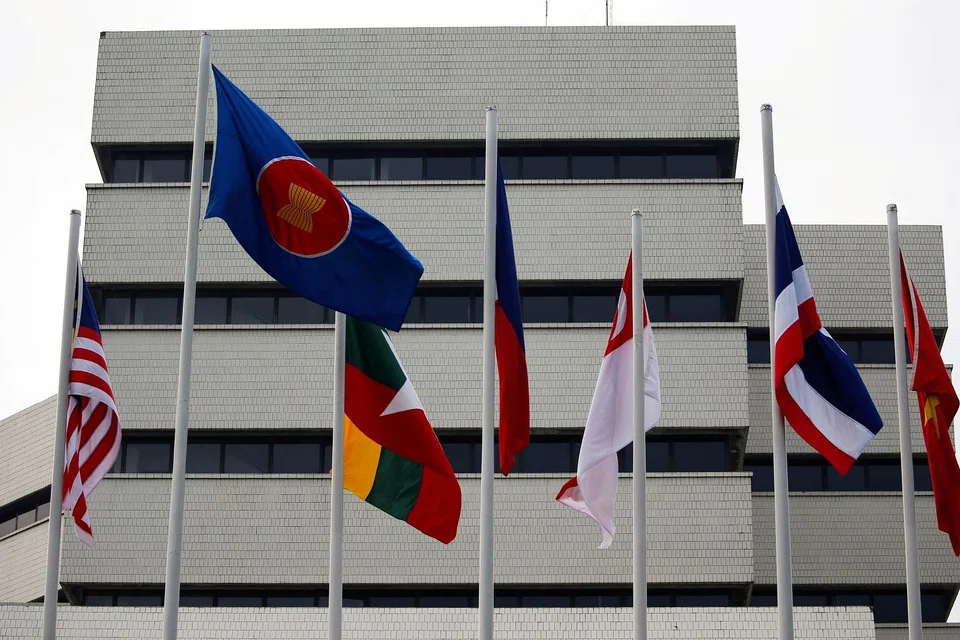
[SINGAPORE] South-east Asia’s stock markets have had a mixed year so far.
After sell-offs triggered by US tariffs hit the region’s top five markets in April, some rebounded strongly while others have yet to regain their footing. The Business Times looks at how the region’s equities markets have performed this year – told through four charts.
Riding the momentum of a market upgrade by FTSE Russell to secondary emerging market status in September, the Vietnamese stock market (VNX) – comprising the flagship Ho Chi Minh Stock Exchange and the small-to-mid-cap oriented Hanoi Stock Exchange – has topped returns among the Asean markets.
However, further upside on the benchmark VN-index’s (VNI) 33 per cent surge this year may be limited by structural roadblocks, including a shallow pipeline for new listings.
Singapore’s Straits Times Index (STI) has rewarded shareholders with returns of more than 27 per cent in US dollar terms, boosted by central bank initiatives including a S$5 billion liquidity injection and regulatory streamlining on the Singapore Exchange (SGX).
Indonesia’s market had a strong start to the year as a flurry of new listings flocked to the Indonesia Stock Exchange (IDX) to raise funds. Yet, ongoing macroeconomic uncertainty, foreign capital outflows and an ailing rupiah have stifled returns for the country’s investors as the benchmark Jakarta Composite Index (JCI) struggled to regain momentum.
Companies listed on the Stock Exchange of Thailand (SET) and its benchmark SET index have taken major blows amid political turmoil, while macroeconomic headwinds from tariff uncertainty and faltering tourism revenue continue to weigh on corporate earnings.
Investors are currently nervous, with the kingdom’s main index trading at the highest price-to-earnings and lowest price-to-book ratio among regional peers.
Still, the Thai market remains South-east Asia’s most liquid market by traded value, reaching a daily average of nearly US$1.3 billion so far.
Malaysia’s market led in dealmaking this year with 41 initial public offerings (IPO) on Bursa Malaysia (BM), beating out Indonesia’s 23. The Malaysian bourse had 151 follow-on transactions – additional share and rights offerings – with more than US$2.66 billion raised across all deals.
SGX, however, came out on top in deal proceeds in both categories, as fresh capital returned to the bourse after several years of stagnation. Singapore’s market saw eight IPOs raise almost US$1.49 billion, while listed companies took in US$2.58 billion from 40 fundraising exercises.
Meanwhile, Asean’s other markets remain underutilised as a fundraising channel. Vietnam’s stock exchanges saw just one IPO this year, but its market status upgrade and a series of reforms – including enabling higher foreign ownership of Vietnamese stocks – could unlock a deeper listing pipeline.
Likewise, Thailand’s IPO market – with a weak showing of US$103.4 million raised through 10 listings – may witness a potential turnaround as the country looks to boost market attractiveness through a series of reforms.
Hopes of a US-China trade deal lifted the region’s markets on Monday (Oct 27) in the lead-up to Thursday’s meeting between US President Donald Trump and Chinese President Xi Jinping. Regional investors are likely to watch this meeting closely, after previous truces had sent global markets high into the green.
Negotiations at the Asean Summit in Malaysia saw both countries reaching a preliminary consensus on various key trade topics – in particular the US tariffs on the world’s second-biggest economy and China’s rare earths moves – China officials said on Sunday.
During the summit, Trump also signed deals with Malaysia, Thailand and Vietnam to cooperate on specific products, but reciprocal tariffs of up to 20 per cent remained for the Asean trio.
By 12 pm on Monday, Thailand’s SET index topped gainers with a 1.9 per cent jump to 1,338.74, while Malaysia’s benchmark Kuala Lumpur Composite Index (KLCI) received a 0.3 per cent boost to reach 1,618.29. Singapore’s STI rose 0.5 per cent to reach 4,443.34 by the midday break.
Among the region’s retreats were Vietnam’s VNI, falling 0.9 per cent to 1,667.72. Meanwhile, Indonesia’s JCI plummeted 3 per cent to 8,023.63 at noon.
TRENDING NOW

He built the Vingroup empire. Now South-east Asia’s richest man is handing some key roles to his sons

32 companies, 6 individuals bag accolades at Singapore Corporate Awards 2026
Can a first-time homebuyer couple earning S$18,000 a month afford a new EC unit?

Floods compound Philippine growth woes from public-works scandal

