



Why Indonesia’s rupiah hit a record low in January
Analysts widely expect the currency to weaken further in 2026
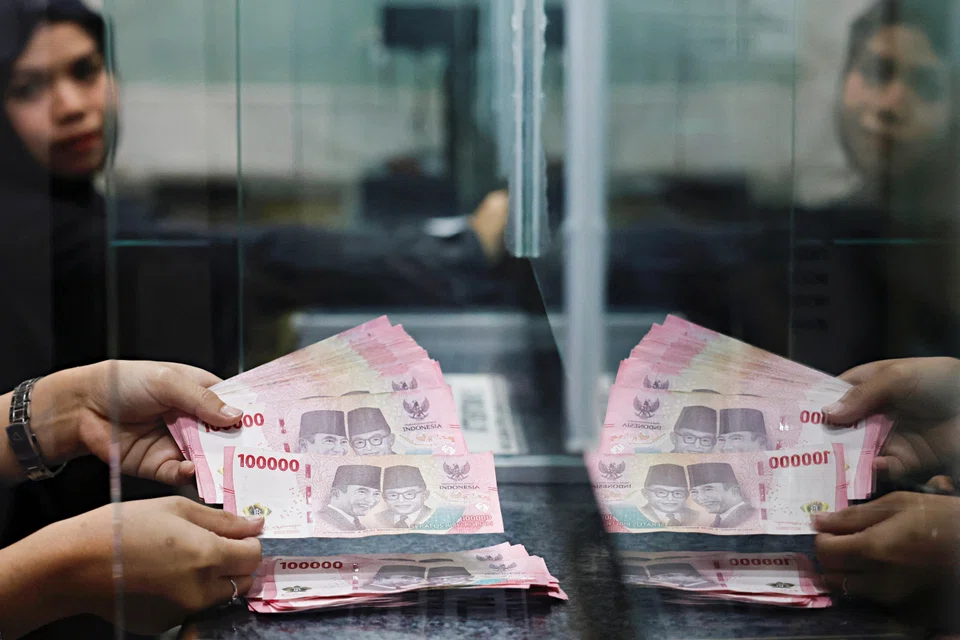
[JAKARTA] Indonesia’s rupiah has been under sustained pressure for months as investors grow uneasy about the country’s fiscal outlook and the direction of economic policy. Those concerns pushed the currency to a record low against the US dollar in January, despite intervention by the central bank to smooth its decline.
With little sign of relief, attention is turning to just how far the rupiah could still fall – and what that would mean for inflation, economic growth and the cost of living for everyday Indonesians.
What’s happening with the rupiah?
The rupiah fell to an all-time low of 16,988 per US dollar on Jan 20, surpassing a previous record set in April 2025. Before that, the rupiah had not been that weak since the 1997 to 1998 Asian Financial Crisis. It was the weakest currency in Asia in 2025 after the Indian rupee.
While the currency has since managed to recoup some of its recent losses, it’s not out of the woods. Analysts widely expect the rupiah to weaken further in 2026.
Why is the rupiah so weak?
The reasons for the rupiah’s depreciation in January are different from the sell-off in April, which was triggered by US President Donald Trump’s reciprocal tariffs that rattled global markets.
The currency has been on a downward trend since August 2025, driven by investor concerns over the Indonesian government’s fiscal discipline and fears that the central bank, Bank Indonesia, could be pressured to support the government’s pro-stimulus agenda at the expense of its independence.
A pro-stimulus push typically implies higher government spending financed through increased borrowing and bond issuance. That raises concerns about fiscal sustainability and debt levels, making Indonesian assets riskier and prompting investors to sell rupiah and move capital elsewhere.
Those worries intensified in late August and early September. The resignation of well-respected, long-serving Finance Minister Sri Mulyani Indrawati triggered heavy outflows from Indonesian stocks and bonds amid investor fears that her departure would weaken the government’s fiscal discipline.
Days later, Bank Indonesia agreed to shoulder part of the debt costs of President Prabowo Subianto’s spending-heavy “priority programmes”. Soon after, lawmakers floated revisions to the law governing the central bank’s charter, reinforcing concerns about political interference.
SEE ALSO




Around the same time, Bank Indonesia delivered two consecutive surprise interest-rate cuts, aligning monetary policy with the government’s pro-growth agenda. Bank Indonesia cut a cumulative 125 basis points off the benchmark interest rate in 2025.
Lower rates have reduced Indonesian bond yields and narrowed the gap with US Treasuries, shrinking the extra return foreign investors receive for holding riskier Indonesian assets. This prompted offshore investors to pull capital out of Indonesia, putting downward pressure on the rupiah.
Concerns about the central bank’s independence resurfaced on Jan 19 when Prabowo nominated his nephew, currently a deputy finance minister, for Bank Indonesia’s deputy governor. That day the rupiah fell 0.3 per cent.
Those fears are compounded by the budget outlook: last year’s deficit reached 2.92 per cent of gross domestic product, very close to the legal cap, and analysts warn it could breach the 3 per cent ceiling this year.
What are the pros and cons of a weak rupiah?

A weak rupiah typically boosts the profits of Indonesian exporters, which are dominated by commodity producers such as coal, palm oil and nickel. Government revenue from royalties, export taxes and income taxes from natural resource exporters also tends to rise.
However, rupiah depreciation rarely leads to a meaningful increase in export volumes, which are instead largely determined by global demand and international commodity prices.
The downsides of a weak rupiah are felt more quickly and more broadly than the benefits, because Indonesia’s economy remains heavily dependent on imports. Even the export-oriented manufacturing sector relies on imported raw materials, offsetting much of the competitiveness gained from a weaker currency.
Higher import costs are often passed on to consumers, pushing up inflation, especially for food staples and fuel. Rising prices in turn erode household purchasing power, weighing on consumption, which accounts for the largest share of Indonesia’s economic growth. That’s why Indonesian policymakers tend to intervene to stabilise the rupiah, although periods of US dollar strength, capital outflows and heightened policy uncertainty can constrain those efforts.
Are the government or central bank concerned?

Since late 2024, Bank Indonesia has stepped up efforts to stabilise the rupiah. It has done so by selling US dollars from its foreign-exchange reserves to buy rupiah, purchasing government bonds in the secondary market, and using non-deliverable forwards to shape market expectations.
The central bank sought to reassure investors concerned about the currency’s weakness during its January monetary policy announcement, when it kept the key rate steady for a fourth straight month. Governor Perry Warjiyo also pledged that he wouldn’t hesitate to conduct large-scale interventions in foreign-exchange markets to ensure the rupiah’s movements remained in line with economic fundamentals and orderly market conditions.
Bank Indonesia’s confidence in supporting the rupiah is underpinned by its large foreign-exchange reserves, which stood at a nine-month high of US$156.5 billion at the end of 2025. The reserves should be sufficient to prevent extreme price swings without reversing the currency’s direction.
So far, there has been little sign of concern from the government. Finance Minister Purbaya Yudhi Sadewa has played down the weak rupiah and concerns about Bank Indonesia’s independence as temporary issues. Instead, Purbaya insists that investor appetite, especially from abroad, will soon return as the economy grows stronger.
The government’s plan for tighter control over exporters’ foreign-exchange earnings could, however, provide another buffer for the rupiah.
What’s at stake?
Analysts expect the rupiah to weaken further, potentially testing the psychological 17,000-per-US dollar level as early as the first quarter. Strategists at Barclays see the rupiah trading as low as 17,300 this year amid persisting fiscal concerns.
As the Indonesian economy remains heavily dependent on imports, a weak rupiah could push inflation above the central bank’s target, further complicating its easing agenda. A weaker currency would also reduce the attractiveness of local assets for foreign investors, as it lowers the total returns they get from their investments.
The returns on Indonesian government bonds for US dollar-based investors last year, for instance, lagged behind those of Malaysia and Thailand, whose currencies were among the best performers in Asia.
A weak rupiah also ties Bank Indonesia’s hands. While the central bank wants to support economic growth, further rate cuts could accelerate capital outflows and weaken the rupiah even more. That constraint puts limits on policymakers’ plans to stimulate the economy.
Although governor Warjiyo has repeatedly signalled that there is still room for further interest-rate cuts, the timing depends heavily on currency stability and global financial conditions. BLOOMBERG
Decoding Asia newsletter: your guide to navigating Asia in a new global order. Sign up here to get Decoding Asia newsletter. Delivered to your inbox. Free.
Share with us your feedback on BT's products and services

