



Winners and losers from Prabowo’s first budget for Indonesia’s economy
Poultry, dairy and banks set to benefit from the country’s 2026 budget

[JAKARTA] Indonesian President Prabowo Subianto’s debut state budget has put the spotlight on food, healthcare and energy security, with analysts highlighting consumer companies, banks and energy companies as the main beneficiaries.
Unveiled to parliament last Friday (Aug15), the 3,786.5 trillion rupiah (S$297.7 billion) 2026 draft budget marks Prabowo’s first major policy blueprint since taking office last October.
The budget pairs ambitious social measures aimed at driving 5.4 per cent growth next year with commitments to fiscal discipline, including a goal to eliminate the deficit by 2028.
Edward Lowis, vice-president and head of research at Sucor Sekuritas, said that if implemented effectively, the government’s focus on food, housing, fertiliser subsidies and cooperatives could channel more liquidity to middle and lower-income groups, thereby boosting household purchasing power.
“Companies with a strong domestic-driven base stand to benefit the most – particularly in the consumer, banking and healthcare sectors,” he told The Business Times. “In addition, the energy sector is expected to gain momentum amid planned regulatory reforms aimed at boosting oil and gas production.”
The benchmark Jakarta Composite Index slipped 0.4 per cent last Friday, easing after back-to-back record highs in the week. The gauge has climbed 11.6 per cent year to date, supported by easing concerns over US tariffs. The market was closed on Monday for the country’s Independence Day public holiday.
Consumer and health in focus
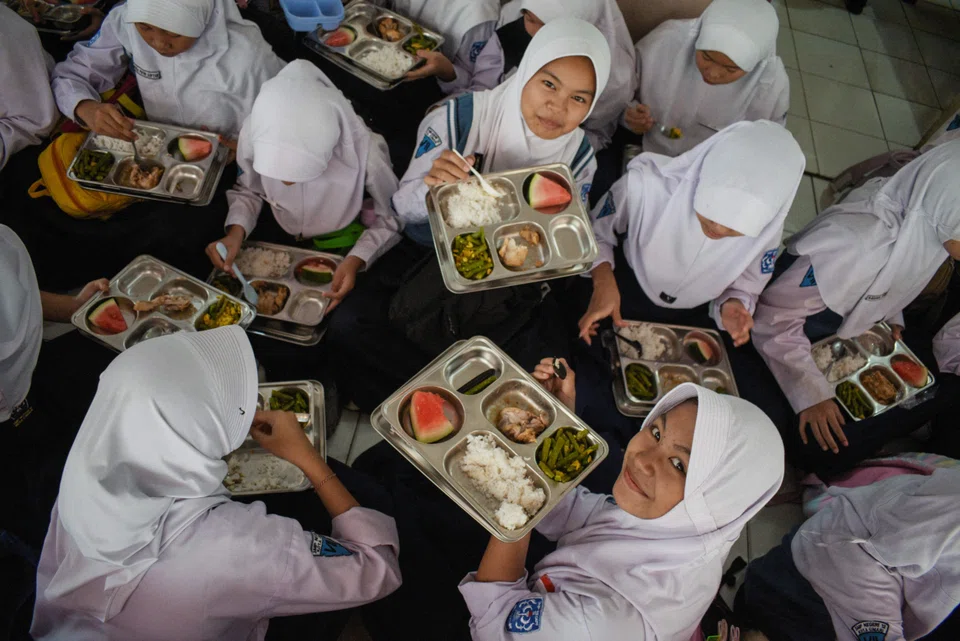
At the core of Prabowo’s populist agenda is the free nutritious meal programme, with its allocation set to nearly triple to 335 trillion rupiah next year – around 8.9 per cent of the state budget – up from 121 trillion rupiah this year.
Aimed at reaching 82 million schoolchildren and pregnant women, the initiative is expected to deliver a direct boost to food producers and ripple through the wider supply chain.
“The free meal programme will not only stimulate demand for poultry and dairy but also generate multiplier effects in rural areas, strengthening supply chains and fostering long-term awareness about nutrition,” said Maybank economists Brian Lee and Chua Hak Bin.
Poultry and dairy producers are among the clearest beneficiaries, with analysts highlighting Japfa Comfeed Indonesia and Charoen Pokphand Indonesia. A rise in poultry consumption is expected to ease oversupply issues, stabilise live bird prices, and increase demand for feed and day-old chicks.
Consumer goods makers such as Indofood CBP Sukses Makmur, along with dairy producers Ultrajaya Milk Industry and Trading, and Cisarua Mountain Dairy, are expected to reap the benefits of stronger demand.
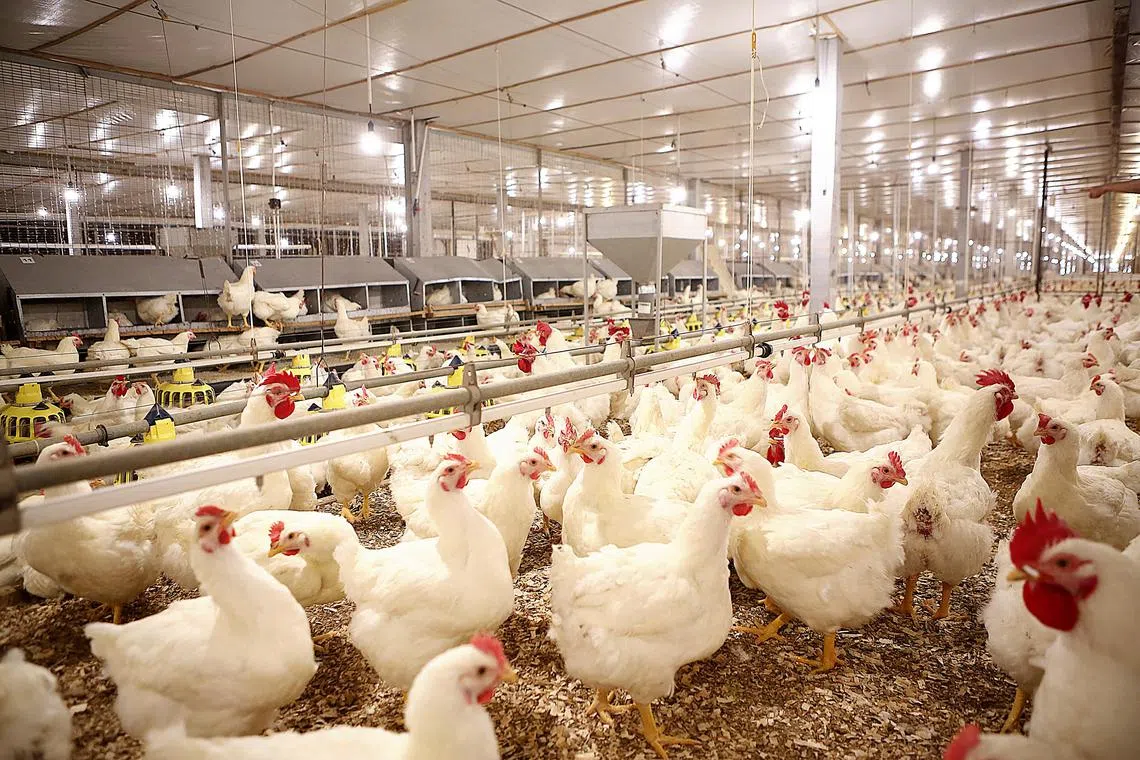
The US Department of Agriculture estimated that Indonesia will need an average of 5.3 million tonnes of milk this year to support the free meal programme, which has already reached 20 million children.
Healthcare also sees a significant increase in spending plans, with the budget rising to 244 trillion rupiah.
Expanded state insurance subsidies and a free national health check-up initiative are expected to drive higher hospital visits, benefiting private hospital operators including Medikaloka Hermina and Mitra Keluarga Karyasehat.
Infrastructure spending slows, more housing support
Unlike his predecessor Joko Widodo, Prabowo has not put transport connectivity or major infrastructure projects front and centre on his agenda.
Overall infrastructure spending for next year remains steady, with the Ministry of Public Works allocated 118.5 trillion rupiah.
Funding for the new capital, Nusantara, has been set at 6.3 trillion rupiah, down from 13 trillion rupiah last year. The Nusantara Capital Authority told BT that priorities have shifted from state budget support to private investment.

RHB Sekuritas analyst Andrey Wijaya noted that cement producers such as Semen Indonesia and Indocement Tunggal Prakarsa could face pressure on sales due to the lower share of infrastructure spending in the 2026 state budget.
However, Prabowo’s three million-home programme could partially offset this impact if implemented effectively.
A total of 33.5 trillion rupiah has been allocated to the housing financing liquidity facility to fund 350,000 subsidised homes, providing support for cement and building material producers.
For the non-subsidised housing segment, the extension of value-added tax incentives is expected to benefit mid-to-high-end developers such as Ciputra Development and Summarecon Agung, while mortgage growth is likely to support major banks, including Bank Central Asia, Bank Mandiri, and CIMB Niaga.
Banks to gain from stronger liquidity
The banking sector is set to be among the biggest beneficiaries of Indonesia’s 2026 budget. Prabowo, who campaigned on close ties with lower-income communities, has promised an expansion of the micro loan scheme to 320 trillion rupiah, supported by 36.5 trillion rupiah in interest subsidies.
State-owned banks with strong small and medium enterprise portfolios, including Bank Rakyat Indonesia and Bank Mandiri, are expected to reap the benefits.
“Expectations of a broad economic recovery will be positive for large banks,” said Jerry Goh, investment director for Asian equities at Aberdeen.
The government will also channel 83 trillion rupiah into state-owned banks through the newly launched Merah Putih cooperative village programme. Named after the red-and-white national flag, these cooperatives distribute subsidised goods such as cooking oil and fertilisers, and provide financial and community services to unbanked populations.
All eyes on energy
The 2026 budget allocated more than 400 trillion rupiah to energy security, renewable energy and electrification subsidies and incentives, reflecting the government’s push to meet growing domestic energy demand while reducing reliance on imported fuels.
Maybank analysts expect the programme to give a leg up to energy companies such as Medco Energi Internasional, Pertamina Geothermal Energy and Perusahaan Gas Negara.
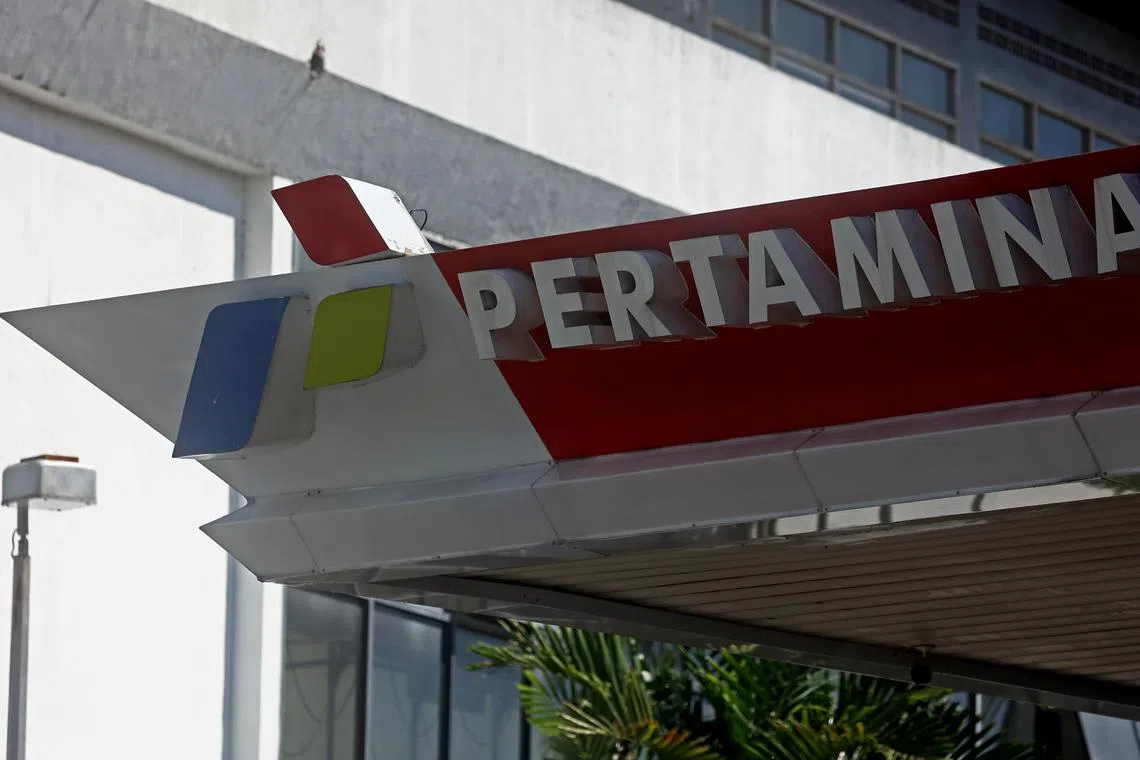
Meanwhile, Fitch Ratings’ Asia-Pacific corporates team noted that the higher budgeted energy subsidy underscores oil giant Pertamina’s status as a key government-related entity, even following its recent ownership transfer to the sovereign wealth fund Danantara.
“The allocation should ensure timely government compensation of subsidies, while Pertamina’s capital expenditure is expected to rise in the medium term for oilfield development, refining and petrochemical capacity expansion, and renewable energy investments,” said Fitch Ratings.
TRENDING NOW

Could stablecoins be the future of money?

Once staunchly pro-China, Malaysian Chinese businesses are now distancing themselves from Beijing

Global expertise and tailored solutions: How affluent S’poreans can grow and manage wealth across markets
GIC-backed Bank Jago sees wealth management as next growth engine as Indonesian investor base grows

