



World Bank urges tax reforms as Indonesia’s Prabowo faces fiscal challenges
It expects the country’s budget deficit will widen to 2.5 per cent this year from 1.7 per cent last year

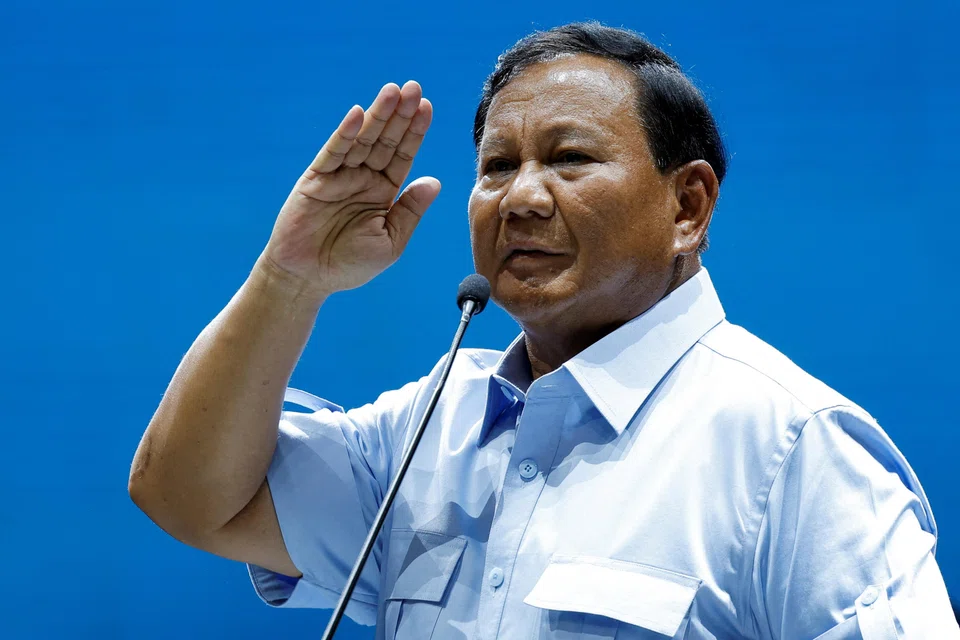
[JAKARTA] Indonesia’s President-elect Prabowo Subianto must intensify tax reform efforts to offset the widening fiscal deficit even as he seeks to implement his campaign initiatives, a senior World Bank official said at an event on Monday (Jun 24).
Carolyn Turk, the World Bank’s country director for Indonesia and Timor-Leste, said Indonesia’s long-track “credible” fiscal rule had helped attract investments and lower the country’s risk premiums.
“It is important to maintain prudent, credible and transparent macro policy, while creating fiscal space that enables priority spending on social protection and investment in human capital and infrastructure” she said.
The bank anticipates that Indonesia’s budget deficit will widen to 2.5 per cent this year from 1.7 per cent last year, as the country faces the impact of declining commodity prices, which have resulted in reduced export revenue.
South-east Asia’s largest economy has a legal limit mandating that the annual budget deficit cannot exceed 3 per cent of gross domestic product.
Habib Rab, the World Bank’s lead economist for Indonesia and Timor-Leste, suggested that revenue reforms could involve lowering tax thresholds, eliminating exemptions and enhancing audit practices.
He noted that Indonesia’s tax collection is relatively small compared to other emerging countries due to several structural and administrative challenges.
The country’s tax ratio, which is the ratio of tax revenue to GDP, stands at only 10.2 per cent, significantly lower than the Asean region’s average of 14 per cent.
“In the medium term, tax collection could also be improved through third-party data that helps track and verify incomes,” he said.
At a separate press briefing, Thomas Djiwandono, a member of Prabowo’s economic transition team, said the incoming administration will ensure the deficit remains below the legal cap.
The outgoing administration will allocate 71 trillion rupiah (S$5.9 billion) to fund a free meal programme for school children next year.
“We have discussed the proposed budget with the current minister of finance that the programme will be carried out gradually with fiscal discipline remaining as our priority,” he said.
Analysts have expressed concerns about the programme’s costliness, as it is predicted to consume a significant portion of the country’s annual budget.
At a recent policy rate meeting, Indonesia’s central bank governor Perry Warjiyo highlighted that concerns over the fiscal sustainability of the next administration have exerted pressure on the rupiah’s exchange rate in the past month, amid ongoing external uncertainties.
Prabowo, who will take office in October, is reportedly looking to increase the country’s debt-to-GDP ratio to 50 per cent – from less than 40 per cent – to fund his campaign promises, including the provision of the free school meals. Djiwandono, however, has denied such a plan.
Meanwhile, Finance Minister Sri Mulyani Indrawati stated that with the lunch programme included in next year’s budget plan, the government estimates the fiscal deficit will widen to between 2.21 and 2.8 per cent.
The government’s 2025 Budget, due by October, is expected to outline an implementation plan for the new administration’s economic goals, and signal its fiscal policy stance.
The World Bank cautioned that global economic uncertainties remained a risk to the country’s external balance and fiscal positions.
It estimates Indonesia’s GDP will grow at an average rate of 5.1 per cent annually from 2024 to 2026, amid challenges from a diminishing commodity boom, heightened volatility in food and energy prices, and increasing geopolitical uncertainty.
Decoding Asia newsletter: your guide to navigating Asia in a new global order. Sign up here to get Decoding Asia newsletter. Delivered to your inbox. Free.
Copyright SPH Media. All rights reserved.
TRENDING NOW

Once staunchly pro-China, Malaysian Chinese businesses are now distancing themselves from Beijing
AI can become superior to humans in certain aspects: TikTok’s Chew Shou Zi

DBS, OCBC, UOB face rate hike reality check

‘The market has spoken’: DBS CEO Tan Su Shan says market is repricing AI financing risks

