Asean Business logo
SPONSORED BYUOB logo

Zetrix AI sets its sights beyond Malaysia with Philippine blockchain deal, Nasdaq listing plan

The firm is building artificial intelligence doubles for politicians and businesses, starting with PM Anwar

Summarise
Tan Ai Leng
Published Wed, Jul 15, 2026 · 01:56 PM
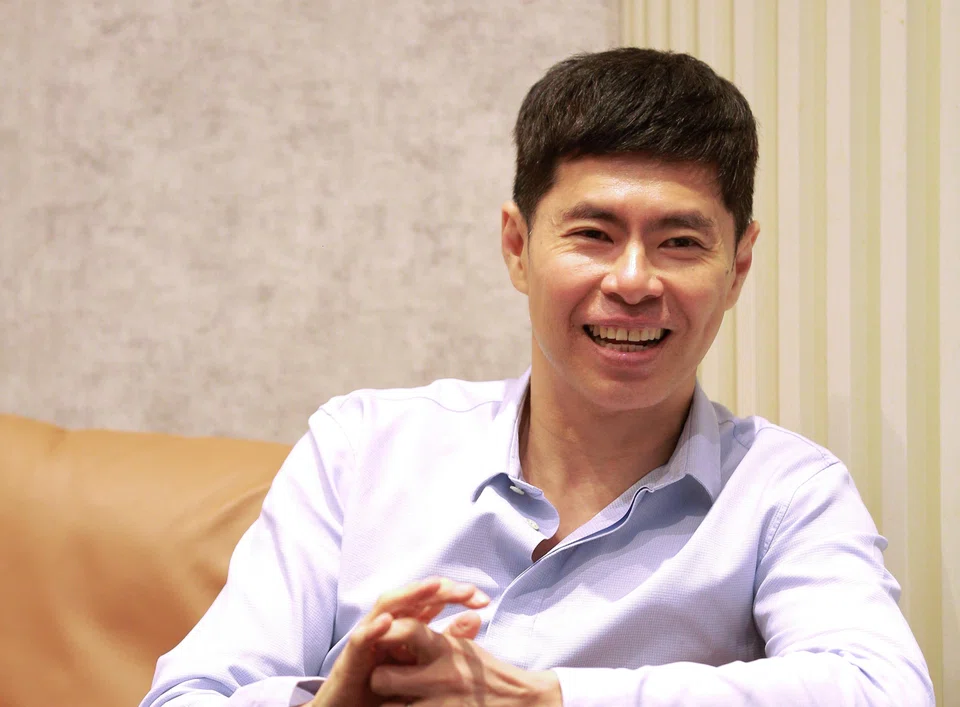
    • Zetrix AI group managing director Wong Thean Soon says that in the future, companies will have AI avatars representing them to communicate and execute tasks.
    • Zetrix AI group managing director Wong Thean Soon says that in the future, companies will have AI avatars representing them to communicate and execute tasks. PHOTO: ZETRIX AI

    [KUALA LUMPUR] Malaysian e-government and digital services company Zetrix AI is shaping up for a pivotal 2026 after securing its first overseas government blockchain project in the Philippines.

    It is preparing to launch an artificial intelligence double of Malaysian Prime Minister Anwar Ibrahim and pursuing a Nasdaq listing for its AI unit.

    The expansion reflects group managing director Wong Thean Soon’s belief that blockchain, digital identity and AI are converging to form the infrastructure of the next-generation digital economy.

    The Bursa-listed company, formerly known as MY EG Services, has evolved from a Malaysian e-government services provider into a regional tech company focused on Web3 and AI. It had a market capitalisation of nearly RM6 billion (US$1.5 billion) as at Tuesday (Jul 14).

    Wong, better known as TS Wong in corporate circles, sees the Philippine project, AI avatars and a planned Nasdaq listing not as standalone initiatives, but as parts of a broader strategy to turn Zetrix AI into a global tech player.

    “They are just parts of the same puzzle. AI agents need two things – identity and the ability to make payments. Blockchain provides trusted digital identities and payment rails through stablecoins,” he told The Business Times.

    The company capped a record FY2025, with revenue up 31 per cent at RM1.3 billion and net profit rising 23 per cent to RM870.7 million, powered by Web3 fees and sales of Zetrix tokens and blockchain nodes.

    Anwar, on demand

    Malaysian Prime Minister Anwar Ibrahim will soon launch PMX AI, an artificial intelligence counterpart designed for direct public engagement. PHOTO: ANWAR IBRAHIM / FACEBOOK

    One of Zetrix AI’s most eye-catching projects is PMX AI, an AI double of Malaysian leader Anwar.

    Developed as an initiative of Anwar’s Parti Keadilan Rakyat, the avatar has been trained on his speeches, writings and the policy record of his administration.

    It is designed to look and sound like him, while responding in English, Bahasa Malaysia and local dialects. Parti Keadilan Rakyat has prepared a video which is set to be dropped within days.

    Anwar would not be alone; India’s Prime Minister Narendra Modi has used AI dubbing for multilingual speeches, while former South Korean president Yoon Suk-yeol deployed an AI avatar during his 2022 campaign.

    “The earliest adopters of AI avatars will be politicians,” said Wong. “Politicians interact with enormous numbers of people and cannot personally speak to everyone. AI avatars allow them to conduct one-to-one conversations with voters simultaneously,” he added.

    Rather than acting as a simple chatbot, this “agentic” AI can provide deep, customised support. For instance, a citizen facing job loss can speak “directly” to the prime minister’s avatar to receive tailored advice, learn about government aid and register for reskilling courses.

    The conversations are then anonymised, helping the Prime Minister’s Office analyse public sentiment and identify community concerns in real time.

    Wong said human oversight would remain necessary and that personal data used to train individual AI agents would be stored on users’ devices rather than on a blockchain.

    He expects the model to spread to companies eventually. “In the past, companies needed websites. In the future, they will have AI avatars representing them to communicate and execute tasks,” he said.

    Exporting the Malaysia model

    On Jul 7, Zetrix AI’s Philippine unit signed a memorandum of understanding with the Philippine government to develop and operate the country’s public blockchain infrastructure using the Zetrix protocol.

    The platform will support the issuance, verification and authentication of government-issued credentials while providing blockchain infrastructure for applications deemed critical to national digital services.

    If implemented, the pact would mark the first overseas deployment of Zetrix AI’s government blockchain model, which was developed in Malaysia.

    Unlike many blockchain projects centred on cryptocurrencies, Zetrix AI focuses on digitising government-issued credentials, Wong said.

    “While blockchain is commonly associated with currency, money is merely one type of asset. Governments issue a vast range of other credentials, with digital identities being the most critical.”

    Zetrix AI’s strategy is to onboard governments first. “Once governments issue trusted digital credentials on our blockchain, commercial entities will naturally follow,” Wong added.

    Initially, the platform will support digital identities and payment systems before expanding to other government-issued credentials.

    The longer-term ambition is cross-border interoperability across South-east Asia.

    Wong envisages a future where a Filipino visiting Malaysia could use a government-issued Philippine digital identity to open a bank account, check into a hotel or access public services without carrying physical documents.

    The concept aligns with Asean’s ambition to make digital identities interoperable across member states.

    “We believe the Philippines is just the beginning. Digital identities should work regardless of which Asean country you are in,” said Wong.

    For Zetrix AI, the commercial opportunity lies in transaction volume rather than software licensing.

    Each identity verification or blockchain transaction generates a processing charge known as a gas fee, similar to the fees imposed on stablecoin transfers.

    “The bigger the population, the bigger the transaction volume,” Wong said, noting that the Philippines offers a significantly larger addressable market than Malaysia.

    Why every AI agent needs an identity

    While blockchain forms one pillar of Zetrix AI’s strategy, Wong believes autonomous AI agents represent the next frontier.

    He expects AI systems to increasingly negotiate, purchase goods and perform tasks on behalf of individuals and organisations. To do so securely, however, they must possess trusted digital identities.

    “Today it’s difficult to know what information on the Internet comes from humans and what comes from AI. AI agents need identities because they have to prove who they represent.”

    To support that vision, Zetrix AI has developed what it calls a personal knowledge model, allowing users to train AI agents using their own knowledge, preferences and decision-making patterns.

    Wong said that rather than simply answering questions like conventional chatbots, these AI agents are designed to complete tasks.

    Building the next growth engine

    A humanoid robot at Zetrix AI's Asean China AI Lab in its headquarters in Selangor. The company has become a regional Web3 and AI leader. PHOTO: ZETRIX AI

    Beyond South-east Asia, the company is working towards listing its AI unit, AI Foundation Lab, on Nasdaq by this year as it seeks to accelerate its international ambitions.

    Wong said the move reflects the company’s aspiration to become a global player rather than remain focused on its home market.

    “By the nature of our business, we would like to tap into a global pool of tech investors as we aspire to be a global tech player,” he said.

    Wong expects AI applications to become Zetrix AI’s next major growth engine alongside its blockchain business. The company’s recent quarterly performance was driven by Web3 application services and sales of Zetrix Layer-1 nodes.

    Wong expects blockchain revenue to continue growing through higher transaction volumes, while AI applications generate recurring income through token usage.

    For the first quarter of 2026, net profit rose 49.4 per cent year on year to RM271.3 million; revenue jumped 30 per cent to a record RM386.3 million, led by higher blockchain application fees and sales of blockchain nodes.

    Generational transition

    Wong, 55, studied engineering at the National University of Singapore, graduating in 1995. He co-founded MY EG Services in 2000, building it into a major provider of Malaysian government services covering road transport, immigration and foreign workers.

    The company was renamed Zetrix AI in July 2025 to reflect its move beyond e-government services into blockchain, digital identity and AI. Wong remains its largest shareholder, with direct and deemed interests of about 30 per cent as at Monday.

    His children are already involved in the business, with one working on blockchain and another on AI development.

    He believes their involvement brings a critical generational edge to a rapidly shifting industry.

    “Every 20 to 25 years, technology’s core architecture undergoes a fundamental shift,” he said. “Because the younger generation grew up with AI, they naturally understand and interact with this new framework in an entirely different way.”