

Asia data centres sound out US clients to replace China demand
New curbs hit data centre providers counting on renting computational resources to Chinese customers
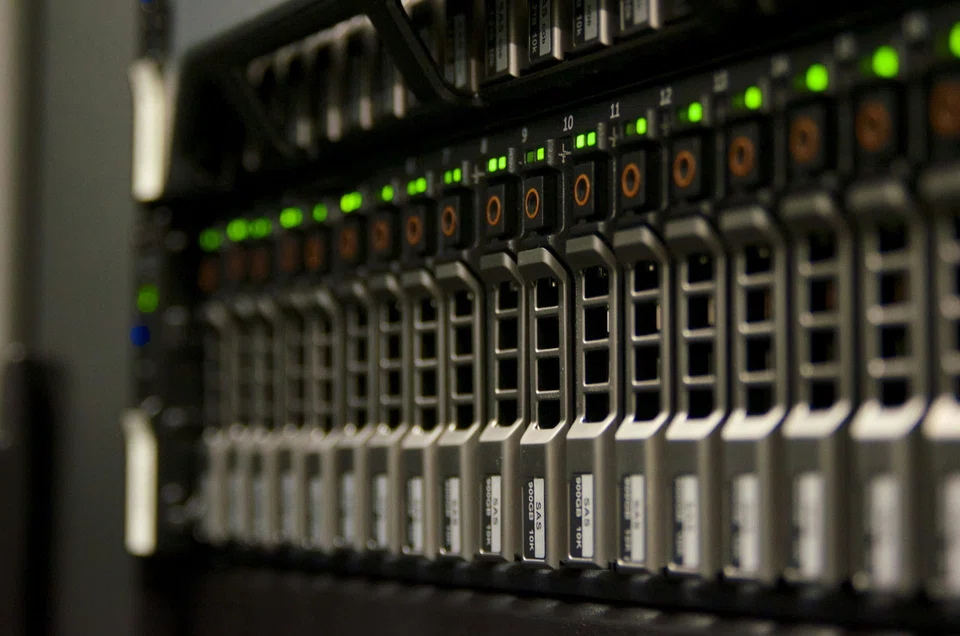
[HONG KONG] Data centres across Asia are racing to offload excess computing power to US buyers after the Trump administration tightened a loophole that gave Chinese tech firms access to Nvidia’s most advanced chips.
That is according to Ronit Jain, chief executive and co-founder of Liquid Compute, a New York-based startup building a regulated exchange for artificial intelligence computing capacity.
A new rule targeting exports of cutting-edge AI accelerators to the region is hitting data centre providers that were counting on renting computational resources to Chinese customers, he said.
The cost to access Nvidia’s powerful B300 graphics processing units (GPUs) was US$7.72 per GPU-hour at the end of October, according to a Liquid Compute index.
That had fallen 7 per cent to US$7.19 as at Tuesday, according to the startup, which says it tracks over 200 data centre companies. A post Jain made on X last week highlighting the declining prices drew widespread attention.
“All the neoclouds based in Asia-Pacific selling to Tencent and other companies, or in Singapore or Taiwan with Chinese companies as offtakers, have excess capacity,” Jain said in an interview.

“They’re trying to broker it into the US.” He declined to name the companies selling their excess compute, or the buyers.
This time in 2025, the price of B300s stood at US$4.55 per GPU-hour and had steadily increased before falling over the course of October, Jain said.
Nvidia’s board reinstated co-founder Jensen Huang as chief executive officer this week, 11 days after he resigned amid revelations that he had had multiple extramarital affairs, including one with a woman the US government has investigated for spying on behalf of China.
At the heart of the scandal was the woman’s company, Singapore-based Megaspeed International, which was alleged to have been smuggling Nvidia’s AI chips into China.
The US government last week said shipments of advanced chips to four countries in South-east Asia will require Washington’s permission.
It also announced a soon-to-come global clampdown on data centres that provide Chinese firms with remote access to advanced hardware they are restricted from buying.
New York-based Liquid Compute, which was founded in 2024, tracks over 200 neoclouds, many of them with operations in Asia-Pacific, Jain said.
In September, the startup raised US$15 million in a seed round co-led by FirstMark Capital and Chemistry Ventures. The company is also backed by startup accelerator Y Combinator.
Before the controversy, Nvidia’s Huang had been among the most vocal advocates of Chinese chip buying.
Even with his reinstatement, market participants appear to be operating under the assumption that Chinese firms will no longer be able to access Nvidia’s chips via AI cloud providers, according to Jain.
“Just based on basic economics, you would expect the price to decrease with a temporary influx of supply,” he said. BLOOMBERG
Decoding Asia newsletter: your guide to navigating Asia in a new global order. Sign up here to get Decoding Asia newsletter. Delivered to your inbox. Free.
Share with us your feedback on BT's products and services
TRENDING NOW

StarHub-M1 deal could add to Keppel’s special dividends but analysts flag potential wait

Could Jensen Huang work for Elon Musk? It would be ‘a titanic ego death match’, says biographer
Why Singapore, Johor and Riau Islands should build a cross-border ecosystem for AI

Alice Huang-linked firms listed US$270 million in AI servers in China, records show

