
Asia seeks to stay out of US-China crossfire
 Add BT as a preferred source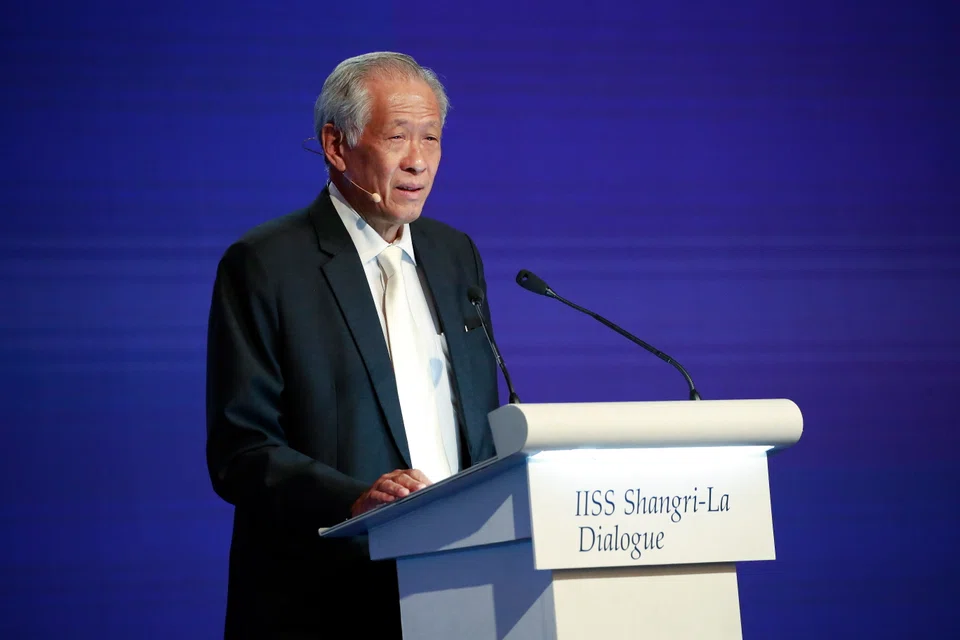
ASIAN defence chiefs urged efforts to protect the borders of smaller nations in the wake of the Ukraine war, while baulking at joining in on the broader US-China tussle.
Ministers of smaller nations such as Fiji and Singapore warned against framing the crisis as part of an ideological contest between autocracies and democracies as the IISS Shangri-La Dialogue wrapped up in Singapore.
Earlier on Sunday (Jun 12), Chinese Defence Minister Wei Fenghe hit back at the US’s Indo-Pacific strategy, which he blamed for pushing the 2 sides towards confrontation.
Both the US and China are using Asia’s biggest annual security conference to drum up support for their competing visions for regional stability, even as Ukraine consumes Washington’s attention and Beijing struggles with economic pressures at home.
Questions about which side Fiji would take in the US-China struggle over the South Pacific have been so frequent, the nation’s defence minister joked that people kept asking him, “When will you get married?”
“We’ve met the Americans. We met the Japanese. We met the Chinese. We met the Australians. You name it,” said Inia Batikoto Seruiratu, Fiji minister for defence, national security and policing. “We all have the sovereign rights to make our own decisions. But at the same time, I will also see benefit from all these relationships that we have, including China.
Navigate Asia in
a new global order
Get the insights delivered to your inbox.
Singapore’s Defence Minister Ng Eng Hen said “there would be few takers for a battle royale” between democracy and autocracy in Asia. Still, he said smaller nations needed to work together to ensure that their sovereignty was not violated by larger powers.
“For all Asian countries, we must ensure that our deeds match our words if we are to avoid a calamity like Ukraine,” Ng said.
Chinese Defence Minister Wei earlier warned that the Biden administration’s Indo-Pacific strategy was pushing the world’s 2 largest economies towards confrontation.
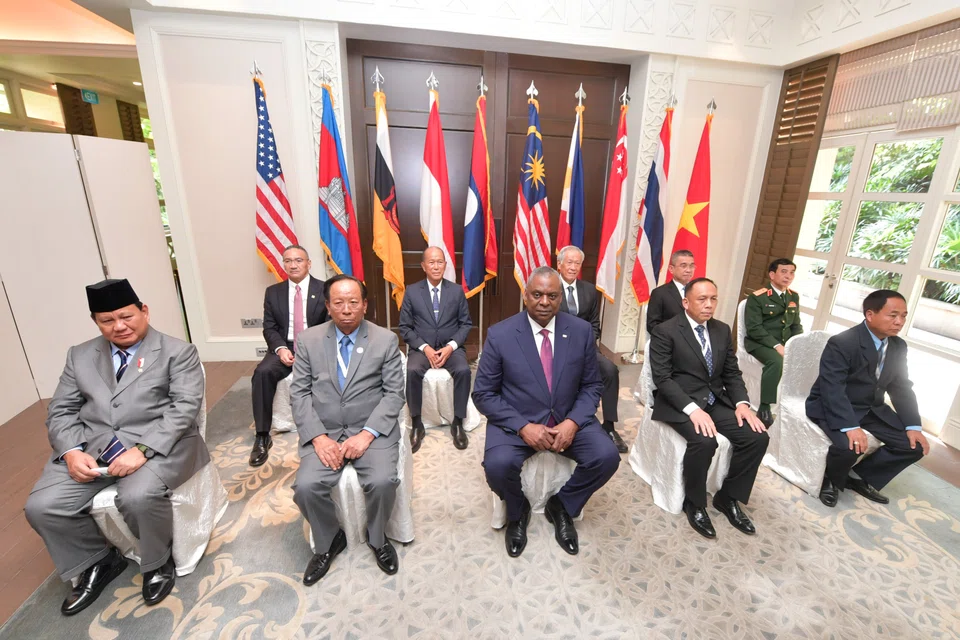
“To us, the strategy is an attempt to build an exclusive small group in the name of a free and open Indo-Pacific, to hijack countries in our region and target one specific country,” Wei said in a roughly 30-minute speech. “It is a strategy to create conflict and confrontation to contain and encircle others.”
The US’s top commander in the Pacific said he believed the world was experiencing “potentially the most dangerous period” since World War II, and urged greater measures to prevent miscalculation and miscommunication. Admiral John Aquilino blamed China’s “destabilising actions” and “failure to respect agreements” in Hong Kong and disputes on the Indian border, alongside Russia and North Korea for contributing to global instability.
“These aggressive behaviours are escalating tensions,” the Indo-Pacific Command chief said. “They’re increasing the potential for miscalculation, and hence the topic of crisis communications is completely relevant based on that security environment.”
Ukrainian President Volodymyr Zelenskiy addressed defence officials via video link, evoking the words of the late Singaporean leader Lee Kuan Yew while he criticised Russia for trying to dismantle the international order.
“I want to remind you of the words of a person whom you know very well — if there had been no international law, and the big fish ate the small fish and the small fish ate shrimps, we would not have existed ...
“These are the wise words of Lee Kuan Yew, the leader who was perspicacious enough to see the clear reasons of many things and resources, and who knew exactly what is of value,” he added.
Singapore hopes all parties will “exercise restraint and maintain dialogue” on situations in the East China Sea and South China Sea in order to preserve regional peace and stability, Prime Minister Lee Hsien Loong said after a meeting with his Japanese counterpart Fumio Kishida.
“The issues are complex and unlikely to resolve soon, but they should continue to be managed peacefully in accordance with international law,” he said. BLOOMBERG
Decoding Asia newsletter: your guide to navigating Asia in a new global order. Sign up here to get Decoding Asia newsletter. Delivered to your inbox. Free.
Copyright SPH Media. All rights reserved.

