‘Asia will be the growth engine’: FedEx’s Salil Chari on riding the AI boom
Global logistics is in a volatile era but this has not derailed his focus on regional high-value trade

The strategies and stories that shape today’s leaders
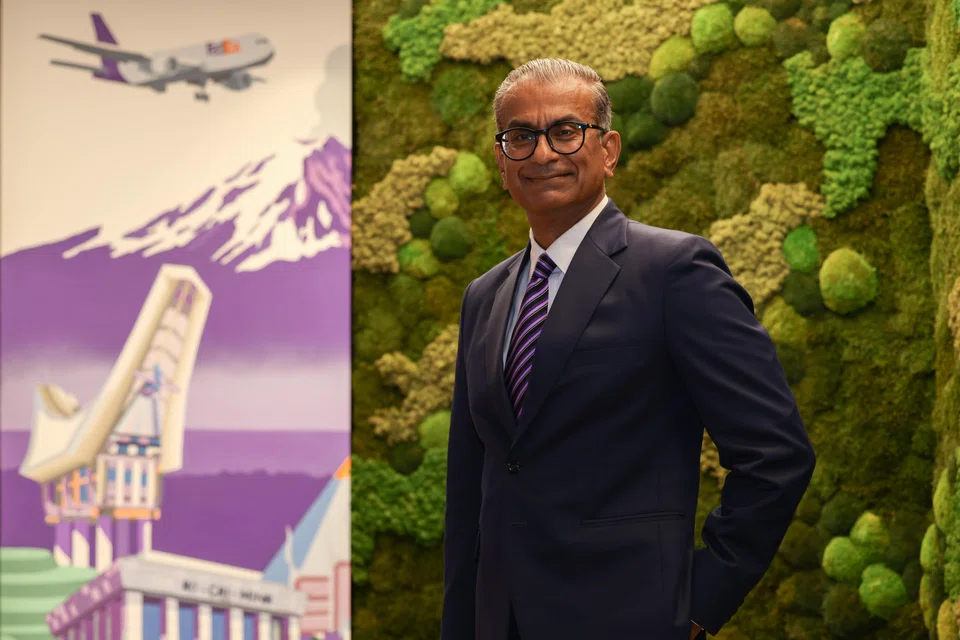
[SINGAPORE] FedEx’s Asia-Pacific regional president Salil Chari wants to seize artificial intelligence-driven growth opportunities in the region – while helping customers navigate the new norms of trade amid geopolitical instability.
“Asia will be the growth engine for FedEx, and it’s my goal to make that a reality,” he told The Business Times in an interview at the company’s Singapore office.
In March, FedEx marked its single-largest investment in Taiwan in 35 years: It expanded its transhipment centre at the Taoyuan International Airport to 19,000 square metres, with an automated sorting system that processes up to 9,000 packages per hour.
“Taiwan especially is at the epicentre of all that’s going on for AI data centre infrastructure, so we’re seeing tremendous growth in that market,” noted Chari, adding that the company also wants to grow “much faster” in South-east Asia.
“We want to tap into the AI data centre infrastructure that’s really booming – so lots of opportunity and (I’m) really excited about the prospects of the region.”
FedEx has made a series of strategic moves to ride on the wave of high-value manufacturing in Asia.
In July last year, the company launched its first direct flight connecting Taiwan and South Korea, to boost trade in high-tech sectors such as semiconductors and electronic components.
In the following months, it added a new cargo flight between the semiconductor hubs of Guangzhou and Penang, as well as another connecting South Korea, Vietnam and Guangzhou.
FedEx has also inked a memorandum of understanding to invest RM46 million (US$11.3 million) in a 100,00 square foot logistics facility within the upcoming Penang International Logistics Aeropark.
As Chari put it: “Asia is really in the middle of how trade flows are being reshaped.”
Opportunity in crisis
The 55-year-old logistics veteran has been at FedEx for almost three decades, and rose to his current role in January – just about two months before the US-Iran war broke out.
He does not downplay its impact. Operations in the company’s Dubai hub were hit by the war, and traffic had to be adjusted to keep serving customers. Jet fuel and petrol costs soared, and remain volatile.
Asked about his outlook on the war, Chari mused: “Forecasting is a hazardous business; you never know which way it’s going to go. We hope for the best, and we plan for the worst.”
This means a heavy focus on scenario planning to prepare for more volatility – but without neglecting Asia’s rich growth opportunities.
Chari acknowledged that clients have grown cautious, and supply chains are more complex.
“Companies are now shifting from efficiency – where they might have had a single plant and (are) manufacturing for efficiency – (to) thinking about resilience and diversification. They are... multi-sourcing... maybe manufacturing in multiple countries,” he said.
But this also supports greater trade between China and South-east Asia, spurring more companies to set up manufacturing operations in Asean countries.
“As customers move from a model of efficiency to one of more resilience and diversification, intra-Asia (trade) flows are growing very fast,” Chari said.
Climbing the ranks
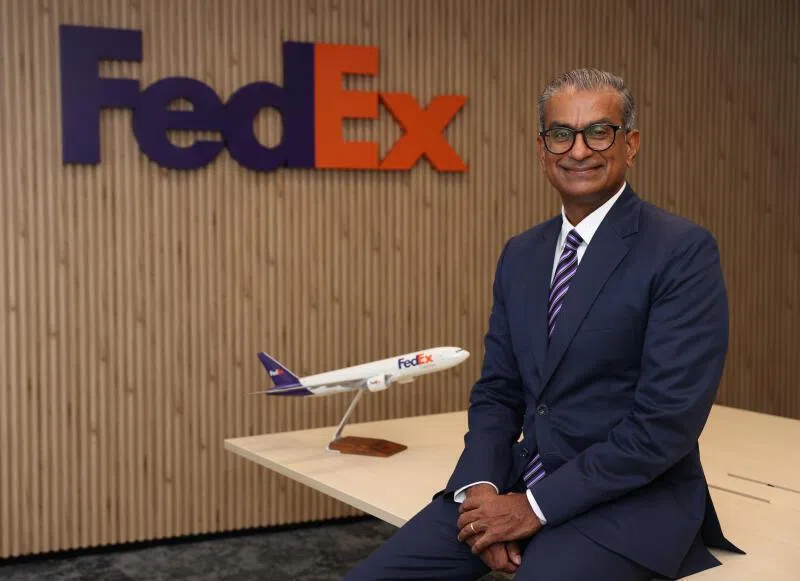
Chari grew up in the Indian city of Chandigarh and studied chemical engineering in Delhi. He first worked for Procter & Gamble, before moving to the US for an MBA. He started his career at FedEx in 1997 as a marketing analyst in the US city of Memphis.
Even while based in the US, he gained a first-hand insight into FedEx’s growing emphasis on Asia: with the company launching a “super express freighter” linking Japan and Memphis.
“I believe it used to be called the ‘Back to the Future’ flight, because it used to land before it took off (with) the time difference,” he recalled.
Chari then moved to FedEx’s South American division, which was then “almost like a little startup” and filled with “tremendous learning opportunities”.
“The wonderful thing about being in a small division was you got to wear multiple hats. So I did a lot of things in marketing, product development, forecasting, analysis, customer service; we also did several mergers and acquisitions,” he said.
In 2015, he moved to the Asia-Pacific division, rising to become the region’s senior vice-president of marketing and customer experience.
Making the leap from a “functional” role to into his current “managerial” one meant embracing many changes. “In the new role, (I’m) responsible for 30,000 team members and their families, so it’s a bigger sense of responsibility,” he said.
Combined with the outbreak of war, the learning curve has been steep. But as Chari believes: “Whenever you have a lot of change going on, it’s also a time where you know you have more personal growth.”
From parcels to predictive analytics
Growing amid changes is also vital for the business. Even as FedEx is a market leader – moving 17 million packages a day – traditional metrics such as speed are no longer enough to stand out, Chari pointed out.
Instead, he reckoned that the company has to leverage data and AI for insights to thrive even with geopolitical volatility.
“Those 17 million packages a day generate about two petabytes of data. There’s a lot of information there – what’s in the package; where is it going? That data can be used to provide predictive insights for our customers, which is critical for them.”
FedEx is tapping AI for a competitive edge. For instance, the company developed FedEx Surround, a tool that provides real-time data about shipments, including predictive delay alerts.
Some 40 per cent of FedEx’s healthcare customers tap this for “predictive visibility” over critical shipments, said Chari.
FedEx is also applying AI internally to improve efficiency, such as for real-time route optimisation, and to solve problems for customers.
As he sees it, logistics is no longer just a game of being the fastest. “Speed and reliability – that’s no longer a differentiator anymore. Now customers are looking for adaptability and predictability.”
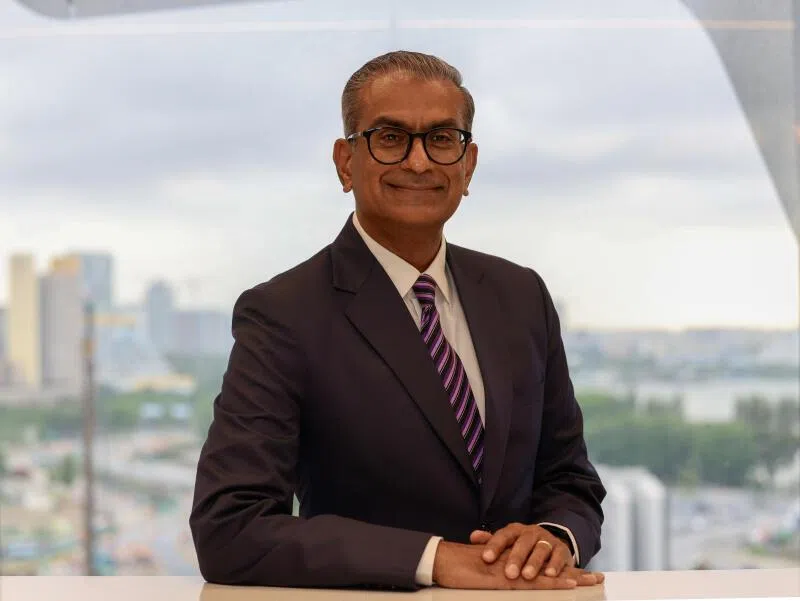
Three questions with Salil Chari, regional president, Asia-Pacific, Fedex
Q: Was there a pivotal moment in your career or personal life that changed your approach to leadership?
I used to teach karate when I was in my early teens. My first job was teaching at a school; I would have been 13 or 14 at the time, (with) four students (who) were all my age... I (would) cycle to the school; it was a few kilometres away.
One day it was raining, and I didn’t go. The next day... one of the students said: “Oh, we expected you to show up.”
They said it in a very nice manner, but it really hit home... It was very pivotal in terms of understanding leadership – the responsibility that comes with being a leader, which is being there for your team.
Q: What is one piece of “unconventional wisdom” you swear by, but which most business schools would tell you is wrong?
The one value that I’ve kept consistently is the golden rule, which is: “Do unto others what you want others to do unto you”. In a lot of business schools, leadership is more about frameworks and less about people.
(The golden rule) is something that is a core value for me: treating people with respect, listening. It doesn’t mean you can’t have tough conversations with them, but you do it with the right intention.
Q: When you feel burnout creeping in, what is your non-business-related “panic button” activity or routine that reliably resets your focus?
One is exercise. I find it important to manage my personal energy. If I don’t do that, I’m not at my best. And if I’m not at my best, I can’t be at my best for my team.
The second thing that I enjoy is sailing. When I got into it, I just enjoyed the feeling of being on the water. But as I got more and more into it, (I realised) there are a lot of parallels to work and business.
While it certainly helps me completely disconnect... it’s about teamwork. When you’re sailing, it’s usually more than one person, and you have to really communicate and be in a team.