

Asian currencies dragged lower by oil spike, with Fed path and Middle East trajectory key risks ahead
But analysts say energy prices are unlikely to shape the region’s currency trajectory over a sustained period

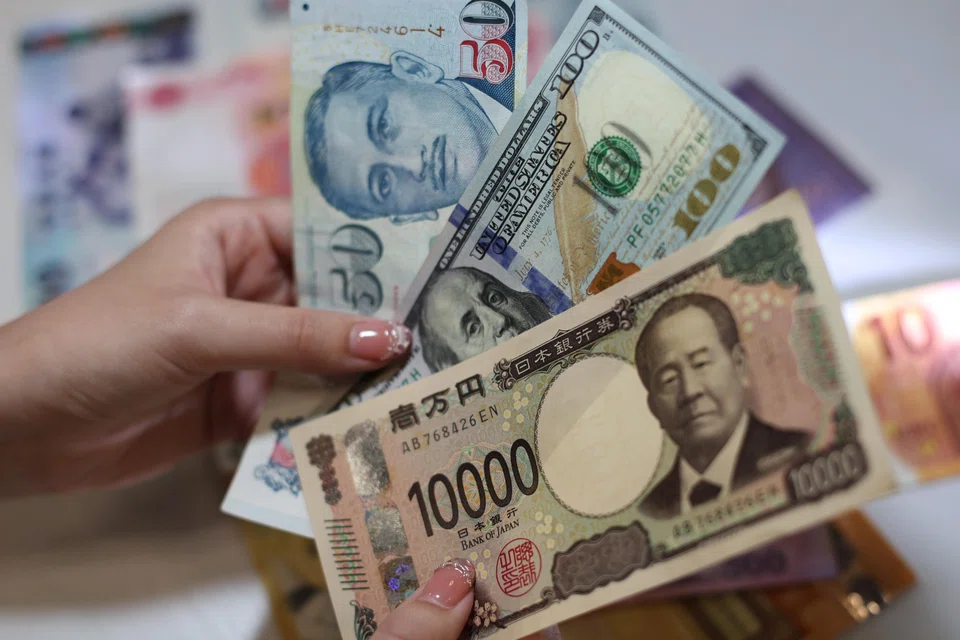
[SINGAPORE] Escalating tensions in the Middle East have pushed major Asian currencies lower against the US dollar over the past week, as oil prices surged and investors sought the greenback as a safe haven.
However, analysts said energy prices – the main transmission channel through which the conflict involving Iran, the United States and Israel affects the global economy – are unlikely to shape the region’s currency trajectory over a sustained period.
“Unless the shock is severe and sustained, we do not expect energy prices to influence the region’s medium-term currency path,” said Vishrut Rana, a senior economist at S&P Global Ratings.
Instead, exchange rates are likely to remain driven by structural factors, including broad US dollar moves, structural current account balances, investment flows and economic growth, he added.
Saktiandi Supaat, head of foreign exchange research at Maybank, said the bank’s baseline still “assumes a modestly softer US dollar in the first half of the year with greater divergence across Asian currencies, depending on domestic fundamentals”.
He said the outlook for regional currencies will likely hinge on three key factors: the trajectory of the Middle East conflict and energy prices; the US Federal Reserve’s policy path; and how Asian central banks respond.
“If the geopolitical situation de-escalates and oil prices fall back, the current risk premium embedded in the US dollar could unwind, which would support Asian currencies,” he added.
“Similarly, clearer evidence of slowing US inflation or weaker growth could allow the (Fed) to cut rates sooner or more aggressively, which would also reduce dollar strength.”
The greenback has strengthened against most major currencies since the US and Israel struck targets in Iran on Feb 28, triggering a conflict that has reverberated across the Gulf region.
Over the past five days, the US dollar index – which measures the greenback against a basket of six major currencies – has risen 1.4 per cent to 98.96, reversing earlier declines and bringing its year-to-date gain to 0.7 per cent.
The Singapore dollar has fallen 1.1 per cent against the greenback over the same period.
Other major Asean currencies have weakened, too, including the Malaysian ringgit (minus 1.3 per cent), Thai baht (minus 1.6 per cent), Philippine peso (minus 1.6 per cent), Indonesian rupiah (minus 0.8 per cent) and Vietnamese dong (minus 0.3 per cent).
Elsewhere in Asia, the Indian rupee (minus 0.7 per cent), Japanese yen (minus 0.7 per cent) and South Korean won (minus 2.9 per cent) have also declined.
Saktiandi noted that the won’s sharper fall reflects its sensitivity to global risk cycles and technology equities, making it particularly vulnerable when market volatility rises.
Meanwhile, Brent crude climbed 17.2 per cent to US$82.93 a barrel, partly on fears that the Strait of Hormuz – through which about 20 per cent of global crude supply passes – could be disrupted by the conflict.
Greenback strength, oil shock
Pressure on Asian foreign exchange rates stems from two main forces: a stronger US dollar driven by safe-haven demand and shifting expectations for Fed rate cuts, alongside higher oil prices that worsen the region’s terms of trade.
“The geopolitical conflict has pushed energy prices higher and raised inflation risks, which in turn has led markets to scale back expectations for near-term Fed easing. That has supported the US dollar broadly,” said Saktiandi.
“At the same time, many Asian economies are net energy importers, so higher crude prices effectively act as a negative income transfer to the region. This tends to weigh on currencies.”
Christopher Wong, foreign exchange strategist at OCBC, noted that historically, the FX impact of such shocks has not been uniform across the region.
Regression analysis shows that the rupiah, peso and won “tend to be more vulnerable” because they weaken both when oil prices rise and when global volatility increases.
Other currencies such as the Singdollar and ringgit “display more balanced exposures”, Wong said. The ringgit can benefit from higher oil prices given Malaysia’s commodity-exporting profile, while the Singdollar has historically been more defensive within the region.
Even so, the persistence of foreign exchange moves tends to depend less on the initial oil price spike and more on whether supply disruptions prove prolonged.
Key risks ahead
Analysts said the main risk for Asian currencies lies in the duration and scale of the geopolitical shock.
“If tensions in the Middle East ease and the risk of supply disruption diminishes, the oil risk premium could unwind quickly. In that scenario, some of the recent weakness in higher-beta Asian currencies could reverse as risk sentiment stabilises,” said Wong, referring to currencies that exhibit greater volatility and sensitivity.
“Conversely, if the conflict escalates and begins to materially disrupt production or shipping through the Strait of Hormuz, oil prices could remain elevated for longer,” he added.
“A sustained supply shock would reinforce inflation pressures and could weigh more persistently on currencies of net energy importers.”
Saktiandi said other downside risks include a sustained rise in shipping costs or a renewed acceleration in US inflation driven by higher energy prices, which could delay Fed rate cuts and keep US yields elevated.
“Finally, a deeper global risk-off episode driven by equity or credit markets could weigh more heavily on higher-beta Asian currencies such as the Korean won, Indonesian rupiah and Thai baht.”
TRENDING NOW

Fed hike throws Singapore banks a margin lifeline; UOB most likely to feel impact

He built the Vingroup empire. Now South-east Asia’s richest man is handing some key roles to his sons

Real-estate veteran Desmond Sim quits from CEO roles at Realion, ETC
Chagee, Mixue and Luckin won the market. Sustaining their edge is the harder part

