

Australia CPI inflation flat in November, under forecasts
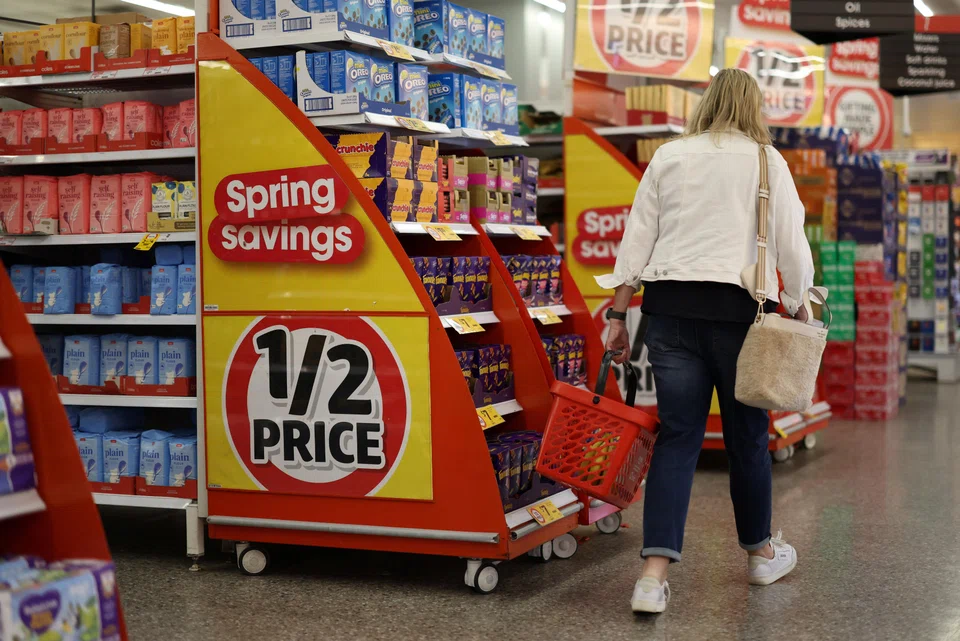
[SYDNEY] Australian consumer prices rose by less than forecast in November, data showed on Wednesday, but core inflation showed enough stickiness that investors still saw a risk interest rates would have to be hiked as early as next month.
The Australian dollar initially slipped but was back to where it was, at US$0.6734. Three-year government bond futures rose 5 ticks before giving up gains to be slightly lower on the day at 95.78.
Investors still see a 33 per cent risk that the Reserve Bank of Australia will be forced to hike rates again in February.
Data from the Australian Bureau of Statistics showed that its monthly consumer price index (CPI) was unchanged in November from the previous month, while the annual pace slowed to 3.4 per cent from 3.8 per cent. Median forecasts had been for rises of 0.3 per cent and 3.7 per cent, respectively.
That was due to price falls in clothing, footwear, furnishings and household equipment, which had been affected by the Black Friday sales event. Costs for recreation and culture also fell in the month as demand for domestic travel fell back after the holiday season.
However, the trimmed mean measure of core inflation increased by 0.3 per cent in the month, taking that annual rate to 3.2 per cent, compared to 3.3 per cent in October. That was still above the RBA’s target range of 2 to 3 per cent.
Housing costs were up a solid 1.1 per cent in November, driven by rents and new dwellings, suggesting some sticky inflationary pressures.
“As the RBA digests the idiosyncrasies of the new monthly CPI measure, it continues to focus on the quarterly measure to inform rate movements,” said Harry Murphy Cruise, head of economic research at Oxford Economics Australia.
“That data lands at the end of the month, with 3.2 per cent being the magic number for trimmed mean inflation. Anything above that will warrant a hike when the RBA board next meets in early February.”


The RBA cut interest rates three times last year to 3.6 per cent but has warned that the next move could be up given the pick-up in inflation. Headline inflation had accelerated in the third quarter to 3.2 per cent, fuelling concerns that monetary policy might not be restrictive at all.
The Commonwealth Bank of Australia and the National Australia Bank have tipped a quarter-point hike next month, arguing the economy is already at its capacity. The labour market also stayed resilient, with the jobless rate hovering at a historically low level of 4.3 per cent. REUTERS
Decoding Asia newsletter: your guide to navigating Asia in a new global order. Sign up here to get Decoding Asia newsletter. Delivered to your inbox. Free.
Share with us your feedback on BT's products and services
TRENDING NOW

8 public officers referred to police over property buys near unannounced MRT stations: Chan Chun Sing
DBS tops trades in smaller board lots on debut of revised SGX framework

Grab CEO’s wife Chloe Tong on life with Anthony Tan and finding her purpose

Retrenched PMETs who return on lower pay see median 25% wage cut

