

Australia PM focused on workplace reform as he marks 100 days in office
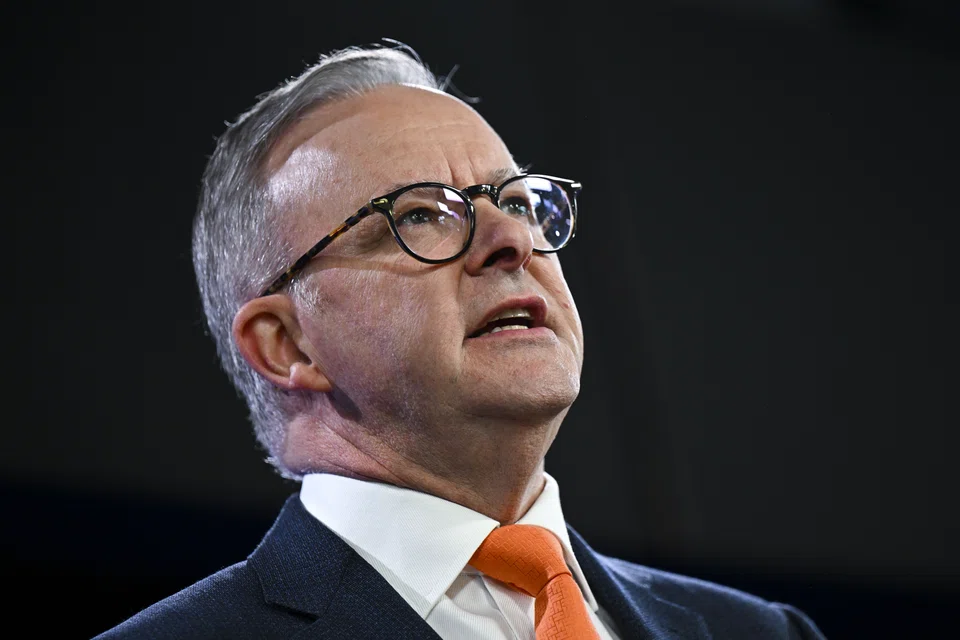
AUSTRALIAN Prime Minister Anthony Albanese said his government was focused on jobs and workplace reform as the country faces economic challenges in the recovery phase of the Covid-19 pandemic.
In a speech in Canberra to mark 100 days of Labor government, Albanese said his government had a growth agenda that was pro-business and pro-worker.
A government-hosted jobs summit this week will bring together key employer and union groups to discuss wages growth, productivity, migration and workplace reform.
“The biggest single outcome I am hoping for is the beginning of a culture of cooperation,” Albanese told the National Press Club on Monday.
Albanese said widespread skills shortages were acting as a handbrake on the economy, and it was unwise for the previous government to tell temporary visa holders to leave Australia during the pandemic as borders closed.
In addition to discussions on lifting Australia’s migration intake, the government would look at creating “more paths to permanent migration” to attract foreign workers back in areas including nursing and engineering, he said.
The government’s immediate priority is shoring up the economy to give families and businesses security and certainty, he said.
“Australia is already in the ‘recovery’ phase – and that’s presenting its own economic challenges. Including significant and unpredictable supply and demand imbalances which are driving up costs, for businesses and families.”
The pandemic was a race that Australia wasn’t ready for, he said.

“We were left vulnerable – not just by complacency and a failure to plan, but by years of cuts and wilful neglect to the very services and skills we needed most. We found ourselves economically exposed, hanging on the end of the global supply chain.”
Nurses, teachers and aged care workers were exhausted by the pandemic and there was a need to boost employment in these sectors for the decade ahead, he said.
Many industries and small businesses in hospitality, tourism and education were also struggling to reboot. Albanese criticised the record of the conservative former government’s nine years in power, including “chaos” in energy policy and stagnant wages.
He highlighted the action his government had already taken on climate change, its decision to hold a national referendum seeking approval to recognise Aboriginal and Torres Strait Islander people in the constitution, and its support for raising the minimum wage.
Australia’s central bank warned this month inflation was heading to three-decade highs requiring further hikes in interest rates that would slow growth sharply. REUTERS
Decoding Asia newsletter: your guide to navigating Asia in a new global order. Sign up here to get Decoding Asia newsletter. Delivered to your inbox. Free.
Share with us your feedback on BT's products and services
TRENDING NOW
Easy to rent out, hard to sell: Are buyers losing interest in Singapore’s one-bedroom condos?

GovTech retrenches another 38 staff in second round of layoffs
Stocks to watch: Seatrium, CapitaLand Investment, Keppel DC Reit, Suntec Reit, CLCT, TSH Resources

World’s largest offshore wind platform by Seatrium consortium on track to be completed by 2028

