

Australian household spending beats expectations in November
The RBA has cut rates by 75 basis points to 3.6%, the lowest level since April 2023

[SYDNEY] Australia’s household spending rose at a faster-than-expected pace in November, indicating consumers are feeling confident about their finances even as inflation and borrowing costs remain elevated.
Consumption rose 1 per cent from the prior month to surpass economists’ predictions for a 0.6 per cent gain, according to data from the Australian Bureau of Statistics (ABS) on Monday (Jan 12). This represents an on-year jump of 6.3 per cent, which also exceeded forecasts.
Household spending can be an important consideration for monetary policy as private consumption accounts for more than half of gross domestic product. Reserve Bank of Australia (RBA) officials have repeatedly highlighted the outlook for consumer spending as a key uncertainty in its decision-making.
“Household spending remained strong in November, continuing the strong rises in services and goods spending seen in October,” said Tom Lay, head of business statistics at the ABS. “Services spending rose by 1.2 per cent, driven by major events, including concerts and sporting fixtures. These events are linked to higher spending on catering, transport, and recreation and cultural activities.”
Monday’s figures come amid growing uncertainty over the RBA’s next course of action after governor Michele Bullock in December ruled out further rate cuts and signalled the next move may be a hike.
Some economists, including those at Commonwealth Bank of Australia and National Australia Bank, are predicting at least one rate rise this year while others, including Bank of America, see an on-hold stance. Money markets are betting on a strong chance of a rate increase in May.
Expectations for a hike gathered momentum after the third-quarter inflation report showed signs of broad-based price pressures across the economy. Monthly consumer price figures since then have also shown inflation above the RBA’s 2 to 3 per cent target band.
Last week, RBA deputy governor Andrew Hauser described inflation as “too high” and said Australians have probably seen the last cut of the easing cycle which began last February.
At the same time, he signalled the rate-setting board is taking a patient approach to control high inflation, ahead of this year’s first policy meeting on Feb 2 to 3. The RBA has cut rates by 75 basis points to 3.6 per cent, the lowest level since April 2023.
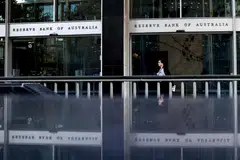



Before the February gathering, the rate-setting board will see December employment figures, testing policymakers’ view that Australia’s labour market remains tight. Fourth-quarter inflation data due late January will also be pivotal for rate expectations.
Monday’s data also showed:
- The biggest rise was in furnishings and household equipment, followed by clothing and footwear and recreation and culture.
- Services spending was 7.8 per cent higher than November 2024, while goods spending was up 4.9 per cent compared to a year ago.
- Growth in goods spending was driven by Black Friday sales, with clothing, footwear, furnishings, and electronics seeing the biggest gains as consumers took advantage of widespread discounts, Lay said. BLOOMBERG
Decoding Asia newsletter: your guide to navigating Asia in a new global order. Sign up here to get Decoding Asia newsletter. Delivered to your inbox. Free.
Share with us your feedback on BT's products and services
TRENDING NOW

ComfortDelGro appoints two new independent directors

Once staunchly pro-China, Malaysian Chinese businesses are now distancing themselves from Beijing

NoonTalk needs continued financial support from CEO Dasmond Koh, auditors warn

DP Architects sets the benchmark for sustainability disclosure and design

