

Australian, New Zealand dollars hit two-week highs on Trump tariff delay
 Add BT as a preferred source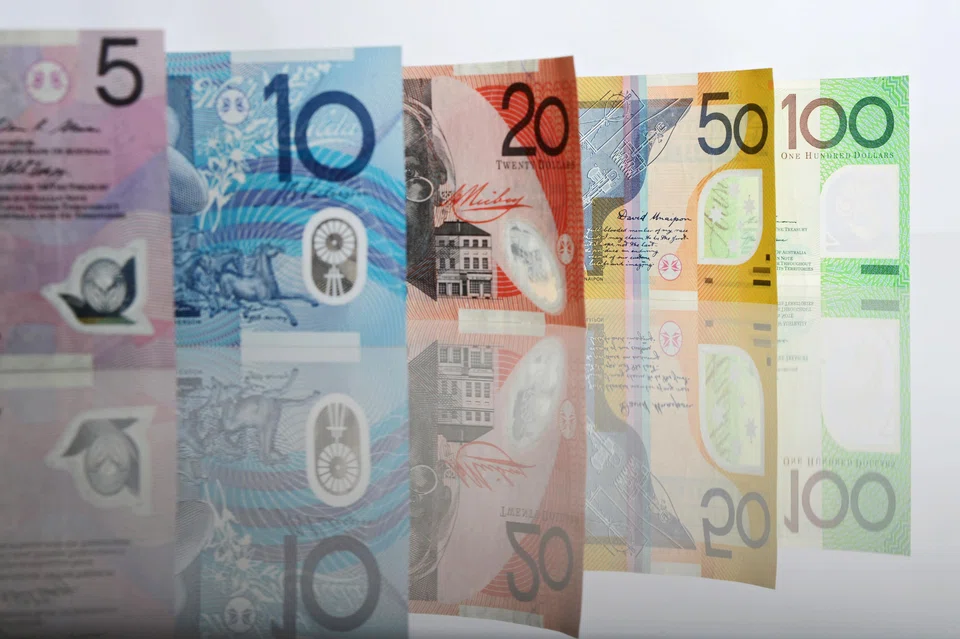
DeeperDive is a beta AI feature. Refer to full articles for the facts.
THE Australian and New Zealand dollars were standing near two-week highs on Tuesday after US President Donald Trump stopped short of imposing new tariffs on his first day in office, triggering a broad correction in the greenback.
Local bonds also gained, tracking the rise in Treasuries. Australia’s three-year government bond futures rose 3 ticks to 96.11, while ten-year futures also gained 4 ticks to 95.53.
The Aussie edged up 0.1 per cent to US$0.6282, having rallied 1.4 per cent overnight to a two-week top of US$0.6287. The bounce likely saved it from testing new five-year low in the near-term, with resistance now at US$0.6302.
The kiwi dollar had better luck and hit a fresh two-week high of US$0.5683, after gaining 1.6 per cent overnight. Resistance lies at US$0.5692, with support at US$0.5539.
In the broader market, the US dollar was nursing heavy losses after Trump used his inauguration speech to announce emergencies on immigration and energy. There was a brief mention of tariffs and, so far, no details on how or when they might be rolled out.
“Trump’s mercurial nature means that it could all unravel in the time it takes to push send on a social media post,” said Kyle Rodda, senior analyst at Capital.com.
Navigate Asia in
a new global order
Get the insights delivered to your inbox.
“However, reports of a cooperative tone to conversations with China and a more deliberate approach to the application of tariffs have the markets hoping that the worst parts of the Trump-trade, tariffs, won’t materialise.”
The Chinese yuan - which the two antipodeans have closely tracked due to their close trade relations with China - had a huge relief. The dollar dived 1.1 per cent overnight to 7.2611 yuan in offshore trade.
Local data on Tuesday showed New Zealand electronic retail card spending rose 2.0 per cent in December, the largest monthly rise since early 2022.


New Zealand also has consumer prices on tap on Wednesday where analysts look for a mild 0.4 per cent rise in the fourth quarter. Annual inflation is seen slowing to 2.1 per cent, from 2.2 per cent, the lowest reading since 2021.
The Reserve Bank of New Zealand next meets on Feb 19 and markets imply around an 80 per cent chance it will cut its 4.25 per cent cash rate to 3.75 per cent. Rates are seen falling further to between 3.0 per cent and 3.25 per cent by the end of the year.
The Australian data diary is bare this week. The closely watched quarterly consumer price report is due on Jan 29 and analysts are hopeful the all-important trimmed mean will rise just 0.6 per cent in the fourth quarter, the smallest increase since mid-2021.
Markets imply around a 63 per cent chance the RBA will cut its 4.35 per cent cash rate by a quarter point at its Feb 18 meeting. REUTERS
Decoding Asia newsletter: your guide to navigating Asia in a new global order. Sign up here to get Decoding Asia newsletter. Delivered to your inbox. Free.
Share with us your feedback on BT's products and services
TRENDING NOW

From 1MDB to ‘corporate mafia’: Is Malaysia facing a new governance test?

Higher costs, lower returns: Why are Singaporeans still betting on real estate?

South-east Asian markets account for 8.8% of global capital inflows from 2021 to 2024: report

Richard Eu on how core values, customers keep Singapore’s TCM chain Eu Yan Sang relevant

