

Australia’s consumer, business sentiment lift as inflation ebbs
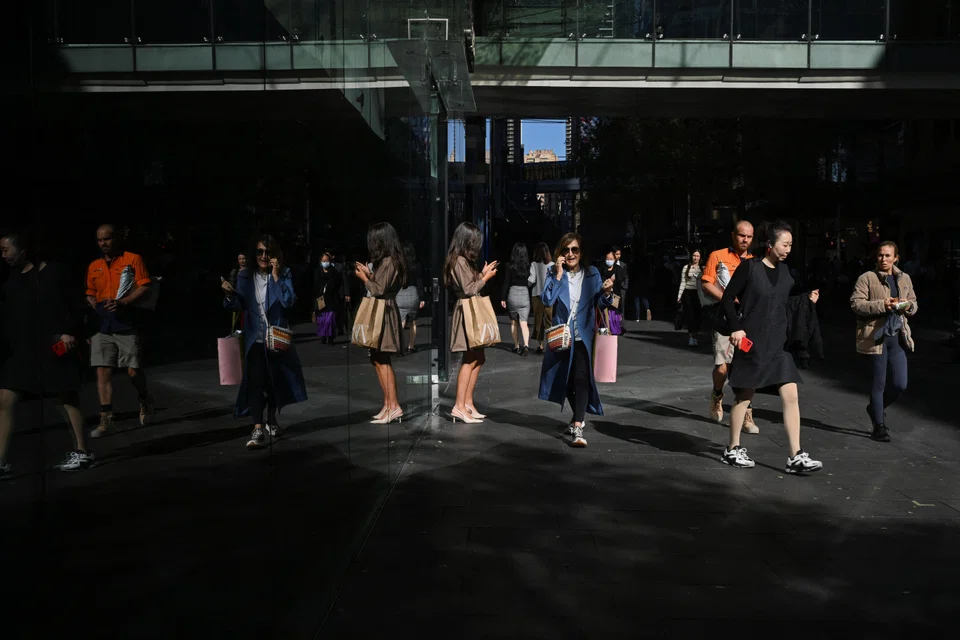
HIGHEST level since early 2023, reflecting ebbing inflation pressures that suggest the next move in interest rates will be a reduction.
A National Australia Bank (NAB) survey showed on Tuesday (Nov 12) that business confidence climbed seven points in October after hovering around 0 for an extended period. Conditions, which measure jobs, sales and profitability, remained unchanged.
“While it’s just one-month this is an encouraging sign alongside a tentative improvement in forward orders,” said Gareth Spence, head of Australian economics at NAB. “We continue to watch the survey closely – not just for the forward looking and activity indicators, but also capacity utilisation which will be key in the evolution in price pressures for the economy.”
The confidence across corporate Australia extended to households, with consumer sentiment climbing 5.3 per cent to 94.6 points, a Westpac Banking survey showed on Tuesday. The index is now up 14.4 per cent from its mid-year lows and closing in on the 100 dividing line between pessimists and optimists.
The data indicate that business and household sentiment are now converging after moving on different tracks for the past two years. This reflects easing worries about further rate increases by the Reserve Bank of Australia (RBA) and greater confidence in the economic outlook.
The consumer survey was carried over the week ending Nov 9, providing an insight into reactions to both the RBA’s policy decision, where it left the key rate at a 13-year high of 4.35 per cent, and the US election result.
The details showed that consumer sentiment was “markedly higher” at the start of the week with an index reading of 99.7 but posted a sharp fall following Donald Trump’s election victory.
“Whether the strong start, or weaker finish to the week are a better guide depends on how lasting the post-US election drop is expected to be,” said Matthew Hassan, a senior economist at Westpac. “That said, the mood does look to be improving and is providing some more positive signs for retailers ahead of the all-important Christmas high season.”
Household sentiment has been in the doldrums in the post-pandemic period as a surge in inflation prompted the RBA to raise rates; the central bank has pointed to persistent price pressures to justify keeping them elevated even as global counterparts ease.


Consumers are likely jittery after the US election over potential fallout from Trump trying to pressure Beijing with tariffs, given China is Australia’s largest trading partner.
Other key data points:
- NAB’s survey showed trading conditions rose one point, profitability was steady while employment eased a tad.
- Forward orders rose two points while capacity utilisation slipped to 82.5 per cent, from 83.1 per cent.
- Westpac’s report showed the biggest gains were in the ‘economic outlook, next 12 months’ sub-index which rose 8.7 per cent to 100.9.
- The ‘family finances, next 12 months’ sub-index rose 4.4 per cent to 104.1.
- The ‘time to buy a major household item’ sub-index barely changed in November and is up only 3.1 per cent over the last two months.
- Job-loss fears declined to a 19-month low. BLOOMBERG
Decoding Asia newsletter: your guide to navigating Asia in a new global order. Sign up here to get Decoding Asia newsletter. Delivered to your inbox. Free.
Share with us your feedback on BT's products and services
TRENDING NOW

First Resources blames El Nino, outside fires for Kalimantan hotspots amid haze scrutiny

High Court rules against Julius Baer’s Singapore trust arm in US$50 million family trust dispute
Singapore key exports jump by higher-than-expected 68.4% in September, led by non-electronics
MSCI proposes downgrading Indonesia to standalone market status

