

Australia's economy seen growing slower as interest rates rise
 Add BT as a preferred source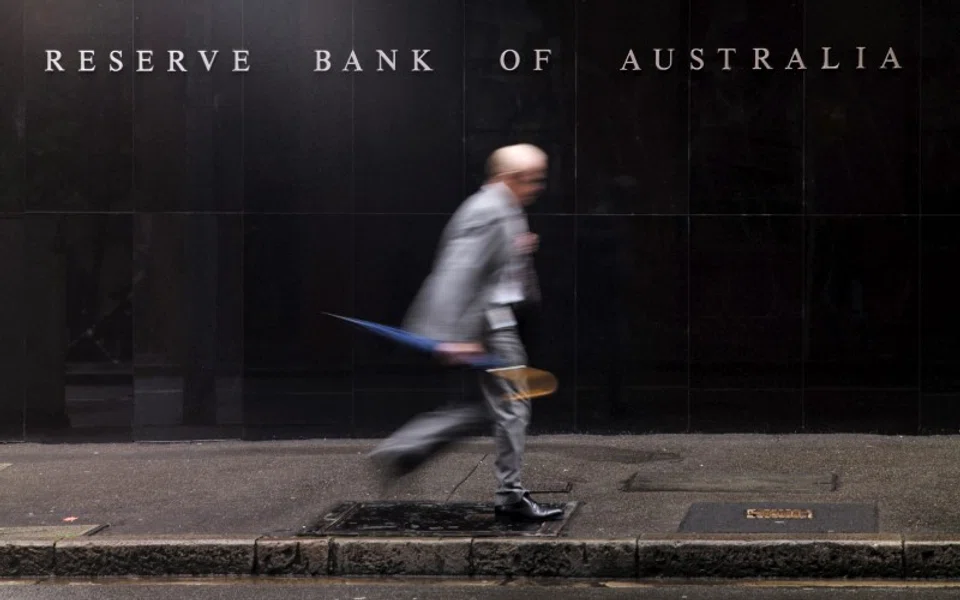
DeeperDive is a beta AI feature. Refer to full articles for the facts.
AUSTRALIA'S economy will expand at a slower pace than previously anticipated this year and next as rapid interest-rate increases to tackle inflation weigh on consumption, a Bloomberg survey showed.
The A$2.2 trillion (S$2.1 trillion) economy will grow an annual 3.3 per cent in the fourth quarter and 3.1 per cent in the first 3 months of 2023, down from previous forecasts of 3.8 per cent and 3.6 per cent, respectively, the poll of 45 analysts showed. The inflation outlook was raised by at least a percentage point in both periods.
"Higher inflation and higher interest rates will weigh on household consumption," said Alan Oster, chief economist at National Australia Bank. He highlighted further risks ahead "including if rates move into more clearly restrictive territory or if the global economy deteriorates rapidly".
The Reserve Bank of Australia (RBA) surprised markets this month with a half-point increase in the cash rate, taking the benchmark to 0.85 per cent, as the inflation outlook worsens. It's widely expected to raise by the same amount again in July and traders are pricing in a cash rate of 3.4 per cent by the end of the year.
Economists, who had previously expected the RBA to be more cautious than market pricing, are steadily increasing their own forecasts. They now expect the cash rate to finish the year at an average 2.45 per cent, from 1.75 per cent previously, before climbing to 2.6 per cent in the first quarter and then holding there.
Despite the faster pace of rate hikes, economists still expect a soft landing for Australia's economy, in contrast with a growing chorus of warnings about sharp Federal Reserve rate hikes eventually tipping the US into a recession.

Navigate Asia in
a new global order
Get the insights delivered to your inbox.
The optimism Down Under is helped by A$200 billion of household savings accumulated during the pandemic and a strong jobs market. The survey showed economists expect unemployment to fall to 3.6 per cent in the third quarter, from the current 3.9 per cent and then edge back up from the second quarter of 2023.
"Ultimately, we still see a 'soft landing' for Australia, as households have built up savings to draw on and, importantly, we don't expect unemployment to rise materially," Oster said. BLOOMBERG
Decoding Asia newsletter: your guide to navigating Asia in a new global order. Sign up here to get Decoding Asia newsletter. Delivered to your inbox. Free.
Share with us your feedback on BT's products and services
TRENDING NOW

Ministry of Home Affairs Permanent Secretary Pang Kin Keong to retire

Shelving S$5 billion office redevelopment plan proved ‘wise’ as geopolitical risks mount: OCBC chairman

Richard Eu on how core values, customers keep Singapore’s TCM chain Eu Yan Sang relevant

China pips the US if Asean is forced to choose, but analysts warn against reading it like a sports result

