Australia’s GDP set to hit three-year high as rate hikes debated
A booming housing market is also lifting sentiment as record prices drive a wealth effect and increased spending
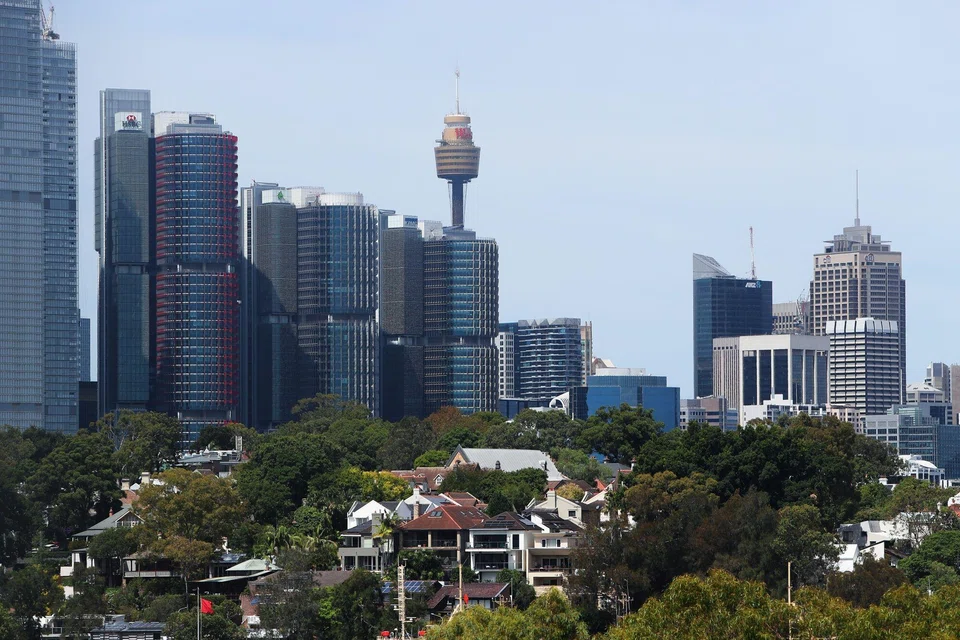
[SYDNEY] Australia’s economic growth probably accelerated at the fastest pace in three years last quarter, coinciding with hotter inflation that’s prompted traders and some economists to wager the Reserve Bank of Australia’s (RBA) next move will be an interest-rate increase.
Economists predict gross domestic product advanced 0.7 per cent in the three months to September, the strongest reading since late 2022, ahead of government data on Wednesday (Dec 3). From a year earlier, they reckon the economy grew 2.2 per cent, or above the estimated potential rate, supported by RBA easing earlier this year.
A strengthening economy, tight labour market and persistent price pressures have prompted money markets to price a 50-50 chance of an RBA rate rise late in 2026. Economists are divided: most still expect another cut, several see the central bank staying on hold and others are more in tune with markets and anticipate the next move will be a hike.
A survey of private capex released last week showed investment in new machinery surged 11.5 per cent in the third quarter from the prior three months, the strongest gain in over two decades. While the increase was led by equipment for data centres and aircraft, it highlighted a broad-based pick up across consumer-facing industries, including accommodation & food and recreation.
Capex intentions lifted too, indicating that the current pace of investment is likely to be sustained and that there may be further upside as firms plan for the next financial year.
Australia’s building activity is also gaining momentum, with extra impetus from the government’s push to tackle a once-in-a-generation housing shortage.
Last quarter, residential building work posted its sharpest increase since March 2015, excluding the pandemic. Non-residential construction strengthened as well, while public infrastructure work rebounded after two quarterly declines.
Australia’s government is aiming to deliver 1.2 million new homes by 2029 to ease a housing shortage that has pushed nationwide prices to record highs and sent rents surging. State governments are also moving to loosen planning rules in an effort to accelerate construction.
Consumer spending, which accounts for the largest share of Australia’s economy, remained strong in the third quarter. A private gauge by Westpac Banking and DataX showed outlays rose solidly last quarter, with households now willing to spend a larger share of their income than at any time in the past two years. That points to “the once-cautious consumer becoming more optimistic”, Westpac senior economist Pat Bustamante said.


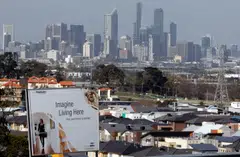

A booming housing market is also lifting sentiment as record prices drive a wealth effect and increased spending.
While the economy is strengthening, productivity growth isn’t – and that’s a problem. It means any burst of demand could feed straight into prices.
The upshot is that the central bank had to downgrade its assumption of the economy’s potential growth rate to just 2 per cent. A lower speed limit means Australia can’t grow as fast without reigniting price pressures, leaving policymakers wary that strong demand could leave them with a renewed inflation problem.
Paul Bloxham, chief economist for Australia and New Zealand at HSBC Holdings, reckons it’s time for better monetary and fiscal coordination to help cool demand. “If that does not arrive, interest rates may have to be lifted sooner, rather than later,” he said.
The government is cognizant of the risks, with Treasurer Jim Chalmers recently warning that “some savings” in the budget are likely in a mid-year update due later this month. RBA governor Michele Bullock will provide her views at a parliamentary hearing on Wednesday, just before the GDP data. BLOOMBERG
Decoding Asia newsletter: your guide to navigating Asia in a new global order. Sign up here to get Decoding Asia newsletter. Delivered to your inbox. Free.
Share with us your feedback on BT's products and services