

Baltic Exchange Shipping Insights
A roundup of the week’s tanker and dry bulk market (Dec 19, 2025)
 Add BT as a preferred source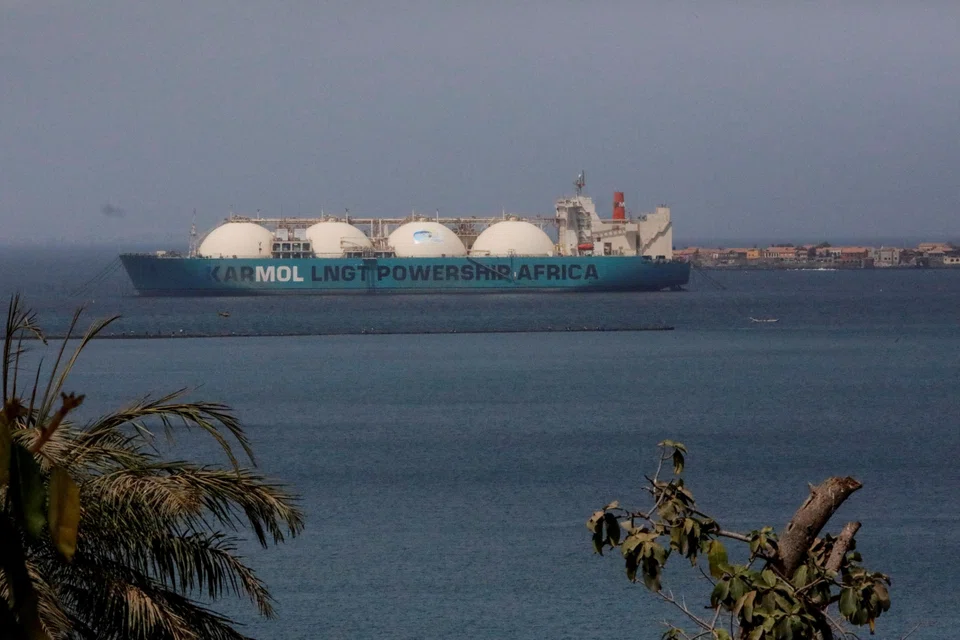
Capesize
The market delivered a mixed but generally constructive week, characterised by strong early momentum, a midweek pause, and a steadier close. Overall sentiment remained cautiously positive, underpinned by firm demand across key basins, though resistance at higher levels became more apparent as the week progressed. The Pacific was consistently supported by regular miner activity, with rates proving resilient despite some early-week softening. While C5 levels briefly eased, the market repeatedly found support in the mid-$10s before drifting lower to around $10.00 by week’s end. The South Brazil and West Africa to China market opened with a sharp improvement from prior levels, pushing fixtures into the mid-$20s before encountering resistance. As the week wore on, rates softened from their highs, though sentiment stabilised, with C3 showing renewed firmness toward the end of the week, where date sensitivity remained a defining feature. The North Atlantic experienced the most volatility, with strong midweek momentum driven by tightening tonnage and robust TA demand, followed by a quieter, more selective close.
Panamax
The sector experienced a consistently weaker trend throughout the week, with sentiment softening steadily amid a persistent lack of meaningful fixture activity across both the Atlantic and Pacific basins. Trans-Atlantic and fronthaul rates remained under sustained pressure as charterers continued to test lower levels, while owner resistance gradually eroded. In Asia, an oversupply of prompt Panamax tonnage weighed heavily on fundamentals, allowing charterers to push increasingly aggressive bids to secure early cover. Activity remained particularly quiet, with limited cargo replenishment, although some Indonesian tenders surfaced for smaller and older units. Period interest stayed subdued throughout the week. Overall, the P5TC index fell sharply, declining from $14,796 on Monday to $11,908 by Friday, reflecting the broad-based weakness across the sector.
Ultramax/Supramax
With the widespread long holiday season coming up sentiment softened in many areas during the course of the week. In the Atlantic, rates dropped with gusto from the US Gulf, an ultramax fixing in the mid-twenties for a trans-Atlantic run. The South Atlantic also saw a weakening a a 63,000-dwt fixing delivery Recalada for a trip Bangladesh at $16,250 plus $625,000 ballast bonus. The Continent also lost ground a 63,000-dwt fining a scrap run from the United Kingdom to the Eastern Mediterranean at $20,750. A similar trajectory from the Asian arena, as limited fresh enquiry appeared and brokers spoke of an abundance of prompt tonnage. A 53,000-dwt open South China fixing an Indonesian round voyage at $7,200. Elsewhere, the Indian Ocean also saw a decline in interest, a 57,000-dwt fixing delivery Port Qasim via the Arabian Gulf redelivery Bangladesh in the mid $15,000s.
Handysize
Another challenging week for the sector with rates in both the Atlantic and Pacific regions facing continued downward pressure. The Continent and Mediterranean markets remain subdued, with very little activity reported and rates slightly lower than previous levels. A 37,000-dwt fixed a trip delivery Canakkale via Constanta to Tekirdag at $11,250. In the South Atlantic and U.S. Gulf, sentiment stayed weak, as the tonnage count continues to build, further putting pressure on rates. A 35,000-dwt heard fixed for delivery Recalada to Fortaleza with grains at $21,000 and a 36,000-dwt fixed delivery Barranquilla to Brazil with coal at $17,000. Meanwhile, the Asian market maintained its negative tone, showing no signs of recovery. A 28,000-dwt heard fixed for a trip delivery Singapore via SE Asia to Yantai with copper concentrates at $9,000.
Clean
LR2
MEG LR2’s softened modestly this week. The TC1 75kt MEG/Japan index came down from WS154.17 to WS149.72. This moved the corresponding TCE to around $36,500/day Baltic description round trip.
A voyage west on TC20 90kt MEG/UK-Continent also ticked downward this week by $193,000 to $3.91 million.
The TC15 80kt Mediterranean/East run remained almost complete unmoved this week at $4.25 million.
LR1

MEG LR1’s also saw their freight levels take a little tumble this week. The TC5 55kt MEG/Japan index went from WS177.5 to WS167.19.
A run west on TC8 65kt MEG/UK-Continent ended the week $157,000 lower at $3.24 million.
On the UK-Continent, LR1 freight remained completely flat this week. The TC16 60kt ARA/West Africa index moved less than a point from WS149.64 to WS148.63.
MR
MR freight in the MEG climbed back up this week. The TC17 35kt MEG/East Africa index ticked up WS252.5 mid-week from WS231.79 but has since returned to WS248.57.
On the UK-Continent, MR freight dropped for the second week on week. The TC2 37kt ARA/US-Atlantic Coast index was assessed 19.38 points down from last week at WS115. The Baltic TCE for the round trip dropped 25% to just over $10,000/ day.
In the US Gulf, MRs look to have bottomed out this week with off market business reported to be holding rates from dropping further. The TC14 38kt US Gulf/UK-Continent voyage is currently at WS167.5 with the Baltic round trip TCE for the run at $23,400 /day. The Caribbean run on TC21, 38kt US-Gulf/Caribbean, follows suit and currently sits at $692,857 (-$10,000).
The MR Atlantic Triangulation Basket TCE went from $32,404/day to $29,911/day.
Handymax
In the Mediterranean, Handymaxes on TC6, 30kt Cross-Mediterranean index jettisoned upward 62.5 points to WS246.67 with the corresponding Baltic TCE up 80% at $40,179/day round trip.
The TC23 30kt Cross UK-Continent route dropped by 11.39 points to WS168.33.
VLCC
The VLCC markets corrected sharply downwards mid-week for all the Baltic published routes. The rate for the 270,000 mt Middle East Gulf to China trip (TD3C) sank by over 11 points at WS114.61 which corresponds to a daily round-trip TCE of $109,837 for the standard Baltic VLCC.
In the Atlantic market, the rate for 260,000 mt West Africa/China (TD15) lost 10 points to WS103.5 giving a round voyage TCE of just below $96,000. The US Gulf to China (TD22) market was relieved of over $1,200,000 and is now assessed at $12,506,944.
Suezmax
In the Suezmax sector, a positive week has meant that rates climbed in the Atlantic and Mediterranean regions. The rate for the 130,000 mt Nigeria/UK Continent voyage (TD20) was rose 13 points to WS143.06 which translates into a daily round-trip TCE of over $72,500 while the TD27 route (Guyana to UK Continent basis 130,000 mt) is 10 points firmer at WS136.84 giving a daily round trip TCE of about $68,600. The TD6 route of 135,000 mt CPC/Augusta rose by 2.5 points to WS161.22 meaning a daily TCE of a fraction over $90,700. In the Middle East, the TD23 route of 140,000 mt Middle East Gulf to the Mediterranean (via the Suez Canal) stayed hovering around the WS105 level.
Aframax
In the North Sea, the rate for 80,000 mt Cross-UK Continent route (TD7) remains flat around the WS156.5-157 range giving a daily round-trip TCE of about $71,100 basis Hound Point to Wilhelmshaven.
In the Mediterranean, the rate for 80,000 mt Cross-Mediterranean (TD19) slipped 3.5 points to WS204 (basis Ceyhan to Lavera, that shows a daily round trip TCE of just shy of $69,000).
Across the Atlantic, the market continued the upward trend for the shorter-haul local voyages, and the longer-haul voyage is slightly firmer than a week ago. The 70,000 mt East Coast Mexico/US Gulf route (TD26) rocketed over 48 points to WS250 (giving a daily round-trip TCE of a little over $79,300) and the 70,000 mt Covenas/US Gulf route (TD9) shot up by 35 points to WS233.75 (translating into a daily round trip TCE of just over $65,500).
The rate for the trans-Atlantic route of 70,000 mt US Gulf/UK Continent (TD25) rose steadily to nearly WS210, however on Thursday this eased by 2 points to WS207.22 (still up about 6 points week-on-week) which gives a round trip TCE basis Houston/Rotterdam of over $59,100 per day.
On the Vancouver exports, the rate for TD28 (80,000 mt crude oil Vancouver to China) continued to slide, losing $125,000 this week to $2,812,500 while TD29 (80,000 mt crude oil Vancouver to Pacific Area Lightering point off the USWC) has lost another 10 points to WS213.75.
LNG
The LNG market softened further this week, with rates retreating across all major routes as the recent highs unwound and the tonnage list begins to rebalance, particularly in the Atlantic.
On the BLNG1 Australia–Japan route, 174k cbm vessels fell sharply by $7,500 to $77,500 per day, while 160k cbm tonnage dropped $6,300 to $60,700 per day, reflecting weaker Pacific demand.
The BLNG2 US Gulf–Continent route saw significant downside, with 174k cbm rates declining $10,000 to $94,000 per day. Similarly, 160k cbm vessels eased $9,500 to $65,500 per day, as Atlantic tightness continued to ease.
The BLNG3 US Gulf–Japan route followed the broader correction, with 174k cbm earnings down $11,000 to $96,000 per day. Smaller 160k cbm vessels also lost $9,500, settling at $67,500 per day.
Time-charter levels softened in tandem with spot rates. The six-month TC rate fell sharply by $5,400 to $37,250 per day, while one-year rates eased $1,375 to $41,625 per day. The three-year term remained broadly stable, edging down just $100 to $55,000 per day, suggesting longer-term confidence remains relatively intact despite near-term weakness.
LPG
The LPG market saw slight improvements this week, with activity in the East remaining relatively subdued, while the West experienced a pickup in fixing, particularly toward the end of the week. This led to a shortening of the Atlantic position list, providing renewed support to freight rates.
On the BLPG1 Ras Tanura–Chiba route, rates edged higher by $1.50 to $80.08 per metric tonne. TCE earnings improved by $1,850 to $69,834 per day, supported by steady enquiry but limited follow-through in the East.
The BLPG2 Houston–Flushing route firmed as Atlantic activity picked up, gaining $1.50 to $73.00 per metric tonne. Corresponding TCE returns rose $2,829 to $83,155 per day.
The BLPG3 Houston–Chiba route strengthened further, with rates climbing $3.50 to $133.50 per metric tonne. TCE earnings increased by $2,988 to $65,065 per day, underpinned by strong fixing activity.
Container
Fronthaul container freight markets strengthened over the past week, with spot rates continuing to firm across the main east–west trades. The Baltic Exchange FBX headline index rose by 9% week-on-week. China West Coast US (FBX1) increased by 11%, rising from USD 1,935 to USD 2,146, while China–North Europe (FBX11) gained 12%, moving from USD 2,467 to USD 2,755. China–Mediterranean (FBX13) saw the strongest move, up 20% from USD 3,357 to USD 4,013.
These increases suggest East–West rates have stabilised and firmed following recent declines, supported by disciplined capacity management and the continued use of selective blank sailings. Intra-Asia lanes remained comparatively stable, reflecting seasonal demand patterns and a broadly balanced supply environment.
From a macro perspective, uncertainty around global trade growth, elevated interest rates, and cautious consumer demand continue to weigh on broader market sentiment. Geopolitical risks remain a key watchpoint, particularly around Red Sea routing and wider Middle East tensions. While most carriers have now adjusted networks to longer routings where required, any escalation could rapidly tighten effective capacity and place renewed upward pressure on spot rates.
Looking ahead, near-term rate direction is likely to remain highly sensitive to carrier capacity discipline and demand signals from Asia. The forward outlook remains finely balanced: while underlying demand appears fragile, limited willingness among carriers to materially expand deployed capacity suggests downside may be constrained, leaving scope for short-term volatility should operational or geopolitical disruptions intensify.
It should also be noted that COSCO has announced a significant newbuilding programme valued at approximately USD 7 billion, covering 87 vessels across containership, tanker, bulker and multipurpose segments. While deliveries are spread over several years, this expansion underscores the potential for longer-term fleet growth to re-emerge as a structural factor for the container market.
This report is produced by the Baltic Exchange. (All currencies are in US dollars.)
The Baltic Exchange, a wholly owned subsidiary of Singapore Exchange, is the world’s only independent source of maritime market information for the trading and settlement of physical and derivative contracts.
Its international community of over 650 members encompasses the majority of world shipping interests and commits to a code of business conduct overseen by the Baltic.
For daily freight market reports and assessments, please visit www.balticexchange.com.
The report is also available online at bt.sg/baltic.
Decoding Asia newsletter: your guide to navigating Asia in a new global order. Sign up here to get Decoding Asia newsletter. Delivered to your inbox. Free.
Share with us your feedback on BT's products and services
TRENDING NOW

‘I felt like dying’: Thai Singha beer scion speaks up after disclosure of alleged sexual abuse
CDL, Hong Realty trump 3 other bidders with S$542.4 million offer at S$1,865 psf ppr for Peck Hay plot

Evergrande’s liquidation prompts some PwC partners to shield assets, contemplate divorce

Private equity giant Carlyle can grow bigger but needs to stay on its toes: co-founder David Rubenstein

