

Baltic Exchange Shipping Insights
A roundup of the week’s tanker and dry bulk market (Jan 23, 2026)
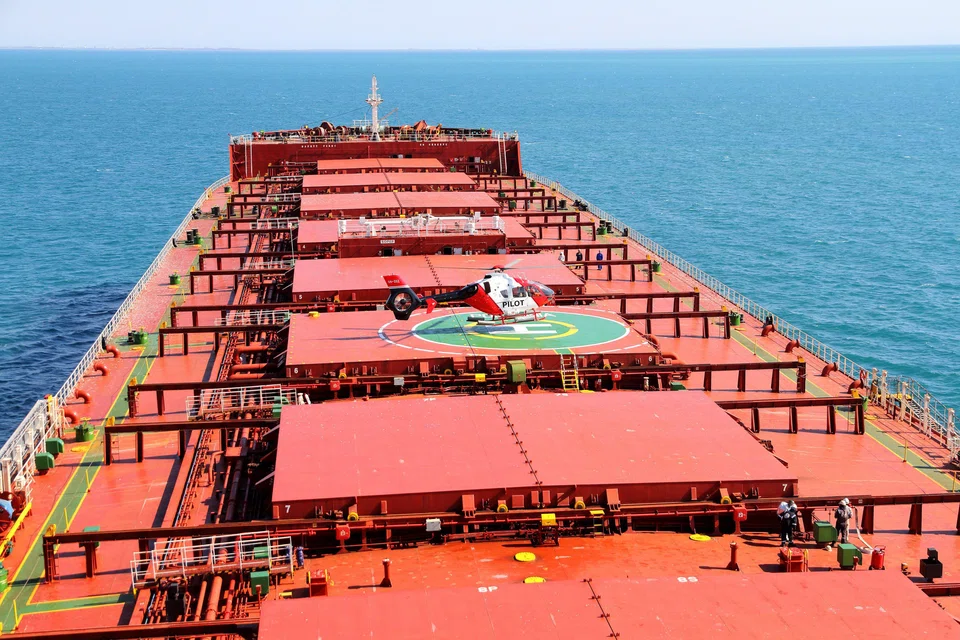
Capesize
The market delivered a strong performance over much of the week, with sentiment and rates firming across both basins before a late-week correction tempered the rally. Early in the week, robust miner participation, healthy cargo volumes and tightening tonnage lists underpinned a steady rise in Pacific rates. C5 steadily climbed into the mid-to-high $8.00s. This momentum was mirrored in the Atlantic, where improving demand from South Brazil and West Africa to China saw C3 rates advance into the low $22.00s, supported by firmer owner resistance. The North Atlantic added further support, as firmer fixtures on transatlantic and fronthaul routes highlighted improving demand amid limited tonnage availability. However, the latter part of the week saw a clear shift in sentiment, led by a sharp correction in the Pacific. Reduced miner presence resulted in C5 rates retreating into the high $7.00s. Despite this, the Atlantic, including the South Brazil and West Africa to China markets, remained relatively resilient, suggesting the correction was driven more by sentiment than underlying fundamentals.
Panamax
This week opened with a noticeably firmer tone across both basins, driven by improving demand and stronger rate ideas. In the Atlantic, transatlantic activity continued to strengthen early in the week, with grain employment maintaining a premium over mineral business and fronthaul enquiry remaining supportive. A clear tightening of prompt tonnage was evident midweek, with several positions covered and remaining owners showing little urgency, helping place upward pressure on rates. By Thursday, the market adopted a steadier, more measured stance as charterers eased off bids, particularly on fronthaul, though sentiment remained stable and transatlantic business held firm. In the Pacific, rates improved throughout despite limited South Pacific mineral demand, supported by Atlantic strength lifting numbers and discouraging ballasting toward EC South America. Period activity stayed active with multiple medium-term fixtures in the high-$17,000s. The P5TC average rose overall from $13,688 to $14,504.
Ultramax/Supramax
Many described a positional week for the sector with regional variations. In the Atlantic, the US Gulf gained traction at the beginning but as it closed some felt a ceiling had been reached. The South Atlantic, despite seeing demand, the number of vessels open was sufficient to keep rates in check. Ultramax size vessels generally fixing around the $15,000 plus $500,000 ballast bonus region for fronthaul business and for transatlantic runs in the low $20,000s. The Asian arena also saw a mixed bag, the North seemed to pick momentum throughout the week with Ultramax sizes fining around $13,000 from North China for NoPac rounds. Further south, a 57,000-dwt fixed delivery Singapore trip via Indonesia redelivery CJK at $7,000. Period activity however picked up, a newbuilding 63,500-dwt open China fixing one year’s trading at $16,350, whilst in the Atlantic a 63,300-dwt open West Africa fixed 7/10 months trading redelivery worldwide at $17,100.
Handysize
The Handysize markets posted a gradual improvement over the week, ending on a firmer footing, driven mainly by strength in the Atlantic, while the Pacific continued to lag behind. In the South Atlantic, healthy cargo volumes and tightening tonnage pushed rates higher, highlighted by a 37,000-dwt vessel fixed for delivery Recalada to redelivery West Africa at $22,250. The US Gulf also remained firm, supported by improving demand and a clearing tonnage list, with a 37,000-dwt reported fixed for a trip from SW Pass to Acajutla at $17,500. By contrast, the Continent and Mediterranean stayed largely stable, with limited fresh enquiry keeping rate levels mostly unchanged. A 39,000-dwt vessel open in the East Mediterranean 22–27 January was fixed for a West Africa trip with gypsum at $12,000. In Asia, fixing activity remained limited, although sentiment improved slightly toward the end of the week, with a 40,000-dwt vessel from West Coast Australia to China fixed with grain at $15,500.
Clean
LR2
After two strong weeks MEG LR2 freight looked to be resetting downward this week. The TC1 75kt MEG/Japan rate dropped 16.67 points to WS202.5. This brought down the corresponding TCE up by $5,200 to $45,000/day on Baltic description round trip.
A voyage west on TC20 90kt MEG/UK-Continent also dipped this week by $168,750 to $4.55 million.
The freight level for the TC15 80kt Mediterranean/East run continued upward this week to $4.72 million (+$306,000).
LR1

MEG LR1’s also ticked down albeit more modestly this week. The TC5 55kt MEG/Japan index went from WS228 to WS211.
A run west on TC8 65kt MEG/UK-Continent ended the week down $164,000 at $3.46 million.
On the UK-Continent, LR1 freight remained level again with the TC16 60kt ARA/West Africa index at WS153.33 unchanged
MR
MR freight in the MEG appeared to have peaked this week. The TC17 35kt MEG/East Africa index peaked at WS300 but has since returned to WS288. This took the corresponding Baltic TCE to $31,500/day round trip.
On the UK-Continent, MRs were flat this week with activity reported quieter. The TC2 37kt ARA/US-Atlantic Coast index was assessed 4.69 points lower than last week at WS117.5. The Baltic TCE for the round trip dropped back to $6,100/day.
In the US Gulf, MRs exhibited their usual tumble after a strong climb. The TC14 38kt US Gulf/UK-Continent voyage is currently at WS152 (-45 points) with the Baltic round trip TCE for the run now at $14,000/day down 38%. The Caribbean run on TC21, 38kt US-Gulf/Caribbean is currently pegged at $623,000 (-$194,000).
The MR Atlantic Triangulation Basket TCE went from $30,884/day to $22,301/day.
Handymax
In the Mediterranean, Handymaxes on TC6, 30kt Cross-Mediterranean index shot up again this week to WS289 at time of writing (+85) with the corresponding Baltic TCE up another 92% at $50,900/day round trip.
The TC23 30kt Cross UK-Continent route remained flat at just under WS170 all week or $14,000/day Baltic round trip.
VLCC
The VLCC markets continue to remain firm, although have slightly weakened towards the end of the week on all the Baltic published routes. The rate for the 270,000 mt Middle East Gulf to China trip (TD3C) is assessed at WS126.5, down 4 points since last Friday, which corresponds to a daily round-trip TCE of $112,394 for the standard Baltic VLCC.
In the Atlantic market, the rate for 260,000mt West Africa/China (TD15) is also down 4 points for the week at WS117.31 giving a round voyage TCE of $101,263. The US Gulf to China (TD22) market is rated at around $13,650,000-$13,700,000 (a softening of about $20,000 since last Friday) which means a daily round trip TCE of just under $93,500.
Suezmax
In the Suezmax sector, rates also remain firm, but weaker since last Friday. The rate for the 130,000mt Nigeria/UK Continent voyage (TD20) lost 21 points to WS149.72 which translates into a daily round-trip TCE of $66,725 while the TD27 route (Guyana to UK Continent basis 130,000mt) settled around the WS138 level giving a daily round trip TCE of just over $65,600. In the Black Sea, the market was stifled, with the Tengiz and Korolev oilfields being offline since 18/1 due to power issues. The vessels on subjects from CPC at the end of last week all failed, and sentiment is somewhat weaker due to no chartering activity and owners having to find alternatives in the Mediterranean, or just sit spot until CPC comes back on stream. The TD6 route of 135,000mt CPC/Augusta has fallen from close to WS250 to be assessed, subjectively, at WS196 yesterday, meaning a daily TCE of a fraction over $115,000. In the Middle East, the TD23 route of 140,000mt Middle East Gulf to the Mediterranean (via the Suez Canal) gained another 5 points to WS113.
The new Baltic route of 145,000mt USG/UKC (TD33), settled at the WS138 level (about 1.5 points up on a week ago)
Aframax
In the North Sea, the rate for 80,000mt Cross-UK Continent route (TD7) gained 28 points to just above the WS187.5 level, giving a daily round-trip TCE of about $95,850 basis Hound Point to Wilhelmshaven.
In the Mediterranean, the rate for 80,000mt Cross-Mediterranean (TD19) continued to improve firmly, gaining 51 points to about the WS259.22 (basis Ceyhan to Lavera, that shows a daily round trip TCE of about $98,100).
Across the Atlantic, the market has again continued to improve dramatically, mainly due to the tensions (and uncertainty) of the USA strategy in Venezuela. The 70,000mt East Coast Mexico/US Gulf route (TD26) gained 22 points week-on-week to just over WS327 (giving a daily round-trip TCE of over $102,850) and the 70,000mt Covenas/US Gulf route (TD9) gained 34 points to just over WS323 (translating into a daily round trip TCE of just over $92,900), with the latest reported fixture at WS325.
The rate for the transatlantic route of 70,000mt US Gulf/UK Continent (TD25) came under significant pressure from owners and was assessed on Thursday 27 points firmer at the WS280 level which gives a round trip TCE basis Houston/Rotterdam of almost $77,200/day. Overnight reports have detailed higher rates done with a Spanish charterer on subjects at WS315 for this trip.
On the Vancouver exports, the rate for TD28 (80,000mt crude oil Vancouver to China) was $50,000 firmer this week at $2,950,000 while TD29 (80,000mt crude oil Vancouver to Pacific Area Lightering point off the USWC) remained firm, between WS217.5-220
LNG
The LNG spot market remained under pressure this week, with rates continuing to decline across all major routes. A lengthy tonnage list and limited fresh cargo activity continued to weigh on sentiment, particularly in the Atlantic, allowing charterers to push rates lower.
On the BLNG1 Australia–Japan route, 174,000 cbm vessel earnings fell by $4,300 to $34,600/day. The East held relatively firmer than the West, as 2-stroke availability remains tight.
The BLNG2 US Gulf–Continent route saw further declines, with 174,000 cbm rates sliding by $6,100 to $15,400/day. Similarly, the BLNG3 US Gulf–Japan route softened further, with 174,000 cbm earnings dropping by $7,300 to $18,800/day.
A long position list and a lack of prompt cargoes continue to weigh heavily on the Atlantic market.
Time charter rates also saw correction. The six-month rate declined by $1,250 to $29,500/day, while the one-year rate eased by $4,650 to $37,500/day. In contrast, the three-year period rate increased by $1,600 to $57,500/day.
LPG
The LPG market came under pressure this week, with sentiment softening across all major routes. While the East saw pockets of activity, pricing remained highly date-dependent and the lengthening position list begins to weigh on confidence. In the West, activity was subdued, with charterers largely stepping back to reassess market direction.
On the BLPG1 Ras Tanura–Chiba route, rates fell $4.67 to $78.17/mt, with TCE earnings declining $5,113 to $67,018/day.
The BLPG2 Houston–Flushing route also weakened, dropping $5.25 to $74.50/mt, while daily returns slid $7,283 to $75,967/day amid limited Atlantic fixing and a quieter chartering environment.
Similarly, the BLPG3 Houston–Chiba route saw the sharpest correction of the week, falling $9.83 to $133.67/mt. TCE earnings eased $7,706 to $64,581/day, reflecting reduced momentum in the West and a more cautious market tone overall.
Container
After a stronger start to January, we have seen some rates starting to weaken. With all eyes on Davos this week, we wait to see if these talks will have any knock-on effects on global trade. Maersk has announced that it will resume Red Sea sailings for its Middle East – USEC service to test the water, pre a fuller resumption of transits later.
FBX01 (China/East Asia – USA West Coast) remained fairly flat over the week, closing at $2,676. FBX03 (China/East Asia – USA East Coast) also remained flat all week, closing at $3,928.
FBX11 (China/East Asia – North Europe) came off $96 over the week, ending the week at $2,802. FBX13 (China/East Asia – Mediterranean) lost $150 over the week, ending at $4,389.
This report is produced by the Baltic Exchange. (All currencies are in US dollars.)
The Baltic Exchange, a wholly owned subsidiary of Singapore Exchange, is the world’s only independent source of maritime market information for the trading and settlement of physical and derivative contracts.
Its international community of over 650 members encompasses the majority of world shipping interests and commits to a code of business conduct overseen by the Baltic.
For daily freight market reports and assessments, please visit www.balticexchange.com.
The report is also available online at bt.sg/baltic.
Decoding Asia newsletter: your guide to navigating Asia in a new global order. Sign up here to get Decoding Asia newsletter. Delivered to your inbox. Free.
Share with us your feedback on BT's products and services






