

Baltic Exchange Shipping Insights
A roundup of the week’s tanker and dry bulk market (May 1, 2026)
Capesize
The market began the week lacking clear momentum, with sentiment broadly flat and activity unevenly distributed across the basins. The Pacific provided the main source of liquidity, supported by consistent miner presence and a steady flow of coal and tender cargoes. Despite this, rates remained constrained, with C5 trading within a relatively narrow range in the high $12s to low $13s.
In contrast, the Atlantic basin lagged, with limited visible activity and a persistent imbalance between available tonnage and cargo. The South Brazil and West Africa to China market struggled to gain traction, reflected in wide bid-offer spreads and an absence of confirmed C3 fixtures, while the North Atlantic remained notably subdued.
Momentum improved into the latter part of the week. Increased miner engagement saw C5 push towards $14 for prompt dates, while the South Atlantic gained traction, with C3 fixtures moving into the mid-to-high $34s to $35, narrowing earlier spreads.
By week’s end, the market had edged higher from its initial stagnation, underpinned by a firmer tone. This improvement was reflected in the BCI 182 5TC, which climbed from $38,837 at the start of the week to $40,371 by week’s end.
Panamax
The week saw a clear divergence between Atlantic and Pacific Panamax markets. In the Atlantic, sentiment remained subdued as a growing tonnage list, especially in the North Continent, combined with limited transatlantic grain and mineral demand continued to pressure rates.
Fronthaul activity from the US Gulf and North Coast South America showed occasional support, but overall levels weakened, with the P1A and P2A indices declining through most of the week despite a modest late recovery. Market sources stated that owners increasingly resisted lower ideas as the week progressed.
In contrast, the Pacific market continued to demonstrate resilience, supported by sustained demand from Australia, Indonesia, and the wider North Pacific. A steady volume of coal cargoes and Pacific basin activity kept momentum healthy, with modern and scrubber-fitted tonnage continuing to command firmer returns.
Despite some caution ahead of regional holidays, sentiment remained broadly positive throughout the week, with charterers remaining active and owners holding firm on pricing. As a result, the P5TC index recorded gradual gains over the course of the week with Monday posting $17,617 and concluding at $18,018 on Friday.
Ultramax/Supramax
A rather subdued week overall for the sector with widespread holidays in many places at the end, players took advantage and cleared their desks early. The Atlantic was described as positional, the recent demand from the US Gulf eased and there was a slight build-up of prompt tonnage and rates eased. The South Atlantic remained finely balanced.

Elsewhere, a 56,000 fixed from the Mediterranean to EC India with fertiliser at $18,000. The Asian arena similarly lost ground with a slowing of demand from Indonesia and further north. A 64,000-dwt was fixed delivery North China trip redelivery Sri Lanka at $23,000. Further west a 63,000-dwt fixed delivery Chittagong trip via Indonesia redelivery India at $19,500. Period cover was limited although a 60,000-dwt open Chittagong fixed for 13-15 months trading redelivery worldwide at $16,000.
Handysize
The market maintained a cautiously firm tone through the week, although underlying fundamentals remained fragile and highly dependent on regional dynamics. Conditions were uneven, with the Continent and Mediterranean continuing to struggle amid limited fresh enquiry and softening rates, while the US Gulf and South Atlantic showed midweek support on improved cargo flow before sentiment in the South Atlantic weakened toward the end due to increasing spot tonnage.
Notable fixtures included a 37,000-dwt fixed from SW Pass to Spain with grains at $17,000 and a 38,000-dwt from Recalada to the Mediterranean at $25,000. In contrast, the Asian market gained momentum as the week progressed, supported by tightening tonnage in Southeast Asia and the North Pacific, which encouraged charterers to raise bids and underpin firmer rates; a 43,000-dwt open Phu My was heard on subjects for a trip to the Far East with salt at $17,000.
Clean
LR2
The TC1 75kt MEG/Japan index remained level in the mid WS550’s this week.
A voyage west also saw the TC20 90kt MEG/UK-Continent index rose a little more to $10.92 million (+ $96,000).
The TC15 80kt Mediterranean/East index dropped by another $160,000 to $10.6 million this week with the corresponding TCE down to $106,000/day on Baltic description round trip.
LR1
The TC5 55kt MEG/Japan index has been assessed up another 10 points this week to WS656.
A run west on TC8 65kt MEG/UK-Continent ended the week with the index $492,000 higher to $8.37 million.
MR
The TC17 35kt MEG/East Africa index levelled off this week at the WS734-737 mark this week which would generate $92,000/day on Baltic description round trip TCE.
On the UK-Continent, MR freight levels dipped again this week. The TC2 37kt ARA/US-Atlantic Coast index was published 29.37 points lower than last week at WS230 with the Baltic TCE for the round trip now at $19,300/day.
In the US Gulf, MR freight levels bounced up and down this week. The TC14 38kt US Gulf/UK-Continent run is currently assessed at WS426, up from where it started the week at WS405 but peaked mid-week at WS450. The Baltic round trip TCE for the run is now at $60,800/day. The Caribbean voyage on TC21, 38kt US-Gulf/Caribbean followed the same pattern and after hitting a ceiling of $1.55m, currently sits at $1.42m the corresponding TCE is now at $57,400/day on Baltic description.
The MR Atlantic Triangulation Basket TCE went from $76,500/day to $75,300/day.
Handymax
In the Mediterranean, Handymax rates fell off a cliff this week with the TC6, 30kt Cross-Mediterranean index dropping 127 points to WS447, translating to $88,000/day (down 30%) on Baltic TCE round trip.
The TC23 30kt Cross UK-Continent route also lost value this week, it shed 35.22 points to WS462 which generates $91,900/day on Baltic TCE round trip.
VLCC
The situation in the Middle East continues to remain uncertain. The Baltic panellists now assess the rate for the TD3C route (270,000mt Middle East Gulf to China) about 40 points less than last Friday at WS408.13, which corresponds to a daily round-trip TCE of $407,437 for the standard Baltic VLCC. TD34 (Gulf of Oman/China) was assessed on Thursday at WS150, 16.5 points lower than last Friday.
In the Atlantic market, the rate for the 260,000mt West Africa to China route (TD15) softened slightly and is now 1.5 points lower than a week ago, at WS132.5 giving a round voyage TCE of a little over $100,600, while in the same period the US Gulf to China route (TD22) has dropped about $500,000 this week to a little below $15,750,000 which gives a daily round trip TCE of just under $94,000.
Suezmax
In the Suezmax sector the rate for the 130,000mt Nigeria/UK Continent voyage (TD20) trip lost 7 points to WS212.22 which translates into a daily round-trip TCE of about $92,250. There was one well reported cargo being traded yesterday with about 10 offers from owners, so the opportunity for the charterer to drive the market down further is very apparent.
The TD27 route (Guyana to UK Continent basis 130,000mt) remained flat at WS226 which gives a daily round trip TCE of about $102,600, but given what is happening in West Africa, there is likely to be a correction here. The Baltic route of 145,000mt USG/UKC (TD33), gained 7.5 points to WS200 but this also is likely to be corrected downwards.
In the Black Sea, rates for the TD6 route of 135,000mt CPC/Augusta gained 12.5 points to WS248.89 meaning a daily TCE of about $145,000, with a handful of fixtures being reported overnight at no less than WS250.
In the Middle East, the TD23 route of 140,000mt Middle East Gulf to the Mediterranean (via the Suez Canal) rate assessments by the Baltic Exchange’s panellists remain theoretical, remained at the WS565 level.
Aframax
In the North Sea, the rate for 80,000mt Cross-UK Continent route (TD7) remains flat at WS235, giving a daily round-trip TCE of just over $127,400 basis Hound Point to Wilhelmshaven.
In the Mediterranean, the rate for 80,000mt Cross-Mediterranean (TD19) fell around 4 points this week to about WS294 (basis Ceyhan to Lavera, that shows a daily round trip TCE of just over $98,500).
Across the Atlantic, the market continued climbing this week. The 70,000mt East Coast Mexico/US Gulf route (TD26) has rocketed 130 points firmer than last Friday at almost WS563 giving a daily round-trip TCE of over $187,300. The 70,000mt Covenas/US Gulf route (TD9) has soared 113 points to WS539.69 (translating into a daily round trip TCE of almost $160,300).
The rate for the transatlantic route of 70,000mt US Gulf/UK Continent (TD25) has firmed by almost 70 points to a fraction over WS434 which gives a round trip TCE basis Houston/Rotterdam of about $120,800/day.
On the Vancouver exports, the rate for TD28 (80,000mt crude oil Vancouver to China) shed $250,000 to $5,320,000 (giving a round trip TCE of just over $96,100/day) while TD29 (80,000mt crude oil Vancouver to Pacific Area Lightering point off the USWC) has slipped by 2 points to WS377.5.
LNG
The LNG spot market softened this week, with rates easing across all major routes amid limited cargo liquidity in the East and a tight but quiet Atlantic market. While vessel availability remains constrained in the West, the lack of fresh enquiry has capped upside and weighed on overall sentiment.
On the BLNG1 Australia–Japan route, 174k cbm vessels declined by $2,900 week-on-week to settle at $71,000/day. The Pacific basin remained subdued, with minimal cargo flow and little impetus to drive rates higher.
The BLNG2 US Gulf–Continent route moved lower, with earnings falling $7,400 to $97,000/day. Despite the shorter tonnage list in the Atlantic, the lack of fixing activity limited any rate support.
Similarly, the BLNG3 US Gulf–Japan route eased by $7,400 to $109,000/day, as weaker long-haul demand and muted enquiry kept downward pressure on rates.
In the time charter market, sentiment was mixed. The six-month rate declined by $1,700 to $93,300/day, reflecting softer spot dynamics. In contrast, the one-year term increased by $1,900 to $82,333/day, while the three-year period rose $2,000 to $80,000/day, suggesting a more stable longer-term outlook despite short-term weakness.
LPG
The LPG market continued to strengthen this week, with tightening vessel availability and limited prompt tonnage supporting higher rates across all major routes.
On the BLPG1 Ras Tanura–Chiba route, rates increased $4.50 to $186.75, with TCE earnings rising $4,386 to $175,102/day.
The BLPG2 Houston–Flushing route climbed $11.25 to $136.50, while TCE earnings rose $13,656 to $148,933/day, supported by a tightening Atlantic position list.
Similarly, the BLPG3 Houston–Chiba route saw the strongest upward movement, with rates jumping $20.42 to $249.58 and TCE returns increasing $14,488 to $142,889/day, as continued tightness in vessel supply drove momentum to the highest levels since the end of 2023.
Container
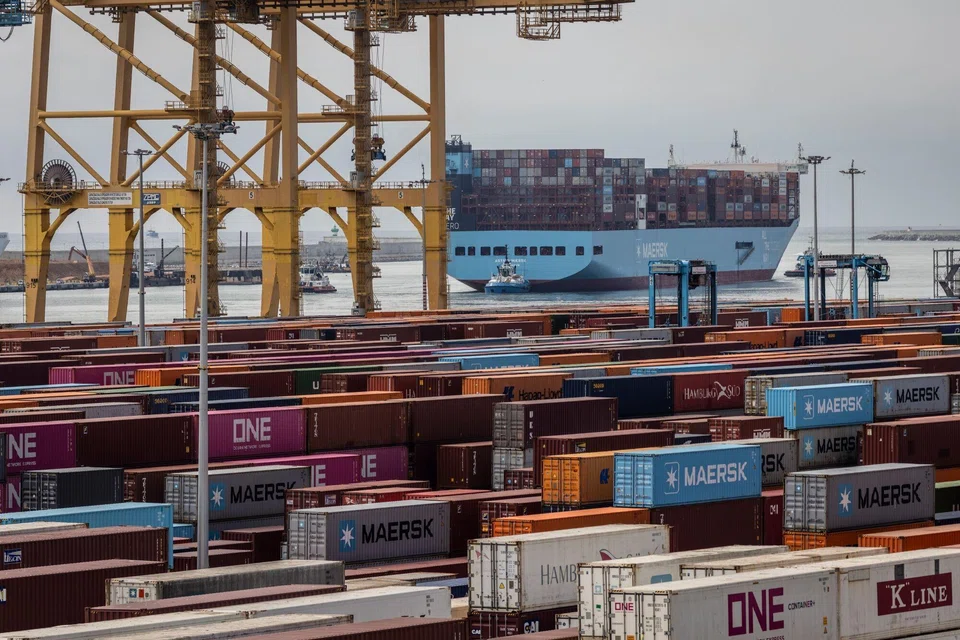
Container freight markets were broadly stable over the past seven days, with mixed movements across the main east–west trade lanes. Global spot pricing eased marginally on average, reflecting softer conditions on Asia–Europe corridors, where rates drifted lower amid seasonally weaker demand and ample vessel availability.
By contrast, Transpacific lanes showed greater resilience, with rates to the US West and East Coasts holding steady to slightly firmer as carriers continued to manage capacity through blank sailings and schedule discipline. Overall market tone remained balanced, with limited volatility despite ongoing macro and geopolitical uncertainties.
From a broader market perspective, carriers continue to prioritise capacity management to stabilise rates during a traditionally quieter period. Longer voyage times linked to rerouting and higher fuel costs remain a background consideration, but these factors have not materially shifted spot market dynamics over the past week.
Forward visibility remains limited, with market participants focused on signs of a pre-summer demand pickup, further carrier capacity adjustments, and cost pressures that could influence rate direction in the weeks ahead. For now, the container freight market appears range-bound, with downside risk moderated by disciplined supply management.
This report is produced by the Baltic Exchange. (All currencies are in US dollars.)
The Baltic Exchange, a wholly owned subsidiary of Singapore Exchange, is the world’s only independent source of maritime market information for the trading and settlement of physical and derivative contracts.
Its international community of over 650 members encompasses the majority of world shipping interests and commits to a code of business conduct overseen by the Baltic.
For daily freight market reports and assessments, please visit www.balticexchange.com.
The report is also available online at bt.sg/baltic.
Decoding Asia newsletter: your guide to navigating Asia in a new global order. Sign up here to get Decoding Asia newsletter. Delivered to your inbox. Free.
Share with us your feedback on BT's products and services
TRENDING NOW

DBS, OCBC, UOB rout lops billions off STI as inflation, rate concerns spook investors

Grab CEO’s wife Chloe Tong on life with Anthony Tan and finding her purpose

OCBC sheds S$8 billion in value as shares close nearly 6% down; analysts cautious on banks

Deal between tycoon friends sparks scrutiny of Philippine power sector

