

Bank of Canada chief advocates low rates but sees light on economic outlook
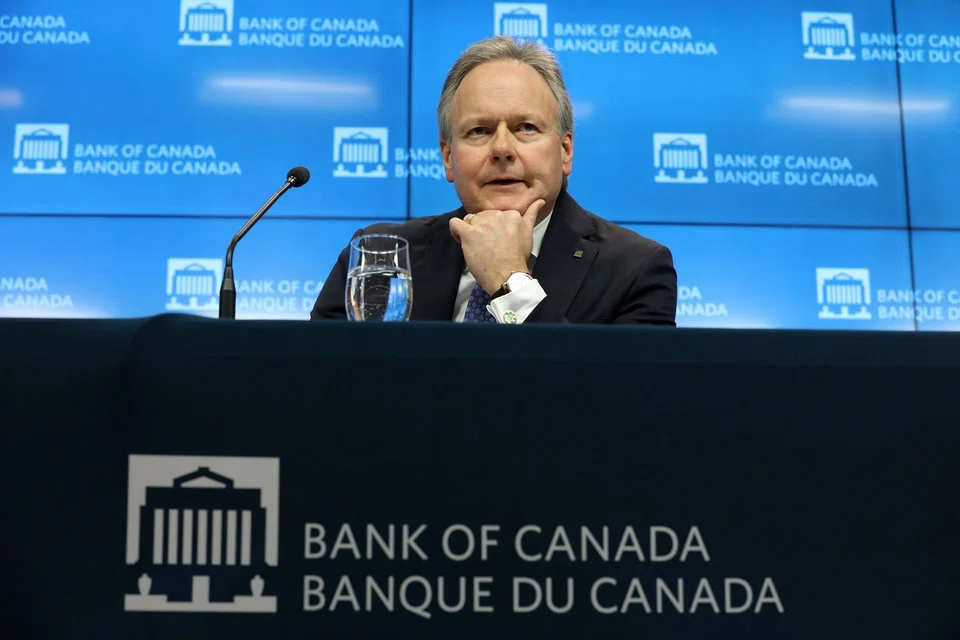
[IQALUIT, Nunavut] Bank of Canada Governor Stephen Poloz expressed guarded optimism on Monday that the country would emerge from a soft patch, but maintained a cautious tone overall, saying the economic outlook still warrants an interest rate below the neutral range.
Speaking at a mining conference in Iqaluit, Nunavut, in Canada's far north, Mr Poloz said trade uncertainties are weighing on Canada and the global economy, which is not performing as well as had been expected just a few months ago.
Even so, Mr Poloz said there are clear signs that Canada is adjusting, with the central bank seeing many areas of encouraging economic growth.
"The data that we've seen recently certainly supports our original interpretations that we were in for a temporary slowdown. How long it lasts is a bit of question mark," Mr Poloz told reporters after his speech.
The Canadian dollar held near an 11-day high of 1.3297 to the US dollar after Poloz's speech.
The Bank of Canada, which has hiked rates five times since July 2017, stayed on the sidelines last month, warning there was "increased uncertainty" on the timing of future hikes. The next rate decision will be April 24.
While Mr Poloz's tone remained cautious, he did not mention the need for the central bank to move away from its hiking stance, instead repeating that the bank is closely monitoring economic data.
"There was no food for those hungry for signs that the bank is contemplating a rate cut," Avery Shenfeld, chief economist at CIBC Capital Markets, said in a note. "Indeed, it's still putting weight on its view that things will get better from Canada as we look ahead."
Mr Poloz later sidestepped questions from reporters on whether the central bank still expects interest rates to eventually rise into the neutral range, which it has set at 2.5 per cent to 3.5 per cent. A neutral range is when rates neither stimulate nor restrain growth.
"We'll know when we get there, but what number it is will depend very much on all the structural things that are going on in the background," Mr Poloz said.
Mr Poloz said the Bank of Canada was not forecasting a recession despite the inversion of the yield curve on US Treasuries late last month. An inverted yield curve has preceded every US recession for the last 50 years, but many market participants question whether it is a good indicator now.
On the domestic front, Mr Poloz said Canada's energy sector continues to adjust to lower global oil prices, while the housing industry is taking longer than expected to digest new mortgage rules and the impact of higher interest rates.
At the same time, he noted that more than 350,000 jobs were created in the last year and labor income grew by 5 per cent in the fourth quarter.
"These data suggest that the mixed picture offered up by the Canadian economy today reflects some important structural changes beneath the surface," he said.
Mr Poloz said protectionist trade policies continue to be a threat for Canada, holding back business investment, but said Canada's existing trade agreements will help buffer the country from some of the negative developments.
He noted the importance of lowering trade barriers between provinces, estimating it could boost Canada's economic growth by 0.2 per cent point per year, or some C$4.5 billion (S$4.6 billion).
REUTERS
Share with us your feedback on BT's products and services
TRENDING NOW

Can a first-time homebuyer couple earning S$18,000 a month afford a new EC unit?

He built the Vingroup empire. Now South-east Asia’s richest man is handing some key roles to his sons

Asia needs new energy security architecture

Chagee, Mixue and Luckin won the market. Sustaining their edge is the harder part

