

Bank of England completes sale of ‘mini-budget’ emergency bond buys
 Add BT as a preferred source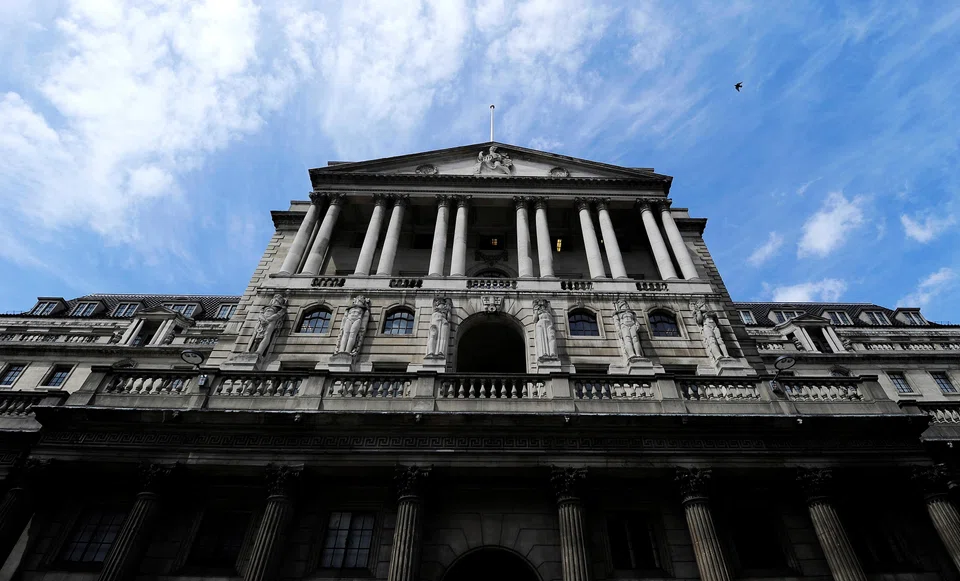
DeeperDive is a beta AI feature. Refer to full articles for the facts.
THE Bank of England (BOE) said on Thursday (Jan 12) that it had sold £19.3 billion (S$31.2 billion) of government bonds it had bought to stabilise financial markets after former prime minister Liz Truss’ “mini-budget” in September 2022.
Long-dated and inflation-linked gilts suffered record daily price falls in the days following Truss’ announcement of the programme, which featured higher spending and unfunded tax cuts. The BOE was forced to intervene as a result.
The speed of the market sell-off threatened the stability of liability-driven investment funds, a bedrock of Britain’s pension industry. This ultimately led to Truss stepping down as prime minister, to be succeeded by Rishi Sunak.
The BOE bought £12.1 billion of conventional gilts with maturities of at least 20 years, and £7.2 billion of inflation-linked bonds between Sep 28 and Oct 14 last year. Prior to this, the central bank had not purchased index-linked gilts, and at the start of the programme, it said it was willing to buy as much as £65 billion of long-dated bonds.
Unlike the nearly £900 billion in bonds bought under its various quantitative easing (QE) programmes between 2009 and 2021, the BOE said it aimed to reverse quickly its latest purchases, once market conditions stabilised.
But the turmoil also forced the central bank to delay the start of gilt sales, which were needed to reduce the size of its main QE stockpile.
Navigate Asia in
a new global order
Get the insights delivered to your inbox.
Policymakers stressed that the gilt purchases were not intended to signal a loosening of monetary policy, at a time when the central bank was raising its main interest rate to fight double-digit inflation.
The BOE started selling the gilts last Nov 29 through thrice-weekly sales windows, at which investors could submit bids at a small premium to market prices. It sold most of the gilts by mid-December. The pace of sales led to some weakness of long-dated gilt prices in late November and early December. This week, the remainder of the gilts were sold. Transactions included a one-off bilateral sale of residual holdings on Thursday.
“The Financial Policy Committee has welcomed the Bank’s timely but orderly unwind of this portfolio,” the central bank said.



Yields on 30-year gilts stood at 3.7 per cent on Thursday, well below the peak of 5.1 per cent recorded on Oct 12, 2022. That was the lowest price since 2002.
Gilt yields are now back around their level before the Sep 23, 2022 “mini-budget”. The BOE would have made a profit on its financial stability purchases, since yields fell after the purchase.
The BOE plans to reduce its QE holdings by £80 billion over the course of a year. About half the reduction will come from gilts maturing, while the remainder will come through active sales. Sales of short-dated and medium-dated gilts began on Nov 1. The central bank will start to sell long-dated gilts on Jan 30. REUTERS
Decoding Asia newsletter: your guide to navigating Asia in a new global order. Sign up here to get Decoding Asia newsletter. Delivered to your inbox. Free.
Share with us your feedback on BT's products and services
TRENDING NOW

StarHub hands Ensign InfoSecurity control back to Temasek in S$115 million deal, books S$200 million gain

Singaporeans can now buy record amount of yen per Singdollar

Air India asks Tata, Singapore Airlines for funds after US$2.4 billion loss

Keppel DC Reit posts 13.2% higher Q1 DPU of S$0.02833 on strong portfolio performance

