

Bank of Israel holds interest rates as inflation nears target
The central bank left its benchmark rate at 4.50 per cent for the 12th meeting in a row.
 Add BT as a preferred source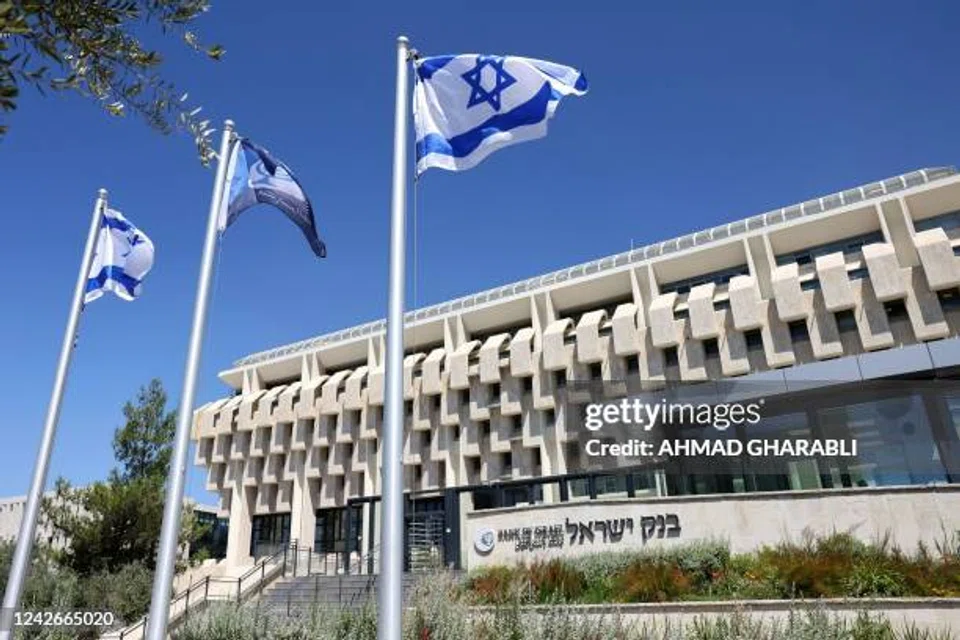
[JERUSALEM] The Bank of Israel left short-term interest rates unchanged on Monday (Jul 7) after inflation eased in May, although economic uncertainty lingers due to the 21-month-old conflict between Israel and Palestinian Islamist group Hamas in Gaza.
The central bank left its benchmark rate at 4.50 per cent for the 12th meeting in a row.
Its last move was to reduce the rate by 25 basis points in January 2024 after inflation eased and economic growth slowed in the early days of the Gaza war. It has kept policy steady since then and said it is in no rush to ease again while inflation remains above target.
Ten of 11 analysts polled by Reuters had expected no rate move on Monday. One predicted a 25 bps rate cut due to the end of a 12 day Israel-Iran war that saw Israel’s risk premium slide and the shekel appreciate sharply.
The annual inflation rate eased to 3.1 per cent in May from 3.6 per cent in April but remained above the government’s 1-3 per cent annual target.
The economy grew by an annualised 3.7 per cent in the first quarter after a 1 per cent expansion for all of 2024 due to the war.
Ahead of the decision, the bank’s monetary policy committee moved back to a full six members for the first time in 2½ years. REUTERS
Decoding Asia newsletter: your guide to navigating Asia in a new global order. Sign up here to get Decoding Asia newsletter. Delivered to your inbox. Free.
Share with us your feedback on BT's products and services
TRENDING NOW

Three Holland Village shophouses sold for S$70 million to Tat Lee Bank’s Goh family unit

Palm oil stocks set to surge as Indonesia said to be scaling back export overhaul: analysts

Frasers Centrepoint Trust to sell White Sands mall for S$467 million

Malaysian tycoon Vincent Tan’s sell-downs point to pruning rather than an exit plan

