

Bank of Japan likely to stay the course for stimulus programme
Tokyo
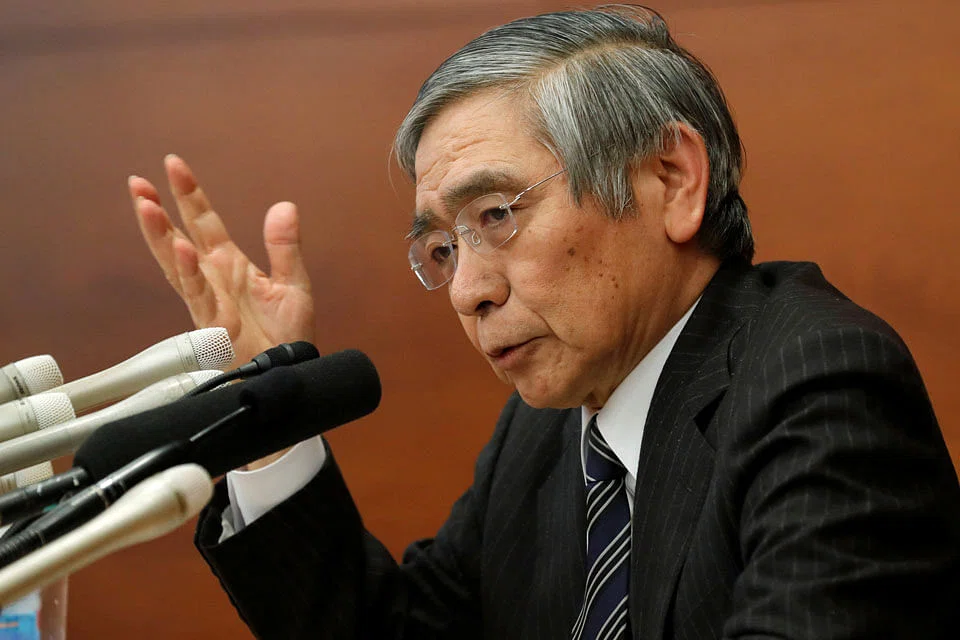
BANK of Japan (BOJ) governor Haruhiko Kuroda said he has no plans to take a fresh look into why the central bank has failed to meet its inflation target, suggesting that no major changes will be made to its massive stimulus programme for the time being.
Mr Kuroda, reappointed by the government for another five-year term when his current one ends in April, has been under fire by some law-makers for failing to achieve his 2 per cent inflation target despite years of heavy money printing.
Speaking in Parliament, he dismissed an opposition law-maker's proposal that the BOJ conduct a thorough assessment on why its price target remains elusive and whether improvements ought to be made in its policy framework.
Mr Kuroda, noting the steady recovery in the economy, said on Monday: "It's unfortunate that achievement of our price target has been delayed. But thanks to the effect of our powerful monetary easing, Japan's economy is no longer in a state that can be described as deflation.
"Things are proceeding smoothly, so I don't have any plan at this stage to conduct another comprehensive review."
His remarks underscore the reluctance shared within the BOJ on conducting another comprehensive assessment like that in 2016, which could trigger debate on whether the bank's framework needs tweaking and possibly spark another bout of global financial market volatility.
Mr Kuroda reiterated the BOJ's resolve to maintain its massive monetary stimulus, with inflation distant from its target.
Mandated by Prime Minister Shinzo Abe to eradicate deflation, a massive asset-buying programme was deployed in 2013 with a pledge to achieve 2 per cent inflation in roughly two years.
But subdued inflation forced the BOJ to conduct a comprehensive assessment of its policy in 2016, which blamed slumping oil costs and Japan's sticky deflationary mindset for the delayed achievement of its price target.
Having conceded it will take more time than expected to meet its price goal, the BOJ revamped its policy framework in 2016 to one targeting interest rates from the pace of money printing - a move it said will make its policy more suited for a long-term battle to drive up prices.
Japan's economy expanded at an annualised 0.5 per cent in the October-to-December period, posting its longest continuous expansion since the 1980s boom, thanks to robust capital spending.
But core consumer inflation stood at 0.9 per cent last month, well below the BOJ's target, in a sign the strengthening economy has yet to prompt companies to raise prices.
Despite weak price growth, many BOJ policymakers are wary of ramping up stimulus and prefer to maintain the status quo due to their dwindling policy options and the rising costs of prolonged easing. REUTERS
TRENDING NOW

What shattered Crystal Jade? How the culinary empire shrank from 120 to just 9 outlets

Could Jensen Huang work for Elon Musk? It would be ‘a titanic ego death match’, says biographer

‘We’ll wait and see’: Investors wary after STI sinks below 5,000 amid global AI selldown

South-east Asia has lost Nvidia’s best salesman

