

Bank of Japan unlikely to move in April, most economists say: poll
 Add BT as a preferred source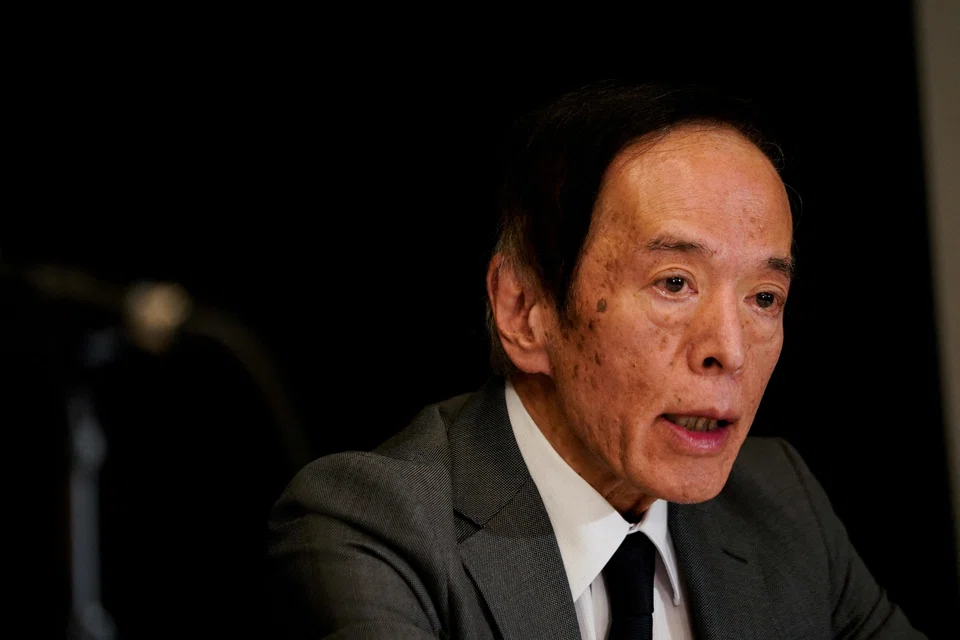
THE Bank of Japan’s new chief Kazuo Ueda will not start unwinding its ultra-easy policy at April 27-28 meeting, nearly 90 per cent of economists polled by Reuters said, as the chance of a surprise tweak at his first rate-review subsided.
Since succeeding Haruhiko Kuroda early this month, Ueda has reassured markets that any change, such as a tweak or end of the controversial yield curve control (YCC) policy, won’t happen quickly, as Western banking turmoil and a global economic slowdown heighten worries about financial stability.
The BOJ will likely keep YCC unchanged at next week’s meeting as it awaits more evidence of sustained wage growth, sources have told Reuters.
Only three of 27 economists, or 11 per cent, said the BOJ will start to scale-back its monetary stimulus next week, whereas 11 (41 per cent) opted for the June meeting, the April 12-19 poll showed.
In a March poll, April and June received around a quarter of analysts’ votes each in a question asking for the timing of the BOJ’s unwinding.
“Ueda said ‘YCC was appropriate’ at his April 10 inaugural news conference, so we moved our policy shift projection forward to June,” said Hiroshi Watanabe, senior economist at Sony Financial Group.
He added the lowered US and Japanese yields after the financial turmoil also decreased the urgency to tweak YCC, which has previously faced market attacks to break the upper limit.
BOJ’s most likely first step to roll back its easy policy is a tweak to its forward guidance, chosen by 16 economists in a question allowing multiple answers, followed by an end to the YCC, selected by 11. Compared with the March poll, fewer economists expect a sudden abolition of YCC to come without warning.
A separate question showed six of 25 respondents (24 per cent) forecasting the end of YCC in April-June, three (12 per cent) in July-September, and five (20 per cent) in October-December.



Mari Iwashita, chief market economist at Daiwa Securities, has pushed her projection back to the December quarter from the September quarter in the previous poll, citing the chance of a national election in the summer that could prevent drastic BOJ moves.
Asked about what the BOJ would do if it were to modify the YCC before ending it, economists were split between those expecting a widening of the tolerance range around the 10-year yield target (52 per cent) and those expecting the target to shift to a shorter-term bond yield (48 per cent).
More analysts projected the latter option this time compared to last month.
“Widening of the yield cap for a second time after December, when the BOJ doubled the range from 0.25 per cent, may encourage the market to test if there will be a third time,” said Nobuyasu Atago, Ichiyoshi Securities’ chief economist, who expects the shortening of the target yield to 3-year in June.
“To avoid the market’s endless attack on the cap, shortening the target yield will be a more appropriate means” when it comes to modifying YCC, Atago said.
Half of the 24 respondents anticipated another YCC tweak, if not an outright end, in April-June. Another eight expected it in the latter half of 2023.
Economists put back their forecast timing for the end of BOJ’s negative short-term interest rate policy compared with a previous estimate. Twelve of 27, or 44 per cent, expect it in 2025 or later, higher than 37 per cent in the February poll. REUTERS
Decoding Asia newsletter: your guide to navigating Asia in a new global order. Sign up here to get Decoding Asia newsletter. Delivered to your inbox. Free.
Share with us your feedback on BT's products and services
TRENDING NOW

Jumbo Seafood to close flagship East Coast Seafood Centre outlet on Sep 30

Shanda co-founder sells Tanglin Hill bungalow for S$76 million

Singapore developer in limbo after Timor-Leste scraps major township project

Trek 2000 shares jump 41.5% after Osim founder Ron Sim drops claims, sells 7.3% stake to Azure Capital

