

Bank of Japan's monetary policy can play bigger role in Covid-19 world: policymaker
 Add BT as a preferred source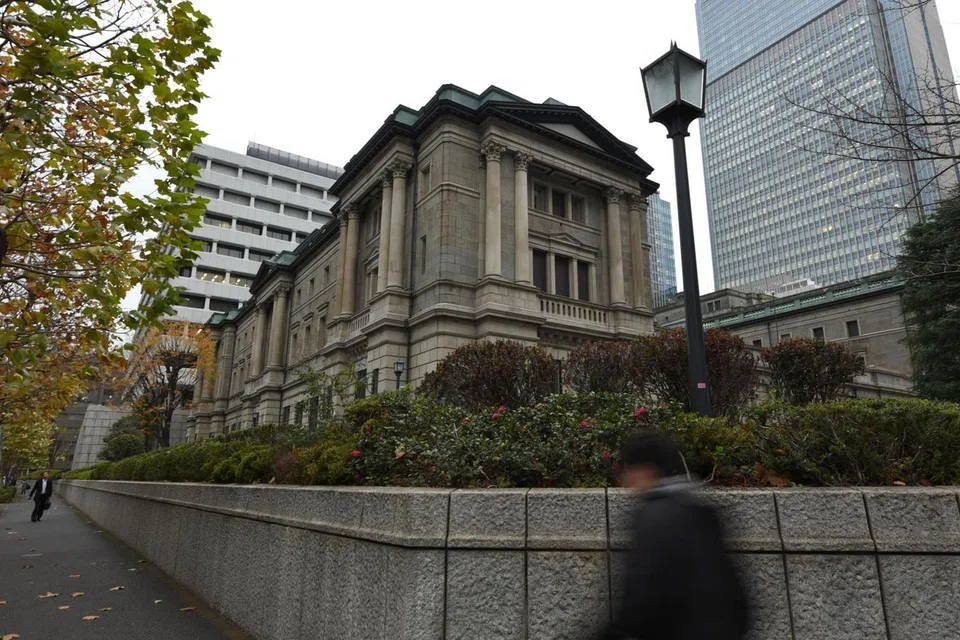
DeeperDive is a beta AI feature. Refer to full articles for the facts.
[TOKYO] The Bank of Japan's monetary policy can play a bigger role in helping to alleviate the pain caused by structural changes to the economy brought about by Covid-19, its board member Seiji Adachi said on Thursday.
Government and central bank relief measures likely succeeded in addressing immediate economic shock from the coronavirus pandemic with Japan's jobless rate, at 3 per cent, much lower than around 7-8 per cent for European and US countries, Mr Adachi said.
But jobs losses are increasing for temporary workers in service industries, while corporate bankruptcies may rise if the economy takes longer to emerge from the pandemic's hit, he said.
"We're not seeing major problems in corporate financing, though the outlook remains highly uncertain," Mr Adachi said.
"It's necessary to maintain accomodative monetary policy in the Covid-19 era, while carefully monitoring economic developments," he said in an online meeting with business leaders in Nagano, eastern Japan.
With the battle to contain the pandemic likely to take time, policymakers must consider what steps they could take to support a society seeking to "live with Covid-19," Mr Adachi said.
Navigate Asia in
a new global order
Get the insights delivered to your inbox.
The US Federal Reserve's policy review, which put greater focus on boosting job growth, may be an example of how Covid-19 is changing the thinking behind monetary policy, he said.
Structural reforms and drastic changes to society needed to adapt to a "with-Covid-19" world can be painful, which is why a safety net to alleviate the pain will become important, he said.
"In the Covid-19 era, I believe it's worth considering whether monetary policy might be able to act as a sort of safety net by providing accommodative financial conditions, rather than as a means of directly promoting such reforms," Mr Adachi said.
The BOJ eased policy twice this year to cushion the immediate pain from Covid-19, focusing on pumping money to cash-strapped firms.
While corporate funding strains have eased, continued weakness in spending on services is stoking concern over the viability of some non-manufacturers hit hardest by the pandemic.
REUTERS
Decoding Asia newsletter: your guide to navigating Asia in a new global order. Sign up here to get Decoding Asia newsletter. Delivered to your inbox. Free.
Share with us your feedback on BT's products and services
TRENDING NOW

StarHub hands Ensign InfoSecurity control back to Temasek in S$115 million deal, books S$200 million gain
Singaporeans can now buy record amount of yen per Singdollar

Air India asks Tata, Singapore Airlines for funds after US$2.4 billion loss

Keppel DC Reit posts 13.2% higher Q1 DPU of S$0.02833 on strong portfolio performance

