

Bank of Korea balances inflation battle against growth risks
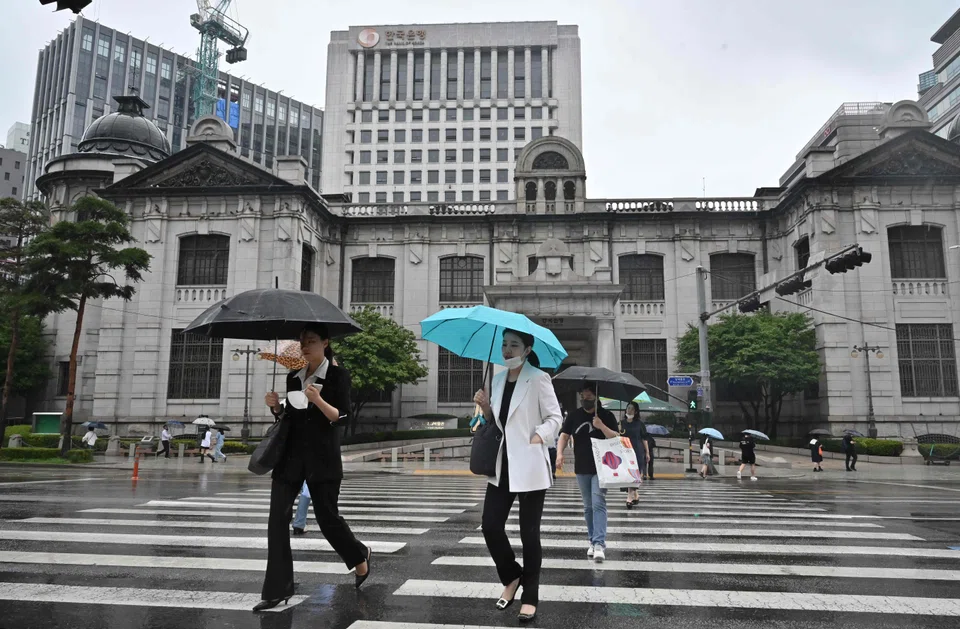
THE Bank of Korea (BOK) raised its key interest rate by a quarter-percentage point on Thursday (Aug 25), returning to its usual pace of tightening as it balances the need to tackle stronger-than-expected inflation with concerns over economic growth.
The central bank increased its 7-day repurchase rate by 25 basis points to 2.5 per cent, in line with the expectations of all economists surveyed by Bloomberg except one who forecast a half-point hike in line with last month’s move.
The BOK also raised its inflation forecast for the current year to 5.2 per cent from its earlier 4.5 per cent view, for its highest projection since 1998. The bank nudged down its growth forecast for this year and next year.
Governor Rhee Chang-yong had already signalled his preference for a more gradual pace of tightening, given the impact of higher borrowing costs on record household debt and the gloomier prospects for the global economy.
Still, the central bank made clear it was determined to continue tightening policy, saying in a statement that it continued to see the need for further rate hikes. The BOK cited capital flows among factors for deciding on the size and pace of those increases. Larger outflows from the economy would likely further weaken a feeble won hovering around a 13-year low against the dollar.
“The economic situation at home is increasingly presenting headwinds for rate hikes with anxiety growing over consumption and exports,” said Park Hee-chan, an economist at Mirae Asset Daewoo.
The BOK, one of the first rate-hikers in Asia-Pacific since the start of the pandemic recovery, carried out its first-ever 50 basis point increase last month to rein in the fastest price growth in more than 2 decades.
The bank’s return to a smaller increase contrasts with the Reserve Bank of New Zealand, another early mover in the region that recently raised rates by a half-percentage point for the fourth straight meeting.
The decision comes before Rhee sets off for a meeting of global central bankers at Jackson Hole this week, where attention will focus on whether Federal Reserve chair Jerome Powell will stick to a hard line on tackling inflation or signal a more flexible approach as the US economy slows and inflationary pressure shows signs of moderating.


The easing of global energy and food prices since last month has provided Rhee with more scope for tightening at a slower pace. Policymakers now see inflation peaking around October.
Still, a slower pace of rate hikes could contribute to further weakness of the won, especially if the Fed continues with outsized rate hikes. The currency has been among Asia’s worst performers this year and fell to a 13-year low this week, triggering a verbal intervention by the authorities.
The won gained 0.5 per cent against the dollar after the policy statement and government bond yields rose, with the 3-year yield jumping over 10 basis points. BLOOMBERG
Decoding Asia newsletter: your guide to navigating Asia in a new global order. Sign up here to get Decoding Asia newsletter. Delivered to your inbox. Free.
Share with us your feedback on BT's products and services
TRENDING NOW

32 companies, 6 individuals bag accolades at Singapore Corporate Awards 2026

He built the Vingroup empire. Now South-east Asia’s richest man is handing some key roles to his sons
URA to review guidelines on floor space to give developers more design flexibility: Chee Hong Tat

Chagee, Mixue and Luckin won the market. Sustaining their edge is the harder part

