

Bank of Russia warns on wartime labour shortages, holds rates
 Add BT as a preferred source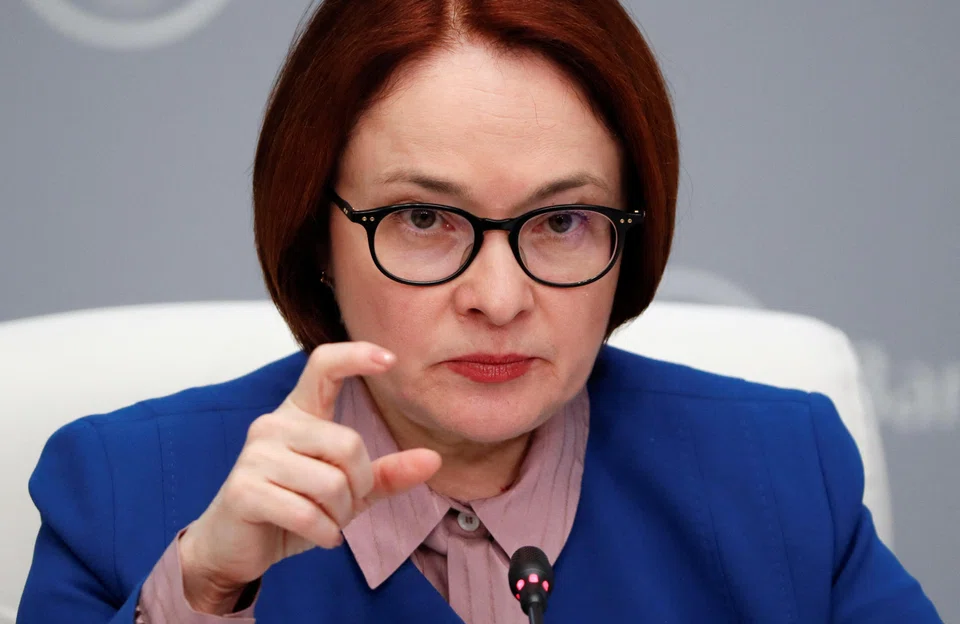
DeeperDive is a beta AI feature. Refer to full articles for the facts.
RUSSIA’S central bank delivered its strongest warning yet that the Kremlin’s call-up of men to fight in Ukraine is leaving the economy deprived of workers and could put pressure on inflation, as it left interest rates unchanged for a second meeting.
Policymakers kept their benchmark at 7.5 per cent, in line with the unanimous forecast of economists surveyed by Bloomberg. The rouble maintained losses after the announcement and traded 0.4 per cent weaker against the US dollar as at 2.21pm in Moscow.
The mobilisation of 300,000 men, combined with a massive exodus of Russians it triggered, has made labour scarce at a time when unemployment is already near the lowest ever and the population is shrinking. On Friday (Dec 16), the central bank said “the capacity to expand production in the Russian economy is largely limited by the labour market conditions”.
The Bank of Russia again provided no guidance in its statement, leaving options open on the future direction of monetary policy.
“Labour shortages are increasing in many industries amid the effects of the partial mobilisation,” the central bank said. “Under these conditions, real wage growth is accelerating in these sectors and could outpace productivity growth.”
The decision caps a year that included a steep monetary easing cycle that more than reversed an emergency hike after the Kremlin’s invasion of Ukraine. Encouraged by a steep deceleration in consumer prices, the central bank has been in a rush to unwind the unprecedented measures imposed after the invasion in late February as the economy lurched into crisis under the strain of sanctions from the US and its allies.
Navigate Asia in
a new global order
Get the insights delivered to your inbox.
In October, policymakers adopted a “neutral signal” after delivering 12.5 percentage points of easing in six steps to bring rates below their pre-war level.
Since peaking near an annual 18 per cent in April, inflation has slowed to around 12 per cent, or near the low end of the central bank’s year-end forecast. Price expectations, a key factor for policymakers, dropped in November for the first time in four months.
“Current consumer prices are growing at a moderate rate, and consumer demand is subdued,” the central bank said on Friday. “At the same time, pro-inflation risks are up and prevail over disinflationary risks.”

But it’s the threats ahead that will increasingly dominate the agenda for central bank governor Elvira Nabiullina, who’s previously signalled that looser fiscal policy is becoming a worry.
“The tone of the comment has changed somewhat,” said Olga Nikolaeva, senior analyst at ITI Capital in Moscow. “Over the short-term horizon, the regulator has increased its emphasis on pro-inflationary risks.”
The Finance Ministry, which was forecasting a full-year budget shortfall of 0.9 per cent of gross domestic product, now expects the deficit to reach 2 per cent as revenues fall and expenditure rises for the war effort.
Alongside higher government spending, the call-up – announced nearly three months ago – poses risks for inflation by straining the labour market. As a result of the mobilisation and the wave of emigration that followed, the male labour pool may decline by 2 per cent.
That’s among the main reasons that Bloomberg Economics now puts Russia’s potential economic growth rate at just 0.5 per cent – or half its pre-war level.
The rouble has meanwhile turned weaker as the current-account surplus – for months a major reason behind the currency’s strength – has started to fade.
The budget may also come under pressure from new restrictions on Russian oil exports as geopolitical risks show little sign of easing.
The outlook for rates has become so murky that Nabiullina wouldn’t rule out that the central bank’s next move may be a hike, a scenario that doesn’t look likely for now.
Given that inflation expectations remain elevated and a less favourable outlook for the rouble, “the first signs have emerged that it’s worth thinking about raising the rate”, said Evgeniy Vorobiev, head of analysis at Moscow-based Ingostrakh Investments AM.
At the same time, the economy is still in need of support, he said, while massive sales of floating-rate notes by the Finance Ministry raise the risk that debt-servicing costs would balloon if monetary tightening were to resume.
“The central bank is now at a certain crossroads,” Vorobiev said. BLOOMBERG
Decoding Asia newsletter: your guide to navigating Asia in a new global order. Sign up here to get Decoding Asia newsletter. Delivered to your inbox. Free.
Share with us your feedback on BT's products and services
TRENDING NOW

Air India asks Tata, Singapore Airlines for funds after US$2.4 billion loss

Beijing’s calculated silence on the Iran war

China pips the US if Asean is forced to choose, but analysts warn against reading it like a sports result

Richard Eu on how core values, customers keep Singapore’s TCM chain Eu Yan Sang relevant

