

Beijing meets state air quality standards for first time in 2021
 Add BT as a preferred source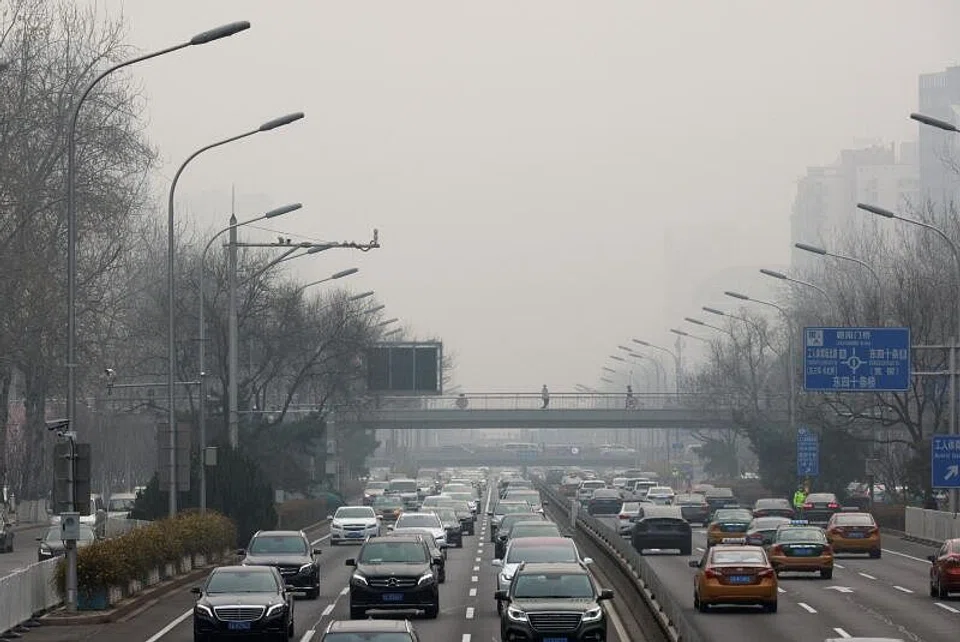
DeeperDive is a beta AI feature. Refer to full articles for the facts.
[BEIJING] The Chinese capital Beijing met state air quality standards for the first time last year, officials said on Tuesday (Jan 4), following a concerted effort to cut coal consumption, reduce transportation emissions and relocate heavy industry.
China declared war on pollution in 2014 after a series of hazardous smog build-ups in Beijing and elsewhere triggered widespread public anger.
Average readings of small, hazardous airborne particles known as PM2.5 reached 33 micrograms per cubic metre in Beijing over the whole of 2021, down 13 per cent compared to a year earlier and meeting China's interim standard of 35 micrograms for the first time on record, officials said during a briefing on Tuesday.
The annual average of 33 micrograms remains much higher than the recommended World Health Organization level of 5 micrograms.
Yu Jianhua, deputy head of Beijing's environmental protection bureau, described the city's efforts over the last decade, as well as the speed of its improvements, as "unprecedented".
"All regions and all departments worked together and organised the whole society to achieve comprehensive improvements in Beijing's air quality," he said.
Navigate Asia in
a new global order
Get the insights delivered to your inbox.
Beijing residents enjoyed nearly 4 months more of clear skies last year compared to 2013, he added.
Beijing promised in 2015 that it would use its staging of the Winter Olympics in 2022 to help drive improvements in its environment, with Chinese President Xi Jinping vowing to host a "green" Games.
As a measure of the progress made, in 2016 average PM2.5 readings stood at 71 micrograms, but frequently approached 500 micrograms during the winter months, when coal-dominated heating systems were switched on throughout the region.
Beijing and the surrounding province of Hebei have since made efforts to switch to cleaner natural gas and also planted vast numbers of trees across the region.
They have also imposed tough new fuel standards on cars and forced steel mills and other industrial facilities to install equipment aimed at controlling emissions.
REUTERS
Decoding Asia newsletter: your guide to navigating Asia in a new global order. Sign up here to get Decoding Asia newsletter. Delivered to your inbox. Free.
Share with us your feedback on BT's products and services
TRENDING NOW

Shelving S$5 billion office redevelopment plan proved ‘wise’ as geopolitical risks mount: OCBC chairman
Why where you park your joint venture matters: Lessons from a US$689 million shareholder dispute

China pips the US if Asean is forced to choose, but analysts warn against reading it like a sports result
Singaporeans can now buy record amount of yen per Singdollar

