

Beijing tightens Covid curbs, hard-hit Shanghai sees signs of life
Shanghai’s outbreak, which began in March, has been China’s worst since the early months of the pandemic in 2020
 Add BT as a preferred source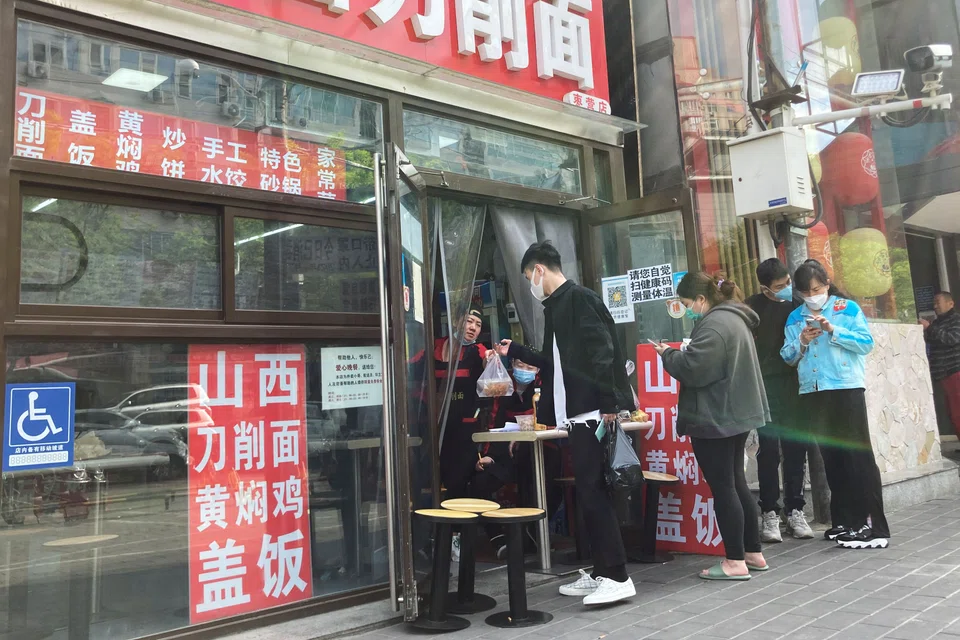
CHINA’S capital Beijing tightened Covid restrictions on Sunday (May 1) as it battled an outbreak, while Shanghai let some of its 25 million residents venture out for light and air after reporting a second day of zero infections outside of quarantine areas.
Shanghai’s outbreak, which began in March, has been China’s worst since the early months of the pandemic in 2020. Hundreds of thousands have been infected and the city has forbidden residents from leaving their homes, to great public anger.
The outbreak in China’s most populous city and the risk of a spread in Beijing are testing the government’s zero-Covid approach in a year when Xi Jinping is expected to secure an unprecedented third term as president. Beijing, with dozens of daily infections in an outbreak now in its 10th day, has not locked down. More than 300 locally transmitted cases have been logged since Apr 22.
But on Sunday, the capital tightened social distancing rules and launched a fresh round of mass testing in its most populous and worst-hit district. The city of 22 million has in the past week conducted mass testing in most of its 16 districts, suspended all entertainment venues and banned restaurant dining.
“The impact of all this on us is too great - 20,000 yuan (S$4,186) in a day gone, just like that!” said Jia, a manager at a normally popular burger restaurant in the east of Beijing. “Our boss is stressing out about this too,” Jia said, asking to be identified only by his surname. “We have 3 branches in Shanghai. They’ve all been shut and losing cash for a month. And now this.”
Beijing’s sprawling Universal Studios theme park closed on Sunday, while in the highly visited Badaling section of the Great Wall, visitors were told to show proof of negative Covid test results before entering. Chaoyang district, accounting for the biggest share of infections in Beijing’s outbreak, launched an additional round of mass testing, with public health workers knocking on doors to remind residents to get tested.
Shanghai’s citywide lockdown since early April has upended the daily lives of its residents, sparking worries about food and concern about being taken to crowded quarantine centres should they catch the virus. Extreme measures taken to seal up residential compounds, including fencing up entrances of buildings, have prompted outrage. Some residents have turned to social media to vent their frustration, some clanged pots and pans outside their windows, and others clashed with public health workers.
While much of the city remains in lockdown, Shanghai officials, striking a confident tone, said on Sunday that curbs on some areas would be eased after the city reined in Covid transmission risks at the community level, excluding cases in quarantine centres.
Six of its 16 districts attained zero-Covid status, meaning 3 consecutive days with no new daily increases in infections, senior city government official Gu Honghui told a virtual news conference.
Public transport will be allowed to resume in 5 districts, but residents must remain in their districts as they visit supermarkets, pharmacies and hospitals, a health official told the news conference.
Social media posts showed the streets of Fengxian, one of the 6 districts, filled with pedestrians and choked with scooters and bicycles. Reuters could not independently verify the videos.
But despite the fall in transmissions, Shanghai will launch a new round of citywide PCR and antigen tests from Sunday until May 7.
Excluding imported cases arriving from outside the mainland, China reported 8,256 new local cases for Saturday, down from 10,703 a day before. Beijing accounted for 59 of the infections, while Shanghai saw 7,872 new cases and all of the nation’s 38 fatalities. REUTERS
Decoding Asia newsletter: your guide to navigating Asia in a new global order. Sign up here to get Decoding Asia newsletter. Delivered to your inbox. Free.
Share with us your feedback on BT's products and services
TRENDING NOW

Yeoh Pei Xien: YTL’s third-gen scion with a pastor’s heart
Singapore banks’ battle for wealth talent goes beyond private bankers

Car dealer charged in S$1.1 million tax evasion case involving Porsches, Ferraris, Rolls-Royces
Vietnam’s island megaproject races towards Apec deadline, but demand test looms

