

Biden eyes swift new Iran talks after nuclear deal return
 Add BT as a preferred source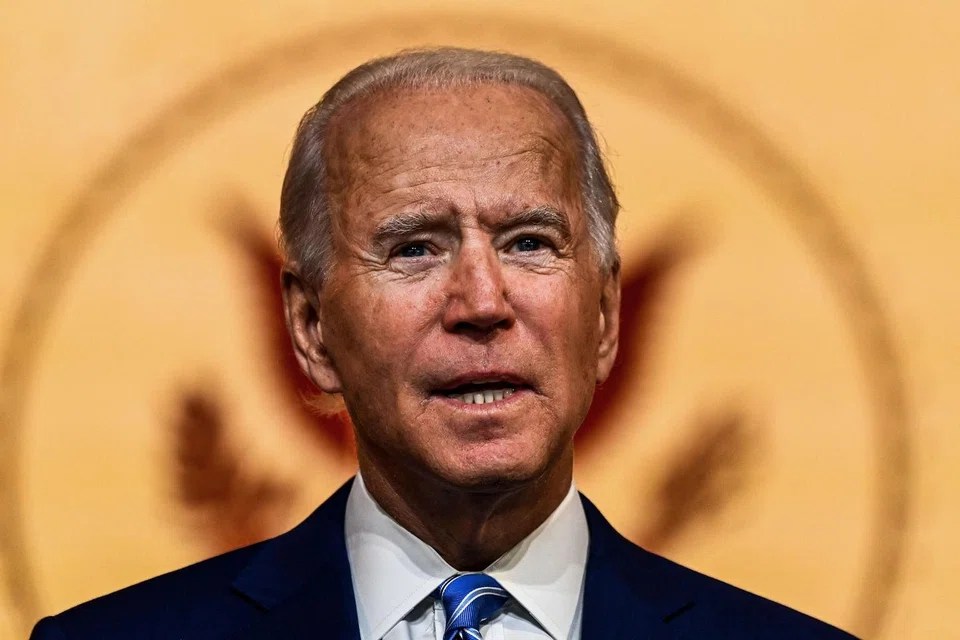
[WASHINGTON] President-elect Joe Biden will seek swift negotiations over new demands on Iran as soon as the US returns to the Iran nuclear deal, The New York Times said Wednesday.
Mr Biden, in an interview with the paper, said "it's going to be hard," but if Iran returned to compliance with the nuclear deal, the United States would rejoin the agreement as a starting point for follow-on negotiations.
The Times said the Biden administration would seek to extend the duration of restrictions on Iran's production of fissile material that could be used to make a nuclear bomb.
Iran would also have to address its regional activities through proxies in Lebanon, Iraq, Syria and Yemen in the talks that Biden team has suggested could include its Arab neighbours like Saudi Arabia, the Times said.
President Donald Trump unilaterally withdrew from the deal in 2018 and has reimposed crippling sanctions on Iran as part of a "maximum pressure" campaign against the US's arch enemy.
Mr Biden, who defeated Trump at the ballot box last month, said during campaigning that he intends to offer Iran a "credible path back to diplomacy".
Navigate Asia in
a new global order
Get the insights delivered to your inbox.
"There's a lot of talk about precision missiles and all range of other things that are destabilising the region," Mr Biden told the Times.
But, he added, "the best way to achieve getting some stability in the region" was to deal "with the nuclear programme." Mr Biden warned that if Iran acquired a bomb, it would spark a nuclear arms race in the Middle East, "and the last goddamn thing we need in that part of the world is a buildup of nuclear capability." "In consultation with our allies and partners, we're going to engage in negotiations and follow-on agreements to tighten and lengthen Iran's nuclear constraints, as well as address the missile program," he told the Times.
Mr Biden said that the United States always had the option to snap back international sanctions if need be, and that Iran knew that.
The 2015 nuclear deal - known formally as the Joint Comprehensive Plan of Action, or JCPOA - gave Iran relief from sanctions in return for curbs on its nuclear programme.
In response to Mr Trump's withdrawal, the Islamic republic has retaliated by rolling back most of its key commitments to the accord.
Iran's government has offered a cautious welcome to Mr Biden's victory, but conservatives have accused it of yielding to what they say is an "illusion" of a change by the "Great Satan" of America.
AFP
Decoding Asia newsletter: your guide to navigating Asia in a new global order. Sign up here to get Decoding Asia newsletter. Delivered to your inbox. Free.
Share with us your feedback on BT's products and services
TRENDING NOW

Middle East-linked energy supply shocks put Asean Power Grid back in focus
Strengthening Asean’s economic resilience through RCEP’s 2027 review
How China’s young workers are securing their future even as AI disrupts job market, triggers pay cuts

US-China rivalry and the Kindleberger Trap: Why inaction – not escalation – is the biggest risk

