

Biden loses bragging rights against China with US economy fading
 Add BT as a preferred source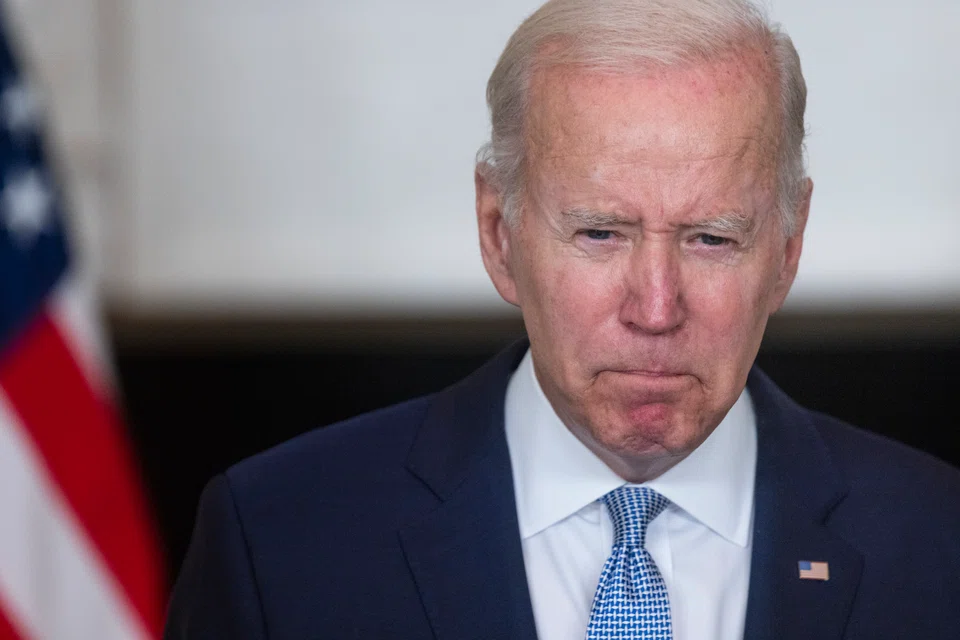
DeeperDive is a beta AI feature. Refer to full articles for the facts.
IT WAS a great talking point for President Joe Biden while it lasted: a forecast for the US economy to grow faster than China’s for the first time since 1976.
Biden highlighted it on a trip to Asia in May, and his national security adviser, Jake Sullivan, called it “a quite striking example of how countries in this region should be looking at the question of trends and trajectories.”
But a report on Thursday (Jul 28) US gross domestic product (GDP) unexpectedly shrank at a 0.9 per cent annual rate last quarter – making it now unlikely to surpass China’s expansion this year.
Bloomberg Economics as of mid-May projected China would expand 2 per cent this year, against 2.8 per cent for the United States – the first undershoot since 1976.
Reflecting a better-than-expected second quarter for China, and mounting evidence of a slump in the US, the team’s latest forecasts are 3.6 per cent for China and 1.5 per cent for the US.
“We don’t want to get wrapped up too much in any one month’s number, or one quarter’s number,” Heather Boushey, a member of the White House Council of Economic Advisers, said when asked about the relative countries’ growth outlooks.
Navigate Asia in
a new global order
Get the insights delivered to your inbox.
United States GDP shrank in both of the first two quarters of 2022.
Measured on a quarter-on-quarter basis, China contracted last quarter, but a rebound in June data raised chances of a modest recovery headed into the second half.
Beating China would have been remarkable, given that US GDP is, measured per capita, more than five times the size of its rival – leaving the Asian economy enormous scope to catch up.

But just weeks ago, with a fresh wave of Covid lockdowns walloping spending and a property downturn deepening, it seemed possible.
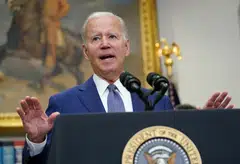
Moving past the data, the Biden administration is now highlighting movement this week on two pieces of economic legislation that are key to the president’s broader campaign to “win the economic competition of the 21st century” with China, as he put it in his State of the Union speech earlier this year.
“We want to see the US economy deliver for the American people over the long haul,” Boushey said on Bloomberg Television’s Bloomberg Balance of Power With David Westin. “That is why we are so focused on the chips legislation and the Inflation Reduction Act. Both of these, especially together, are going to boost American competitiveness.”
The House on Thursday passed legislation marking the biggest expansion in support for US industry and research in years, with US$52 billion in grants and incentives for domestic semiconductor manufacturing.
That bill now goes to Biden for signature.
In the Senate, a new compromise Democrat-only bill emerged this week that would include a raft of investments in clean energy, stepping up US competitiveness in an area in which it has lagged behind.
President Xi Jinping and his colleagues, meantime, have begun to play down the target for growth of around 5.5 per cent adopted by the government in March.
The country should achieve “the best outcome” possible for growth this year while sticking to a strict Covid Zero policy, according to a statement after a meeting of the Politburo – the Communist Party’s top decision-making body.
Xi and his US counterpart may have an opportunity to discuss their economies’ relative growth rates in person.
They told aides to plan a meeting during a call on Thursday in what would be their first face-to-face conversation since Biden became president. BLOOMBERG
Decoding Asia newsletter: your guide to navigating Asia in a new global order. Sign up here to get Decoding Asia newsletter. Delivered to your inbox. Free.
Share with us your feedback on BT's products and services
TRENDING NOW
‘Boring’ is the new black: The stars are aligning for a Singapore stock market revival

Near sell-out launches in March boost developer sales to 1,300 units after four slow months
China pips the US if Asean is forced to choose, but analysts warn against reading it like a sports result

Genting Singapore’s Lim Kok Thay receives S$7.5 million pay package for FY2025

