

Biden meets eastern Nato allies after Putin's nuclear warning
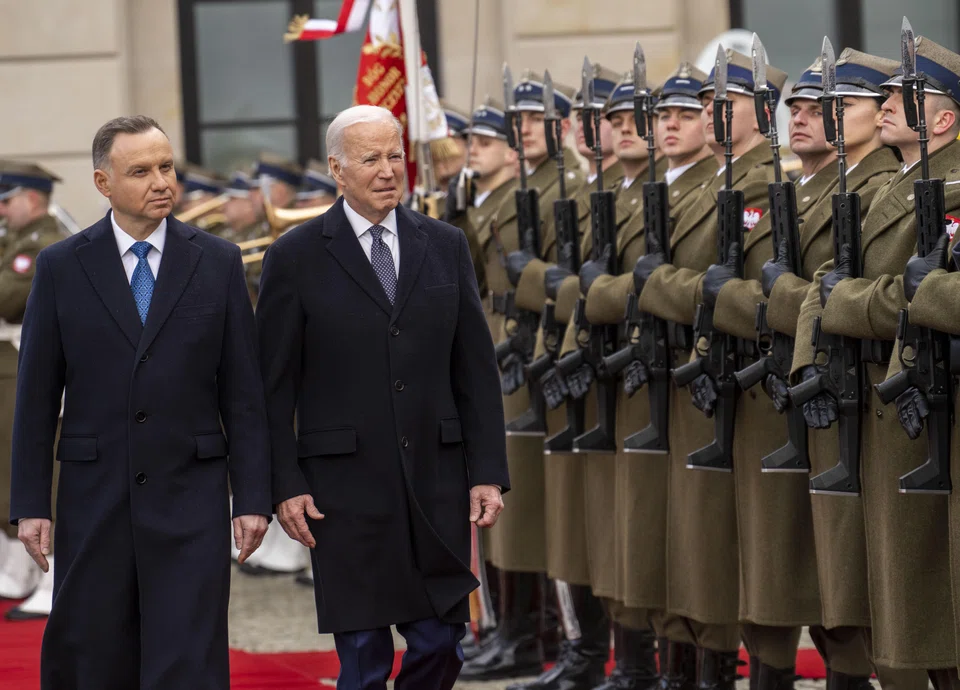
US President Joe Biden met leaders of Nato’s eastern flank on Wednesday (Feb 22) to show support for their security after Moscow suspended a landmark nuclear arms control treaty over strong Western support for Ukraine.
Biden arrived in the Polish capital Warsaw late on Monday after a surprise visit to Kyiv just days ahead of the anniversary of Russia’s invasion of Ukraine on Feb 24, 2022.
Amid the highest tension between Russia and the West since the Cold War over three decades ago, Biden addressed thousands in downtown Warsaw on Tuesday and said “autocrats” like Russian President Vladimir Putin must be opposed.
Hours earlier, Putin delivered lengthy remarks laden with criticism of Western powers, blaming them for the war in Ukraine. Biden said the West was never plotting to attack Russia and the invasion was Putin’s choice.
Putin also backed away from the New START arms control treaty– a 2010 agreement that limits the number of Russian and US deployed strategic nuclear warheads – and warned that Moscow could resume nuclear tests.
“He made a big mistake,” Biden said of Putin’s decision when asked about it as he headed into the meeting with eastern European allies.
Earlier on Wednesday, Biden met staff from the US Embassy in Warsaw before gathering leaders of the Bucharest Nine, the countries on Nato’s eastern flank such as Poland, Bulgaria and Lithuania that joined the Western military alliance after being dominated by Moscow during the Cold War.
Most are among the strongest supporters of military aid to Ukraine, and officials from countries in the group have called for additional resources such as air defence systems.
At the meeting, Biden planned to reaffirm commitments to their security and discuss support for Ukraine before he returns to Washington.
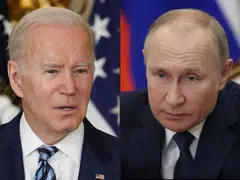
The Kremlin says it regards Nato, which could soon expand to include Sweden and Finland, as an existential threat to Russia.
Lithuanian President Gitanas Nauseda said he wanted greater involvement of the United States in Europe, Nato’s eastern flank and more weapons sent to Ukraine.
“Let’s give Ukraine all the weapons it needs to defeat the aggressor,” Nauseda tweeted on Wednesday ahead of the meeting.
“Let’s continue building up our own defences. Eastern Nato flank must remain in our focus. No soft spots should be left.”
Lithuania, a former Soviet republic on Russia’s doorstep, joined Nato in 2004 and plans to host Biden in July for the security alliance’s leaders summit.
Not all of the Bucharest Nine have been quite so ready to aid Ukraine, notably Hungary, which has pushed back on some EU sanctions on Russia and along with Turkey is the only Nato member still to ratify the accession of Sweden and Finland.
Hungarian Foreign Minister Peter Szijjarto urged a ceasefire and peace talks on Ukraine to prevent further escalation of the war into a broader conflict, a line at odds with calls for an outright Ukrainian victory among many of its neighbours.
“Having seen and listened to the speeches by the presidents of the US and Russia yesterday, I think they would have made humanity a much bigger service by talking to each other,” Szijjarto told a news conference in Budapest.
Before flying to Warsaw for Wednesday’s meeting, Czech Prime Minister Petr Fiala reiterated the importance of helping Ukraine.
“The Ukrainians are fighting extremely bravely,” Fiala said. “But they cannot do it without our help, and they cannot do it without the help of big, powerful countries that have the means and the ability to do it.” REUTERS
Decoding Asia newsletter: your guide to navigating Asia in a new global order. Sign up here to get Decoding Asia newsletter. Delivered to your inbox. Free.
Share with us your feedback on BT's products and services
TRENDING NOW

Once staunchly pro-China, Malaysian Chinese businesses are now distancing themselves from Beijing

Looking beyond looming CEO succession, should UOB potentially pursue a transformative merger?

Could stablecoins be the future of money?

Grab CEO’s wife Chloe Tong on life with Anthony Tan and finding her purpose

