Biden sharply hikes US tariffs on billions in Chinese chips, cars
China strongly opposes tariff hikes, pledging measures to defend rights
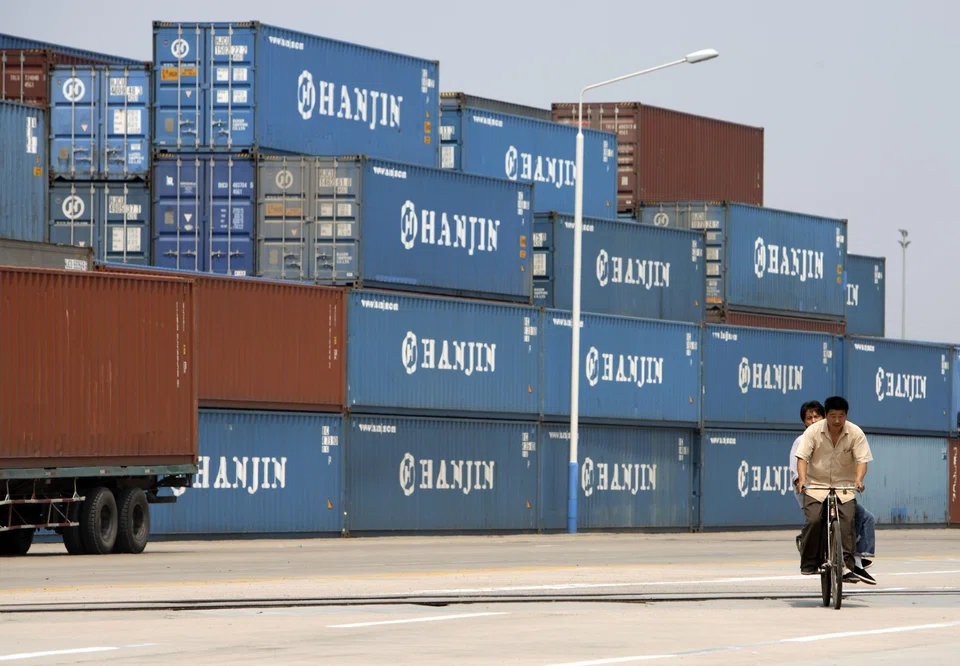
US PRESIDENT Joe Biden on Tuesday (May 14) unveiled a bundle of steep tariff increases on an array of Chinese imports including electric vehicles, computer chips and medical products, risking an election-year standoff with Beijing in a bid to woo voters who give his economic policies low marks.
Biden will keep tariffs put in place by his Republican predecessor Donald Trump while ratcheting up others, the White House said in a statement, citing “unacceptable risks” to US “economic security” posed by what it considers unfair Chinese practices that are flooding global markets with cheap goods.
The new measures impact US$18 billion in Chinese imported goods including steel and aluminium, semiconductors, batteries, critical minerals, solar cells and cranes, the White House said.
China strongly opposed the United States’ tariff hikes, its commerce ministry said on Tuesday, vowing it will take resolute measures to defend its rights and interests.
“US raising Section 301 tariffs violates President Biden’s commitment to ‘not seek to suppress and contain China’s development’ and ‘not to seek to decouple and break links with China’,” said a statement by the ministry, adding the move will “seriously affect the atmosphere of bilateral cooperation.”
“The US should immediately correct its wrongdoing and remove the additional tariffs imposed on China,” the Chinese commerce ministry urged in the statement.
The United States imported US$427 billion in goods from China in 2023 and exported US$148 billion to the world’s No 2 economy, according to the US Census Bureau, a trade gap that has persisted for decades and become an ever more sensitive subject in Washington.
“China’s using the same playbook it has before to power its own growth at the expense of others by continuing to invest, despite excess Chinese capacity and flooding global markets with exports that are underpriced due to unfair practices,” White House National Economic Adviser Lael Brainard told reporters on a conference call.
Administration officials said their measures are “carefully targeted,” combined with domestic investment, plotted with close allies and unlikely to worsen a bout of inflation that has already angered US voters and imperilled Biden’s re-election bid. They also downplayed the risk of retaliation from Beijing.

Biden has struggled to convince voters of the efficacy of his economic policies despite a backdrop of low unemployment and above-trend economic growth. A Reuters/Ipsos poll last month showed Trump had a 7 percentage-point edge over Biden on the economy.
Analysts have warned that a trade tiff could raise costs for EVs overall, hurting Biden’s climate goals and his aim to create manufacturing jobs.
Biden has said he wants to win this era of competition with China but not to launch a trade war that could hurt the mutually dependent economies. He has worked in recent months to ease tensions in one-on-one talks with Chinese President Xi Jinping.
Both 2024 US presidential candidates have sharply departed from the free-trade consensus that once reigned in Washington, a period capped by China’s joining the World Trade Organization in 2001.
China has said the tariffs are counterproductive and risk inflaming tensions. Trump’s broader imposition of tariffs during his 2017-2021 presidency kicked off a tariff war with China.
As part of the long-awaited tariff update, Biden will increase tariffs this year under Section 301 of the Trade Act of 1974 from 25 per cent to 100 per cent on EVs, from 7.5 per cent to 25 per cent on lithium-ion EV batteries and other battery parts and from 25 per cent to 50 per cent on photovoltaic cells used to make solar panels. “Certain” critical minerals will have their tariffs raised from nothing to 25 per cent.
The tariffs on ship-to-shore cranes will rise to 25 per cent from zero, those on syringes and needles will rise to 50 per cent from nothing now and some personal protective equipment (PPE) used in medical facilities will rise to 25 per cent from as little as 0 per cent now. Shortages in PPE made largely in China hampered the United States’ Covid-19 response.
More tariffs will follow in 2025 and 2026 on semiconductors, whose tariff rate will double to 50 per cent, as well as lithium-ion batteries that are not used in elective vehicles, graphite and permanent magnets as well as rubber medical and surgical gloves.
A step Biden previously announced to raise tariffs on some steel and aluminum products will take effect this year, the White House said.
A number of lawmakers have called for massive hikes on Chinese vehicle tariffs. There are relatively few Chinese-made light-duty vehicles being imported now. Senate Banking Committee Chairman Sherrod Brown wants the Biden administration to ban Chinese EVs outright, over concerns they pose risks to Americans’ personal data. REUTERS
Decoding Asia newsletter: your guide to navigating Asia in a new global order. Sign up here to get Decoding Asia newsletter. Delivered to your inbox. Free.
Share with us your feedback on BT's products and services