

Biden: US would defend Taiwan from ‘unprecedented attack’
 Add BT as a preferred source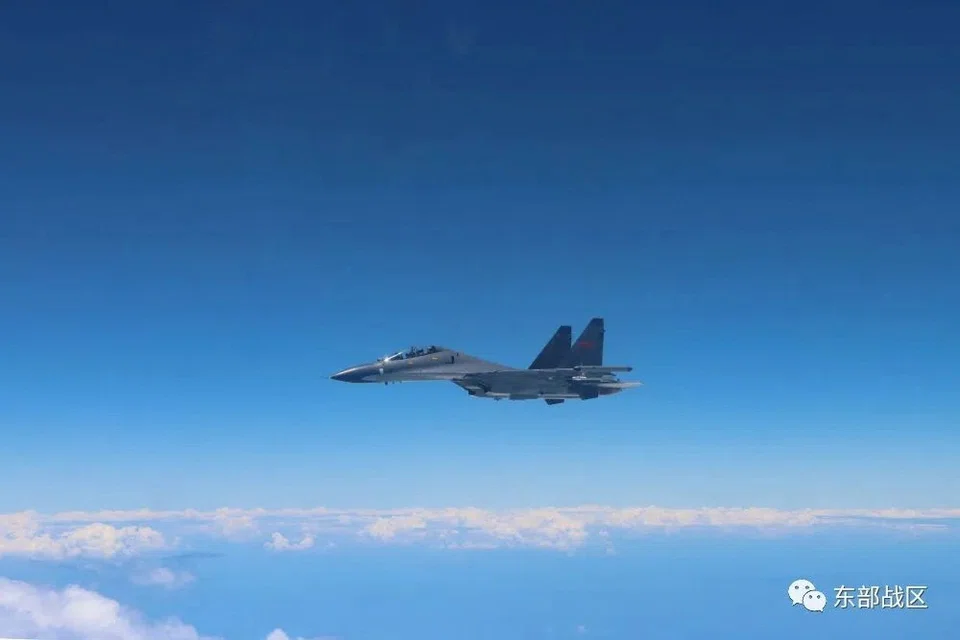
PRESIDENT Joe Biden said US military forces would defend Taiwan from “an unprecedented attack”, his latest pledge of support as his administration seeks to deter China from increasing military pressure on the democratically elected government in Taipei.
He made the remark during an interview with 60 Minutes that aired on Sunday (Sep 18), while distancing himself from the question of whether Taiwan is or should be independent. Interviewer Scott Pelley asked the president if US forces would “defend the island”.
“Yes, if in fact there was an unprecedented attack,” Biden replied, according to a transcript provided by the broadcaster. Pelly then asked if that meant US soldiers would defend Taiwan in the case of a Chinese invasion, unlike the current situation in Ukraine, and the president again said “yes”.
Earlier in the interview, the US leader had said the US stood by its “One China” policy, in which it has avoided formal recognition of the government in Taipei or providing it a binding security guarantee.
“We agree with what we signed onto a long time ago. And that there’s One China policy, and Taiwan makes their own judgments about their independence. We are not moving – we’re not encouraging their being independent,” he said. “That’s their decision.”
A US official said Sunday that US policy hasn’t changed, noting that Biden had made the same points before. The official asked not to be identified responding to the 60 Minutes interview.
Chinese Foreign Ministry spokeswoman Mao Ning urged the US to “fully understand the extremely important and highly sensitive nature of the Taiwan question and abide by the ‘one China’ principle,” at a Monday news briefing in Beijing. Failing to do so, she added, could cause “further damage to China-US relations and peace and stability across the Strait”.
The Chinese foreign ministry said China has lodged “stern representations” with the United States following Biden’s remarks. China reserves the right to take all necessary measures in response to activities that split the nation apart, said Mao.
“We are willing to do our best to strive for peaceful reunification. At the same time, we will not tolerate any activities aimed at secession,” she said. She also urged the US to handle Taiwan-related issues “carefully and properly”, and not send “wrong signals” to Taiwan independence separatist forces, warning the United States not to seriously damage Sino-US relations and the peace in the Taiwan Strait.
“There is only one China in the world, Taiwan is part of China, and the government of the People’s Republic of China is the only legitimate government of China,” said Mao.
Biden has made similar statements on at least 4 other occasions as president, spurring protests from Beijing and adding new uncertainty to Washington’s long-standing policy of “strategic ambiguity” toward Taiwan. China claims Taiwan as its territory, even though the Communist Party has never controlled it, and hasn’t ruled out force to prevent its formal independence.
“China has long assumed that the US would intervene to defend Taiwan, so these statements don’t change PLA plans,” said Bonnie Glaser, director of the Asia Programme at the German Marshall Fund, referring to China’s People’s Liberatiion Army, the country’s military. “If Biden is serious about defending Taiwan, he’ll attach a much higher priority to bolstering the US military’s capability to defend Taiwan if attacked.”
US relations with China have deteriorated further in the wake of House Speaker Nancy Pelosi’s trip to the island last month, with China cutting off climate and military talks and holding its most provocative military exercises near Taiwan in decades. Still, there’s been no indication that the tensions have scuttled plans for Biden and Xi to hold their first face-to-face summit in November.
That could yet change if Congress passes the Taiwan Policy Act, which is now under discussion in Washington. The Senate Foreign Relations Committee approved a bill on Wednesday that would formally designate Taiwan a “major non-NATO ally” and and give it more military hardware, even as the White House has expressed concerns over the legislation.
Lev Nachman, assistant professor at National Chengchi University, said: “The biggest problem we have is that what the White House says is our Taiwan policy and what Biden says is our Taiwan policy contradict each other.
“Even though this is not the first time Biden has made such comments, today’s context makes them hit extra hard because of the Taiwan Policy Act’s ongoing debate and the recent Chinese military drills in the Taiwan Strait,” he added. “The worry is that this will exacerbate Taiwan’s current high-tension moment rather than reduce it.”
The Taiwanese Foreign Ministry expressed “sincere gratitude towards President Biden’s reiteration that the US government has rock-solid security commitments to Taiwan”, the agency said in a statement, praising the administration for showing that “it supports Taiwan through multiple public remarks and specific actions”. BLOOMBERG, REUTERS
Decoding Asia newsletter: your guide to navigating Asia in a new global order. Sign up here to get Decoding Asia newsletter. Delivered to your inbox. Free.
Share with us your feedback on BT's products and services
TRENDING NOW

Digital Realty, STT GDC among data centre operators awarded 50 MW of new capacity in Singapore
Jardine C&C selling Singapore, Malaysia dealerships to Indonesia’s Chandra Asri for US$221 million gain

When every phone becomes a satellite phone, what happens to Asia’s telcos?

‘How come you’re so young?’: Gen Z couple takes on Singapore’s established bullion dealers

