

Billionaire no more: Ukraine president's fortune fades with war
Kiev
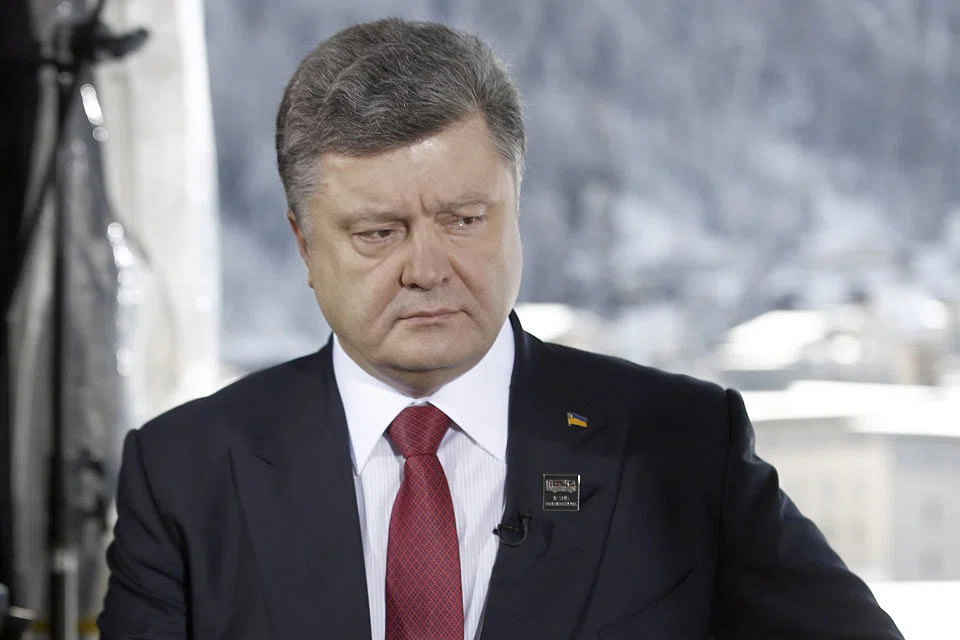
AT the November 2013 World Economic Forum in Kiev's Intercontinental Hotel, billionaire Petro Poroshenko predicted a European Union (EU) trade pact would kick-start Ukraine's economy and enrich his Roshen Confectionery Corp by dramatically increasing EU-bound chocolate exports.
Eighteen months later, Mr Poroshenko - now Ukraine's president - has seen his wealth head in the other direction.
Since the proposed trade deal collapsed, dragging Ukraine's economy down with it, his fortune has declined by some 30 per cent to about US$720 million, according to the Bloomberg Billionaires List.
Roshen's output, which topped 400,000 tonnes in 2012, lost 25 per cent over the next two years after its products were banned in its most important export market, Russia, and its factory there was seized by the government.
Mr Poroshenko's business "has been complicated by his official status and decisions that he has had to make as president", said Yuriy Yakymenko, an analyst at the Razumkov Center for Economic and Political Studies, a research institute in Kiev.
While campaigning for president last year, Mr Poroshenko promised to sell Roshen, but he hasn't been able to find a buyer. There's been scant interest in the company, which the president values at about US$3 billion, according to Roshen chief executive officer Vyacheslav Moskalevsky.
"There's absolutely no way the company will sell for that much at this time," Mr Moskalevsky, who is a minority shareholder, said at Roshen's headquarters near Kiev's riverfront docks. "Nobody can sell anything here now."
That's largely because of the woeful state of Ukraine's economy. The war against pro-Russian separatists has killed more than 6,100 people, the country is mired in a deep recession, and corruption, mismanagement and red tape keep potential investors at bay. An investment banker familiar with the matter said the only party interested in Roshen has been Nestle SA, which isn't prepared to pay more than US$1 billion. Nestle declined to comment.
"Talks are ongoing, but demand here is not just bad. It's very bad," said Mr Poroshenko's chief of staff Boris Lozhkin. "Investors don't want to come here."
Mr Poroshenko, of course, is far from the only Ukrainian who has seen his fortune fade. Everyone from labourers to the middle class to oligarchs has been hit by the crisis. Ukraine's wealthiest man, Rinat Akhmetov, runs a coal and steel conglomerate with most of its operations in or near rebel-controlled areas. He's worth US$7.6 billion versus US$22.4 billion two years ago, according to Bloomberg Billionaires.
But only Mr Poroshenko is president, and he's had to make decisions that hurt his business. The government in March introduced a 10 per cent import duty on food, which has hit Roshen because many of its ingredients - especially cocoa - come from abroad. And the central bank has sought to stabilise the hryvnia by ordering exporters to immediately convert 75 per cent of their foreign earnings back to the Ukrainian currency. That's made it more expensive to do business outside the country because of losses on exchange transactions.
Mr Poroshenko has deep business ties across Ukraine. Born in 1965 in Bolgrad, a small town on the Danube River delta, he studied international relations during the Soviet era. After Ukraine won independence in 1991, Mr Poroshenko went into business, and today he owns a bank, a TV channel, an insurance company, shipyards, and several agriculture and food enterprises.
By far his most valuable asset, though, is Roshen. He formed the company in 1996 by blending together a half-dozen chocolate, cookie and cake producers he controlled, taking the name from the middle letters of his family name. The company has become Ukraine's biggest confectioner and a major player in the region, with factories in Russia, Lithuania and Hungary.
CEO Moskalevsky insists he's more interested in continuing to build Roshen than in selling it. He said the company's total revenue, including sales from abroad, hit US$730 million last year. In 2015, it's unlikely to top US$500 million - not including Russia, where the "situation is too unpredictable", Mr Moskalevsky said.
Despite the drop, he's planning to invest US$50 million this year, most of it in two projects: an expansion of a line that produces hard candies, and a new facility to make sponge cake near Kiev. "I'm working here for the sake of company profit, not for a sale," Mr Moskalevsky added. "If I'm building a house to sell, I do it differently from the house I'd build to live in." Bloomberg
TRENDING NOW
Knight Frank’s Tan Tee Khoon leaves firm, Nicholas Keong takes over auction business
Keppel Energy, Sembcorp Utilities and Tuas Power to supply biomethane in pilot project

GovTech retrenches another 38 staff in second round of layoffs
Take-up of new private homes dives 45% in Q3 as prices accelerate with 1.4% rise

